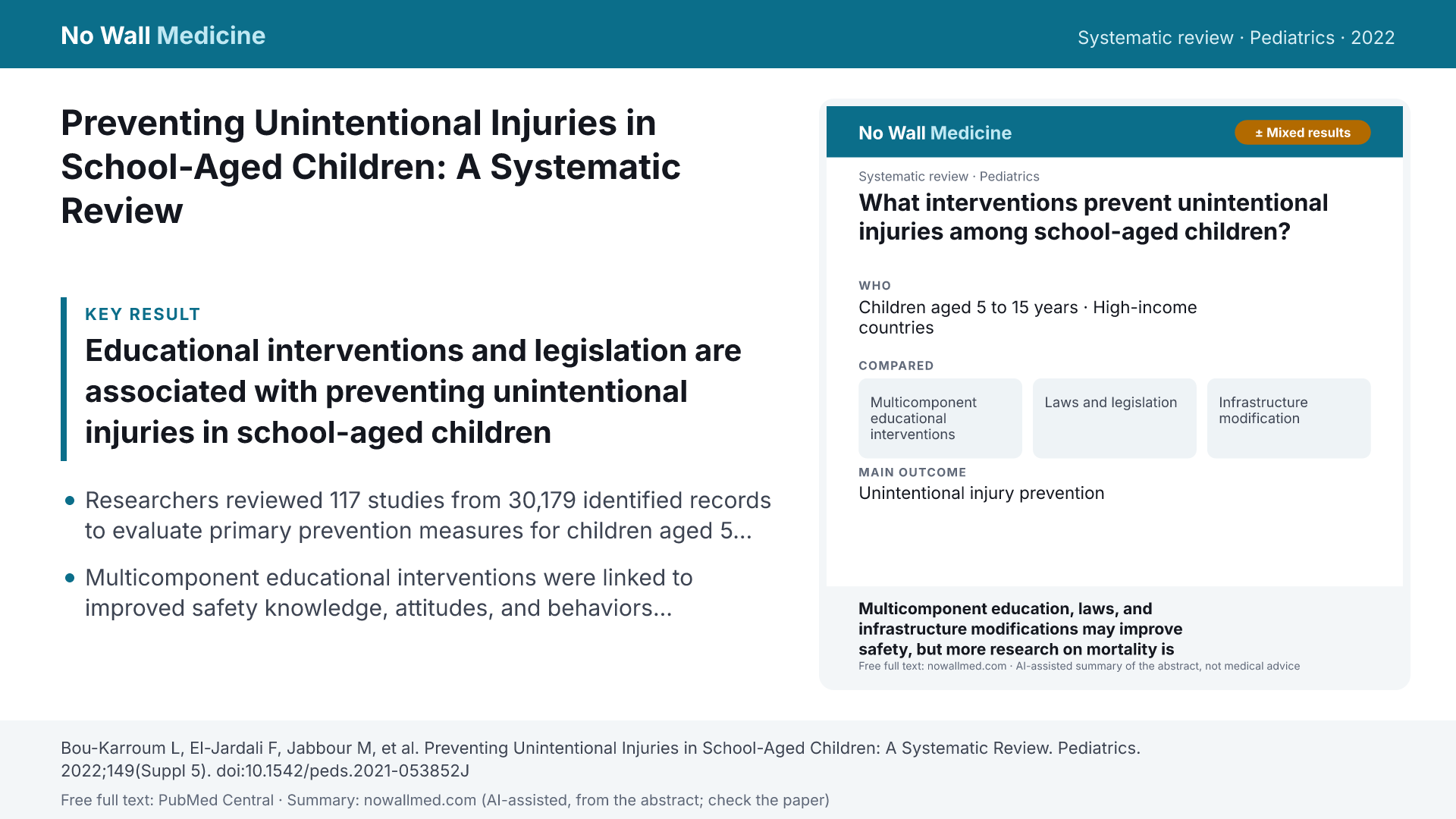
Educational interventions and legislation are associated with preventing unintentional injuries in school-aged children
Preventing Unintentional Injuries in School-Aged Children: A Systematic Review
Systematic reviewMixed results
What interventions prevent unintentional injuries among school-aged children?
Who
Children aged 5 to 15 years · High-income countries
Compared
Multicomponent educational interventions
Laws and legislation
Infrastructure modification
Main outcome
Unintentional injury prevention
Bottom line: Multicomponent education, laws, and infrastructure modifications may improve safety, but more research on mortality is needed.
Pediatrics · 2022-05-03Download image
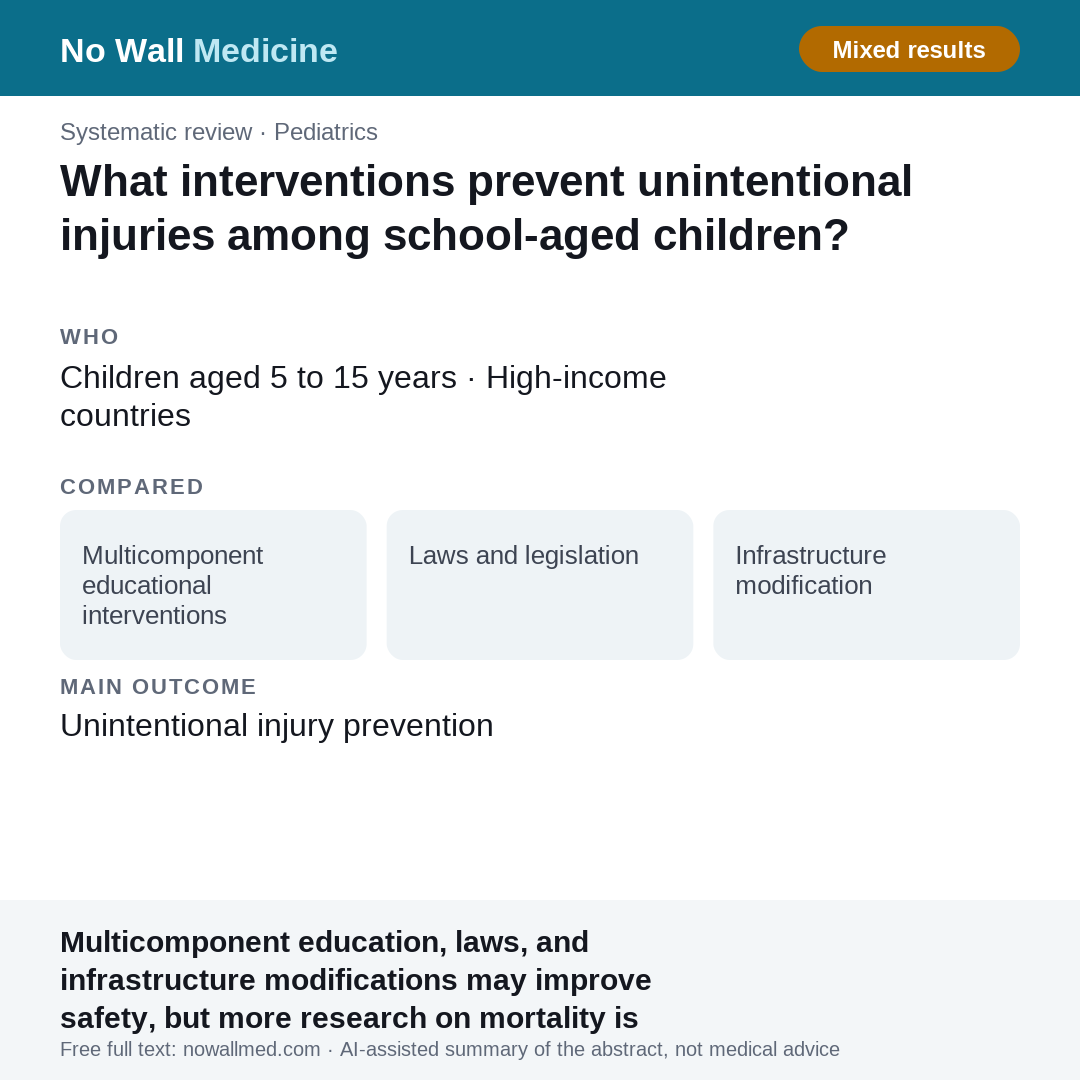
Clinical question: What interventions prevent unintentional injuries among school-aged children?
Why it matters: It is unknown how effective various primary prevention interventions are at reducing unintentional injuries among children aged 5 to 15 years.
Key points
- Researchers reviewed 117 studies from 30,179 identified records to evaluate primary prevention measures for children aged 5 to 15 years.
- Multicomponent educational interventions were linked to improved safety knowledge, attitudes, and behaviors when combined with other approaches.
- Laws and legislation were associated with increased bicycle helmet use and lower traffic-related injury rates, while infrastructure changes were linked to fewer falls.
Headline and key points written with AI from the paper’s abstract, with every number checked against it. Read the paper before relying on them.
Was this summary helpful?
Subject terms
Cite this article
Bou-Karroum L, El-Jardali F, Jabbour M, Harb A, Fadlallah R, Hemadi N. Preventing Unintentional Injuries in School-Aged Children: A Systematic Review. Pediatrics. 2022. doi:10.1542/peds.2021-053852J
Spotted a mistake? Suggest a correction