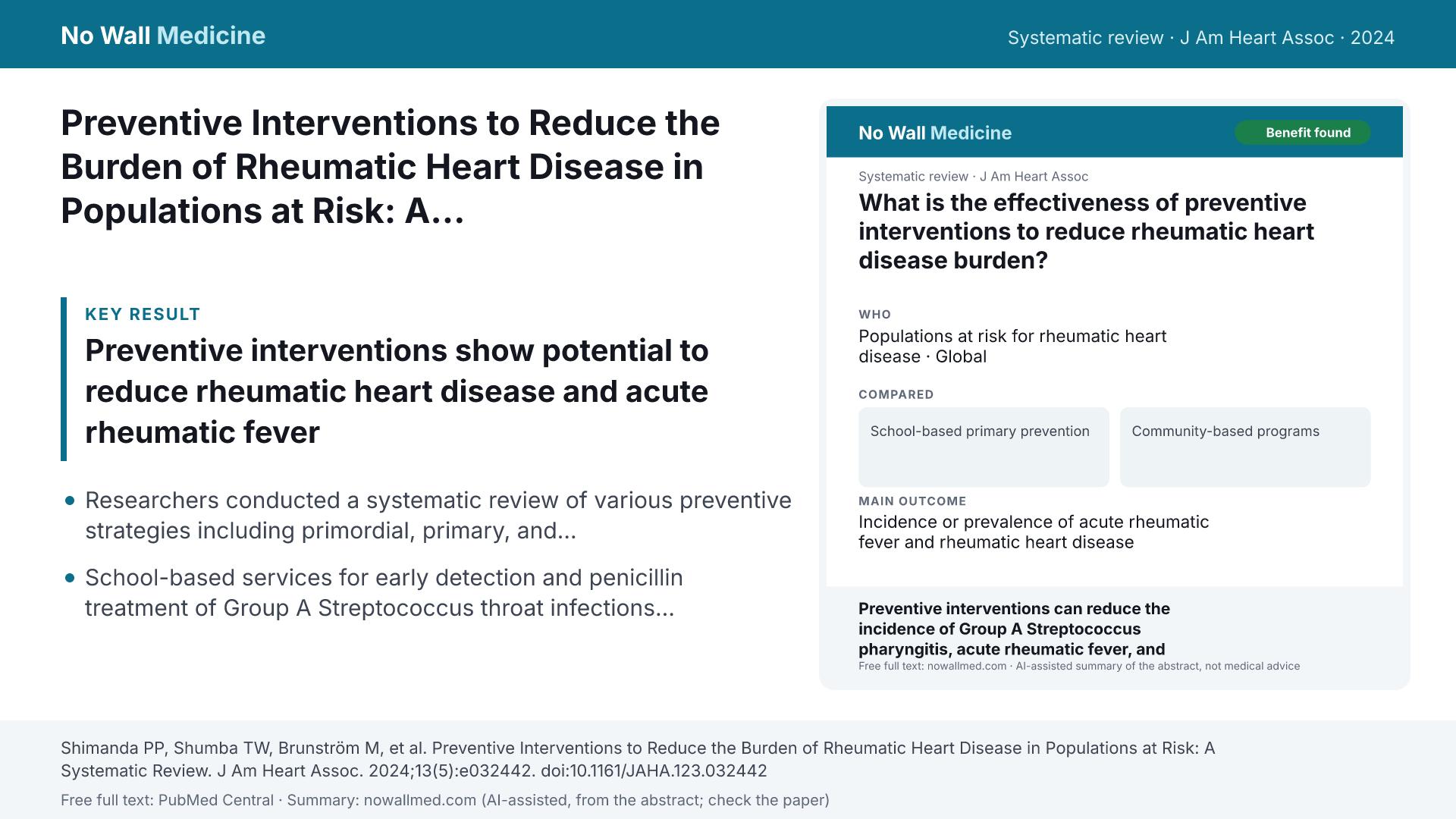
Preventive interventions show potential to reduce rheumatic heart disease and acute rheumatic fever
Preventive Interventions to Reduce the Burden of Rheumatic Heart Disease in Populations at Risk: A Systematic Review
Systematic reviewBenefit found
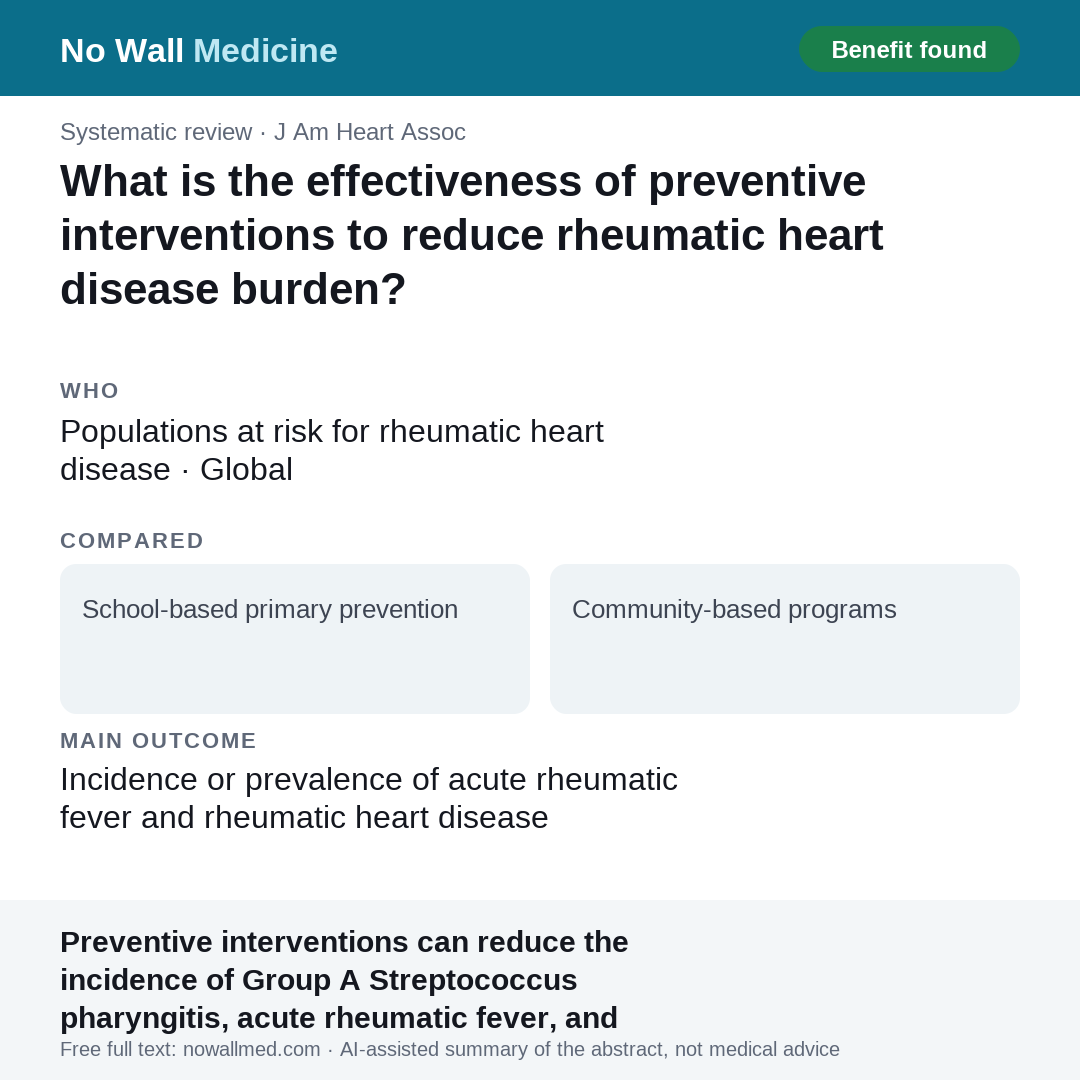
What is the effectiveness of preventive interventions to reduce rheumatic heart disease burden?
Who
Populations at risk for rheumatic heart disease · Global
Compared
School-based primary prevention
Community-based programs
Main outcome
Incidence or prevalence of acute rheumatic fever and rheumatic heart disease
Bottom line: Preventive interventions can reduce the incidence of Group A Streptococcus pharyngitis, acute rheumatic fever, and rheumatic heart disease.
Limitation: Limited evidence from low-middle-income countries and a lack of rigorous evaluations.
J Am Heart Assoc · 2024-02-23Download image
Clinical question: What is the effectiveness of preventive interventions to reduce rheumatic heart disease burden?
Why it matters: Evidence regarding the effectiveness of various preventive measures in reducing the incidence or prevalence of acute rheumatic fever and rheumatic heart disease is currently scattered.
Key points
- Researchers conducted a systematic review of various preventive strategies including primordial, primary, and secondary prevention methods.
- School-based services for early detection and penicillin treatment of Group A Streptococcus throat infections were linked to lower incidence of throat infections and acute rheumatic fever.
- Community-based programs using different strategies were also associated with a reduced burden of rheumatic heart disease.
Limitation the authors note: There is limited evidence from low-middle-income countries and a lack of rigorous evaluations reporting the true impact of the interventions.
Headline and key points written with AI from the paper’s abstract, with every number checked against it. Read the paper before relying on them.
Was this summary helpful?
Subject terms
Cite this article
Shimanda PP, Shumba TW, Brunström M, et al. Preventive Interventions to Reduce the Burden of Rheumatic Heart Disease in Populations at Risk: A Systematic Review. J Am Heart Assoc. 2024. doi:10.1161/JAHA.123.032442
Spotted a mistake? Suggest a correction