Preventive Medications in Pediatric Migraine: A Network Meta-Analysis
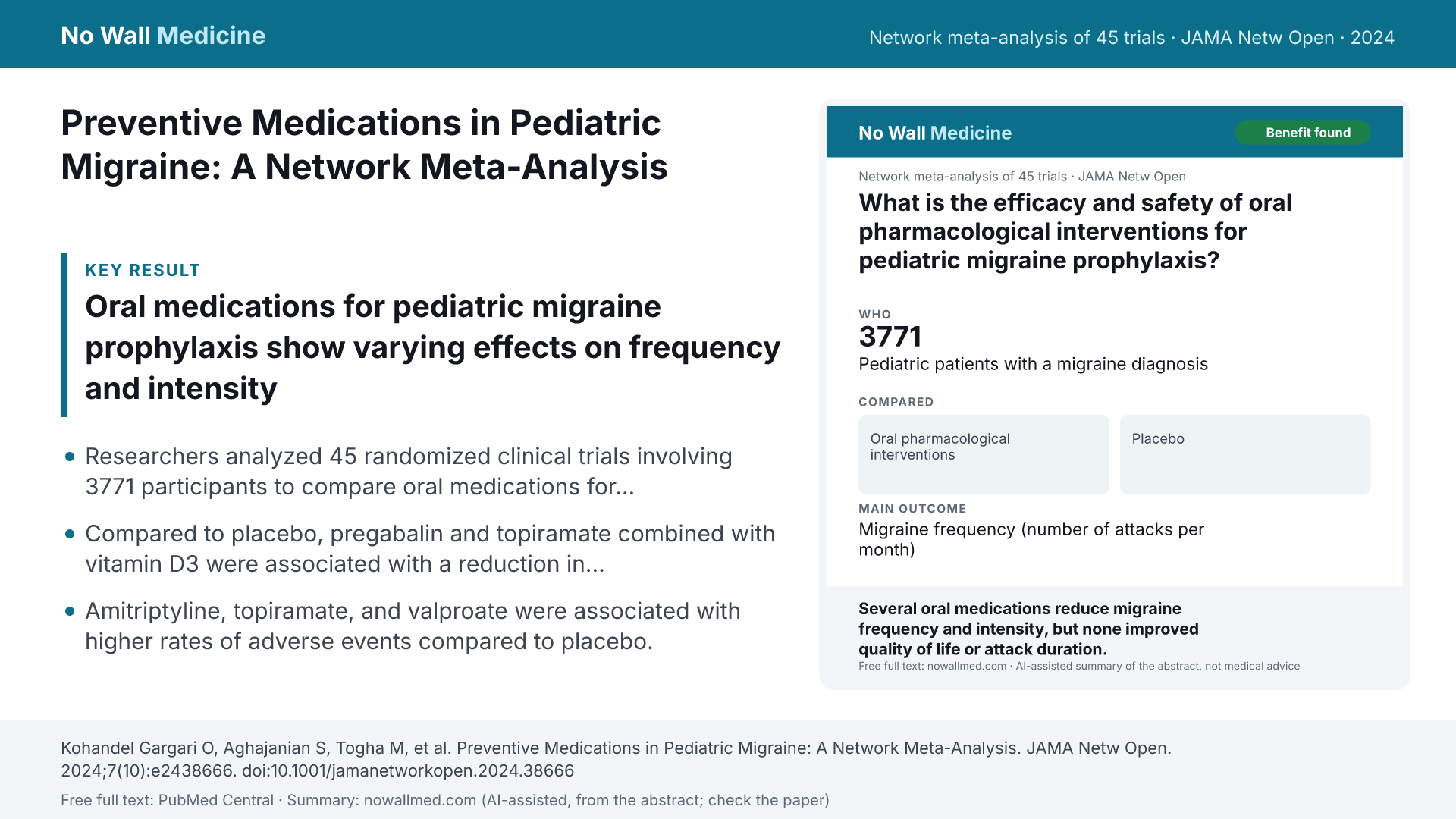
Key result: Oral medications for pediatric migraine prophylaxis show varying effects on frequency and intensity
Network meta-analysis of 45 trialsBenefit found
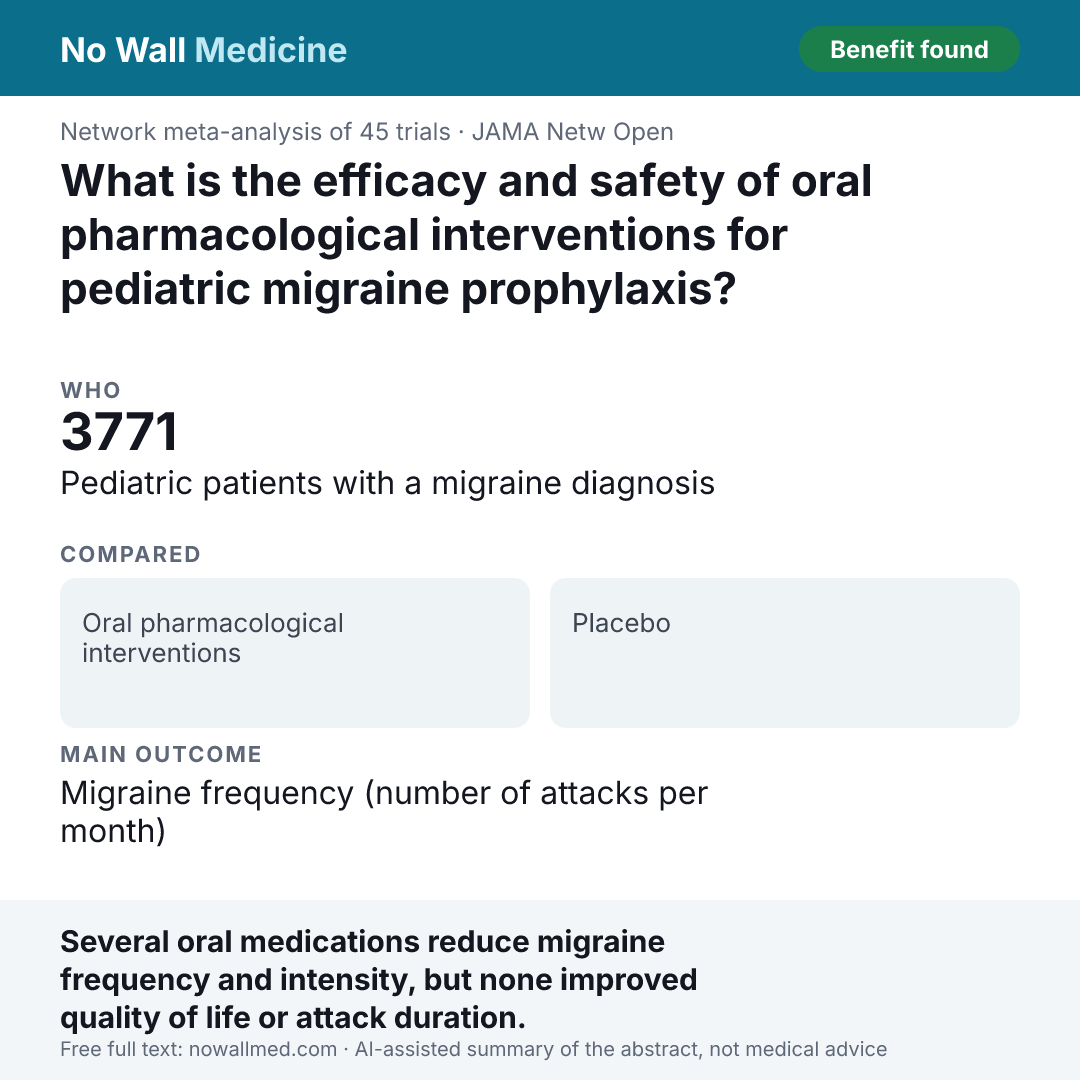
What is the efficacy and safety of oral pharmacological interventions for pediatric migraine prophylaxis?
Who
3771
Pediatric patients with a migraine diagnosis
Compared
Oral pharmacological interventions
Placebo
Main outcome
Migraine frequency (number of attacks per month)
Result: pregabalin ratio of means 0.38 (95% CI, 0.18-0.79)
Bottom line: Several oral medications reduce migraine frequency and intensity, but none improved quality of life or attack duration.
Limitation: More studies are required for a robust conclusion regarding some drugs.
JAMA Netw Open · 2024-10-01 · Save PNG
Key points
- Researchers analyzed 45 randomized clinical trials involving 3771 participants to compare oral medications for preventing migraines in children and adolescents.
- Compared to placebo, pregabalin and topiramate combined with vitamin D3 were associated with a reduction in migraine frequency.
- Amitriptyline, topiramate, and valproate were associated with higher rates of adverse events compared to placebo.
Why it matters: The efficacy and safety of different oral pharmacological interventions for preventing migraines in pediatric patients were not clearly established.
Discussion prompts
- Would these patients look like yours? Who was left out?
- Is the main outcome one that matters to patients?
- Is the difference large enough to change what you do?
Cite: Kohandel Gargari O, Aghajanian S, Togha M, et al. Preventive Medications in Pediatric Migraine: A Network Meta-Analysis. JAMA Netw Open. 2024;7(10):e2438666. doi:10.1001/jamanetworkopen.2024.38666
Free full text: PubMed Central · Summary and visual abstract: nowallmed.com/a/preventive-medications-in-pediatric-migraine-a-network-meta-1ml1hjr/ (AI-assisted from the abstract; check the paper before relying on it).