Primary treatment of type B post-axial ulnar polydactyly: A systematic review and meta-analysis
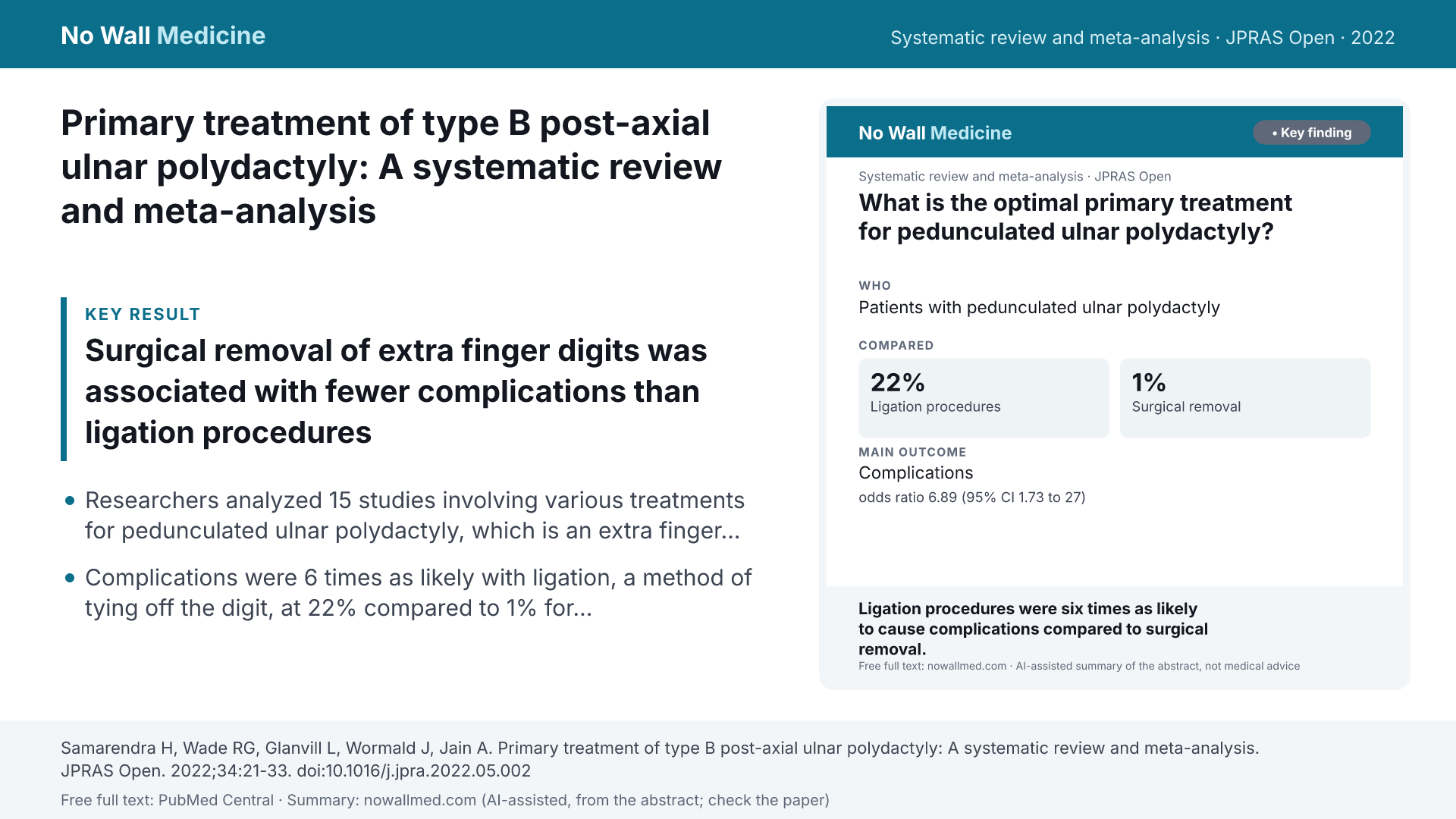
Key result: Surgical removal of extra finger digits was associated with fewer complications than ligation procedures
Key points
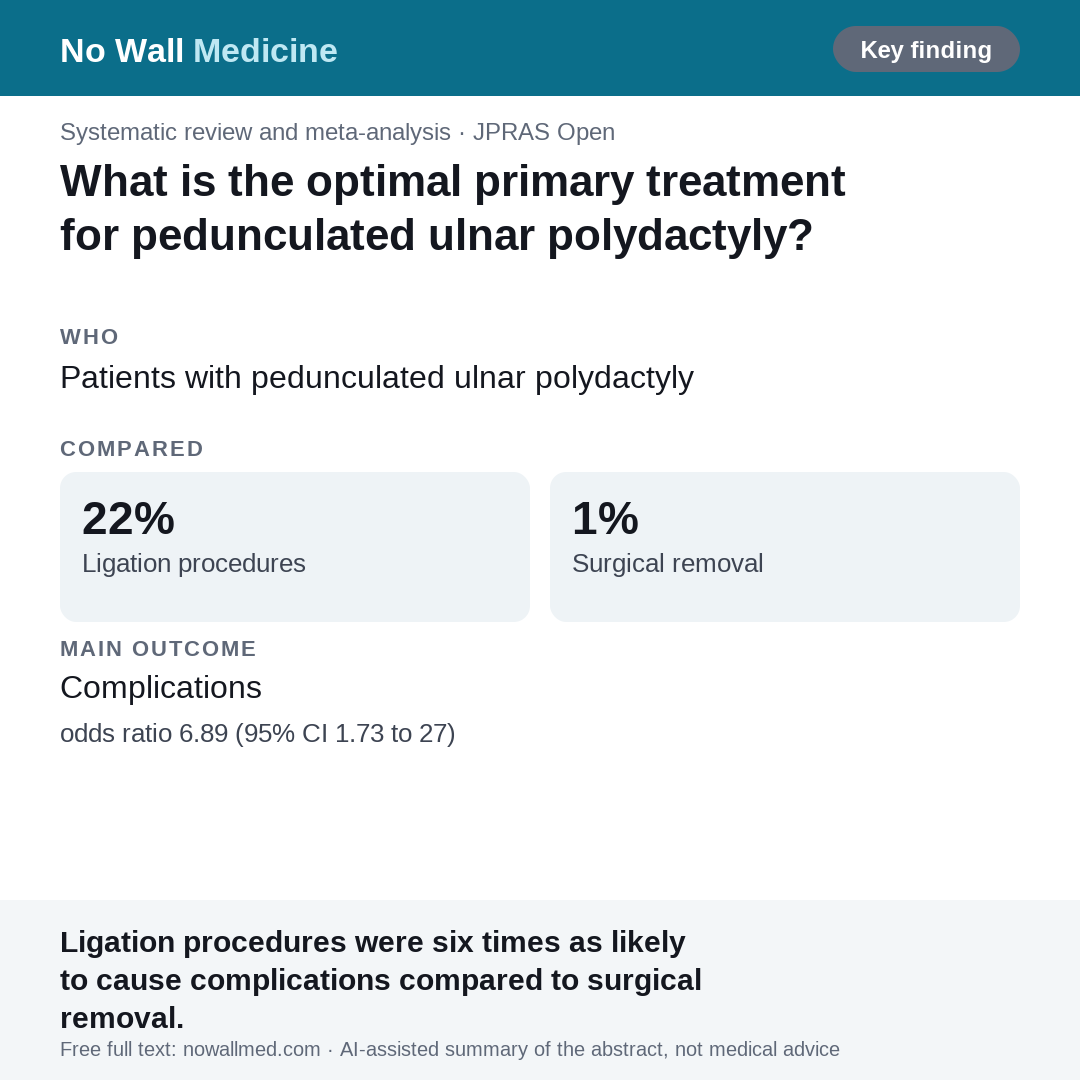
- Researchers analyzed 15 studies involving various treatments for pedunculated ulnar polydactyly, which is an extra finger on the pinky side of the hand.
- Complications were 6 times as likely with ligation, a method of tying off the digit, at 22% compared to 1% for surgical removal.
- Parent-reported satisfaction was high across all treatment methods studied.
Why it matters: The optimal management for pedunculated ulnar polydactyly is not currently defined.
Limitation the authors note: The included studies were at high risk of bias and had low methodological quality.
Discussion prompts
- Would these patients look like yours? Who was left out?
- Is the main outcome one that matters to patients?
- Is the difference large enough to change what you do?
Cite: Samarendra H, Wade RG, Glanvill L, Wormald J, Jain A. Primary treatment of type B post-axial ulnar polydactyly: A systematic review and meta-analysis. JPRAS Open. 2022. doi:10.1016/j.jpra.2022.05.002
Free full text: PubMed Central · Summary and visual abstract: nowallmed.com/a/primary-treatment-of-type-b-post-axial-ulnar-polydactyly-a-systematic-17jb0tr/ (AI-assisted from the abstract; check the paper before relying on it).