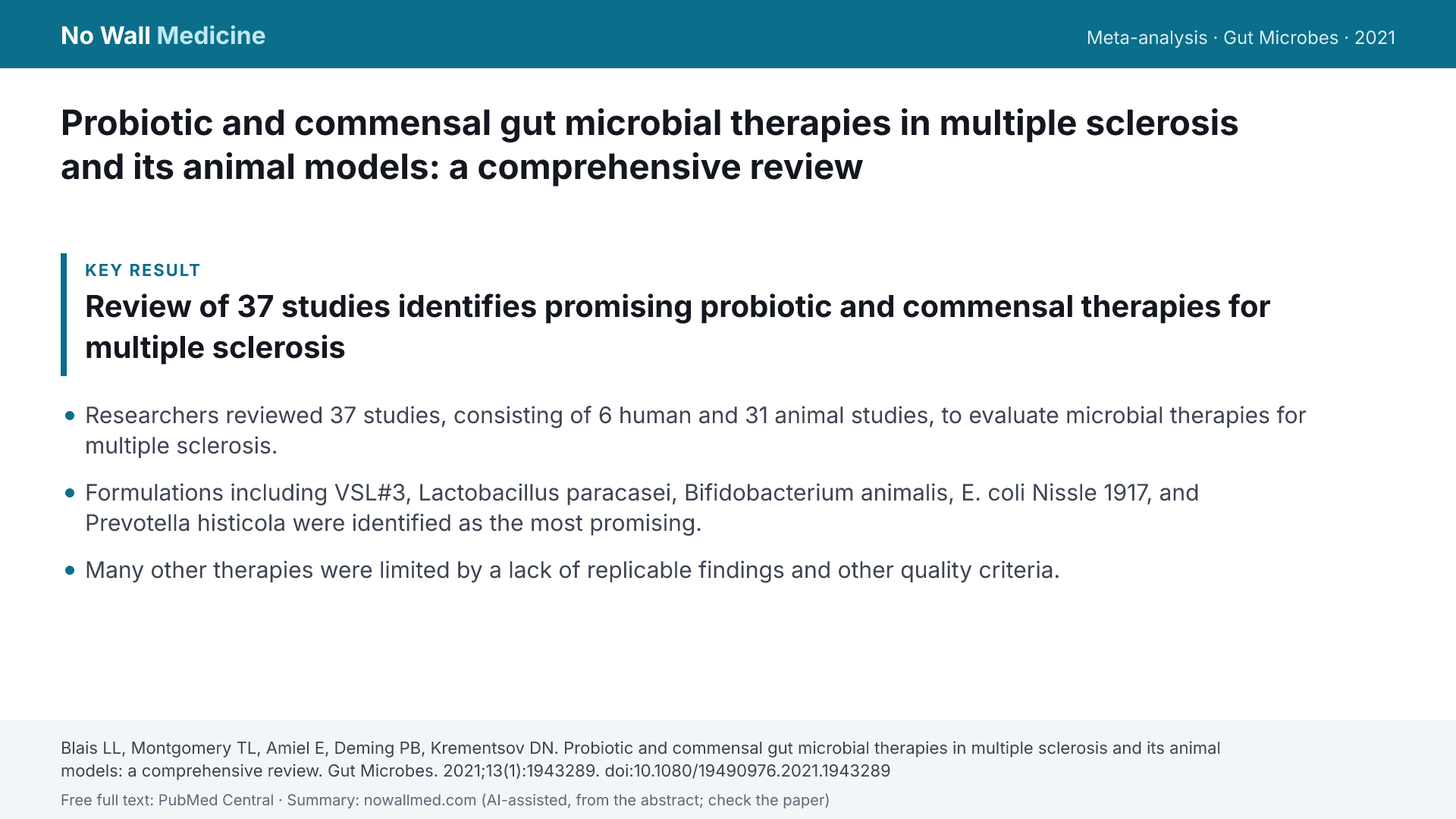
Review of 37 studies identifies promising probiotic and commensal therapies for multiple sclerosis
Probiotic and commensal gut microbial therapies in multiple sclerosis and its animal models: a comprehensive review
Comprehensive reviewMixed results
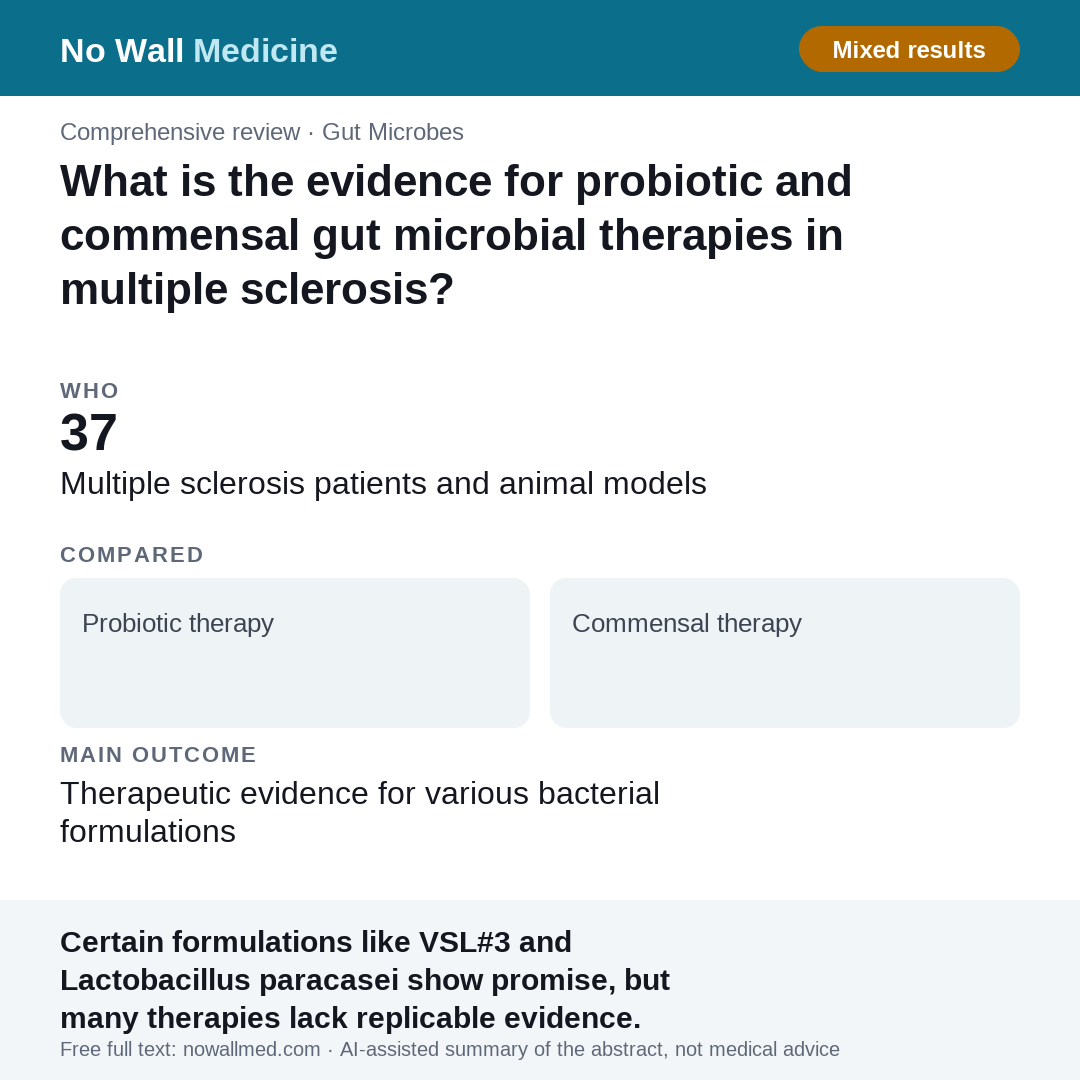
What is the evidence for probiotic and commensal gut microbial therapies in multiple sclerosis?
Who
37
Multiple sclerosis patients and animal models
Compared
Probiotic therapy
Commensal therapy
Main outcome
Therapeutic evidence for various bacterial formulations
Bottom line: Certain formulations like VSL#3 and Lactobacillus paracasei show promise, but many therapies lack replicable evidence.
Limitation: Limited evidence of replicable findings for many therapies.
Gut Microbes · 2021-07-15Download image
Clinical question: What is the evidence for probiotic and commensal gut microbial therapies in multiple sclerosis?
Why it matters: The potential for gut microbial therapies to provide cheaper, safer, and more durable treatments for multiple sclerosis remains to be fully established.
Key points
- Researchers reviewed 37 studies, consisting of 6 human and 31 animal studies, to evaluate microbial therapies for multiple sclerosis.
- Formulations including VSL#3, Lactobacillus paracasei, Bifidobacterium animalis, E. coli Nissle 1917, and Prevotella histicola were identified as the most promising.
- Many other therapies were limited by a lack of replicable findings and other quality criteria.
Headline and key points written with AI from the paper’s abstract, with every number checked against it. Read the paper before relying on them.
Was this summary helpful?
Subject terms
Cite this article
Blais LL, Montgomery TL, Amiel E, Deming PB, Krementsov DN. Probiotic and commensal gut microbial therapies in multiple sclerosis and its animal models: a comprehensive review. Gut Microbes. 2021. doi:10.1080/19490976.2021.1943289
Spotted a mistake? Suggest a correction