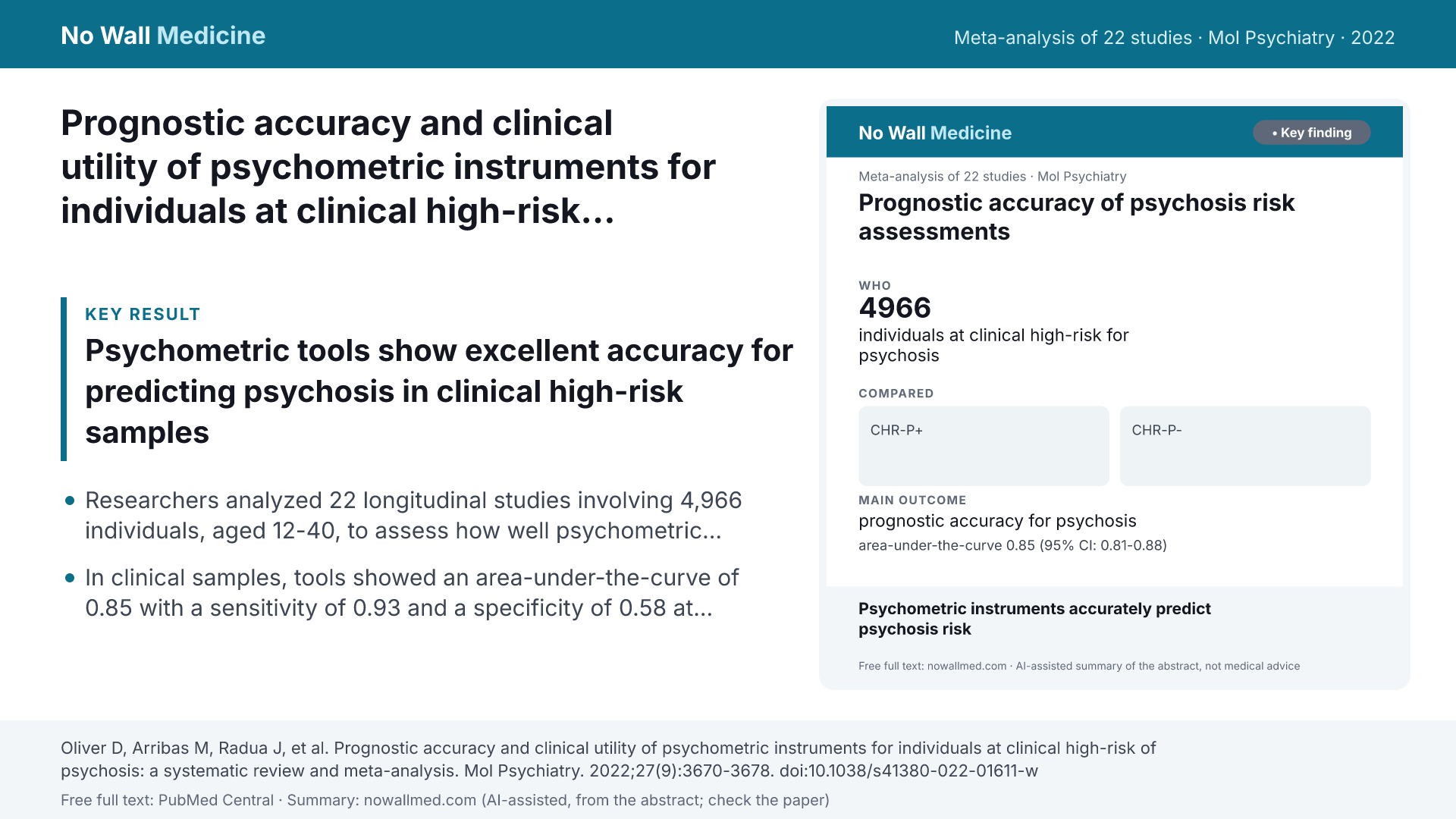
Psychometric tools show excellent accuracy for predicting psychosis in clinical high-risk samples
Prognostic accuracy and clinical utility of psychometric instruments for individuals at clinical high-risk of psychosis: a systematic review and meta-analysis
Psychiatry & Mental HealthAdult and pediatric
Meta-analysis of 22 studiesBenefit found
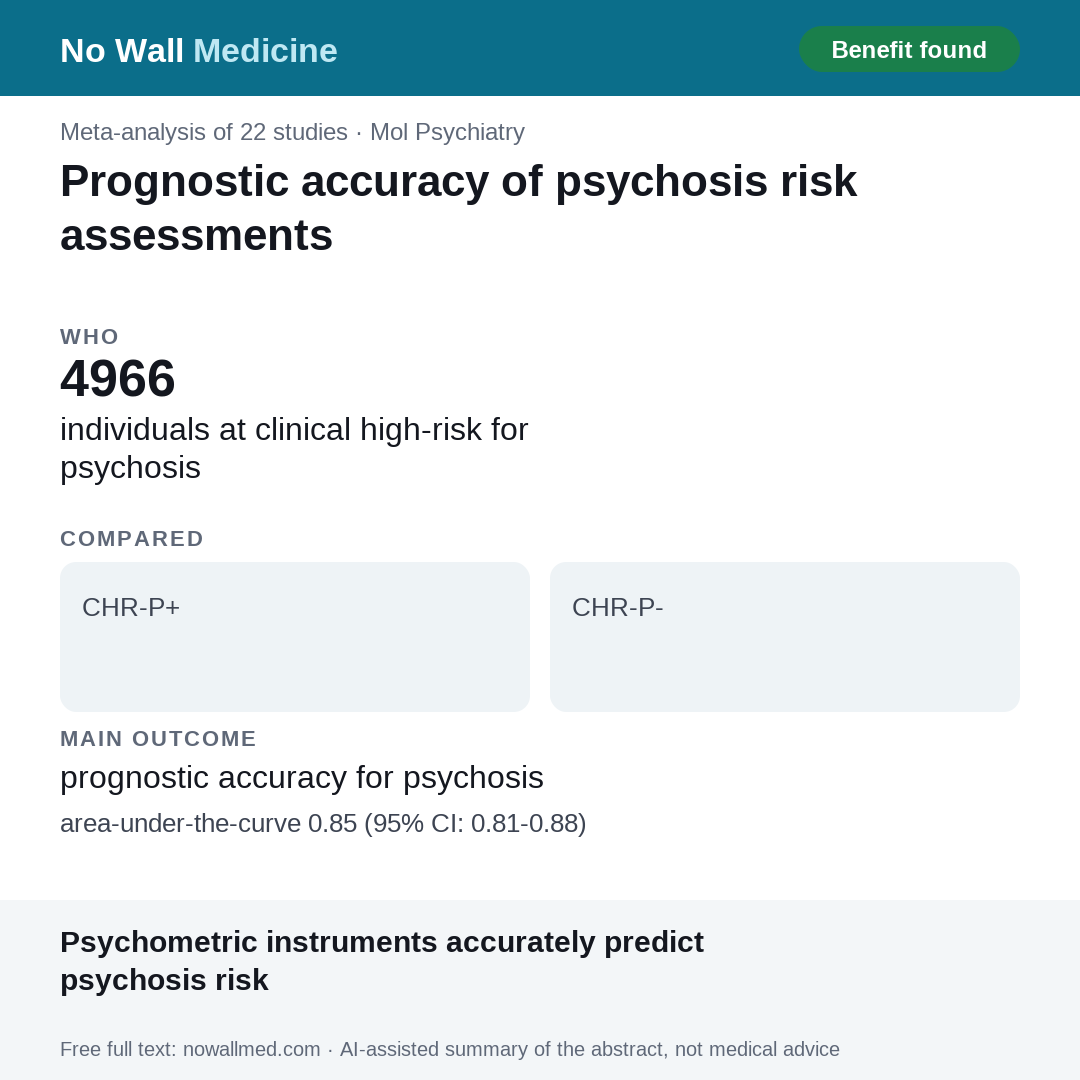
Prognostic accuracy of psychosis risk assessments
Who
4966
individuals at clinical high-risk for psychosis
Compared
CHR-P+
CHR-P-
Main outcome
prognostic accuracy for psychosis
Result: area-under-the-curve 0.85 (95% CI: 0.81-0.88)
Bottom line: Psychometric instruments accurately predict psychosis risk
Mol Psychiatry · 2022-06-03Download image
Why it matters: It is unknown how accurately psychometric assessments can predict which individuals at clinical high-risk for psychosis will actually develop psychotic disorders.
Key points
- Researchers analyzed 22 longitudinal studies involving 4,966 individuals, aged 12-40, to assess how well psychometric tools predict the transition to psychotic disorders.
- In clinical samples, tools showed an area-under-the-curve of 0.85 with a sensitivity of 0.93 and a specificity of 0.58 at a mean follow-up of 34 months.
- Being identified as high-risk was associated with a small positive likelihood ratio of 2.17, while not meeting criteria was associated with a large negative likelihood ratio of 0.11.
Limitation the authors note: There were not enough meta-analysable studies on diagnostic criteria such as the DSM-5 Attenuated Psychosis Syndrome or on non-clinical samples.
Headline and key points written with AI from the paper’s abstract, with every number checked against it. Read the paper before relying on them.
Was this summary helpful?
Subject terms
Cite this article
Oliver D, Arribas M, Radua J, et al. Prognostic accuracy and clinical utility of psychometric instruments for individuals at clinical high-risk of psychosis: a systematic review and meta-analysis. Mol Psychiatry. 2022. doi:10.1038/s41380-022-01611-w
Spotted a mistake? Suggest a correction