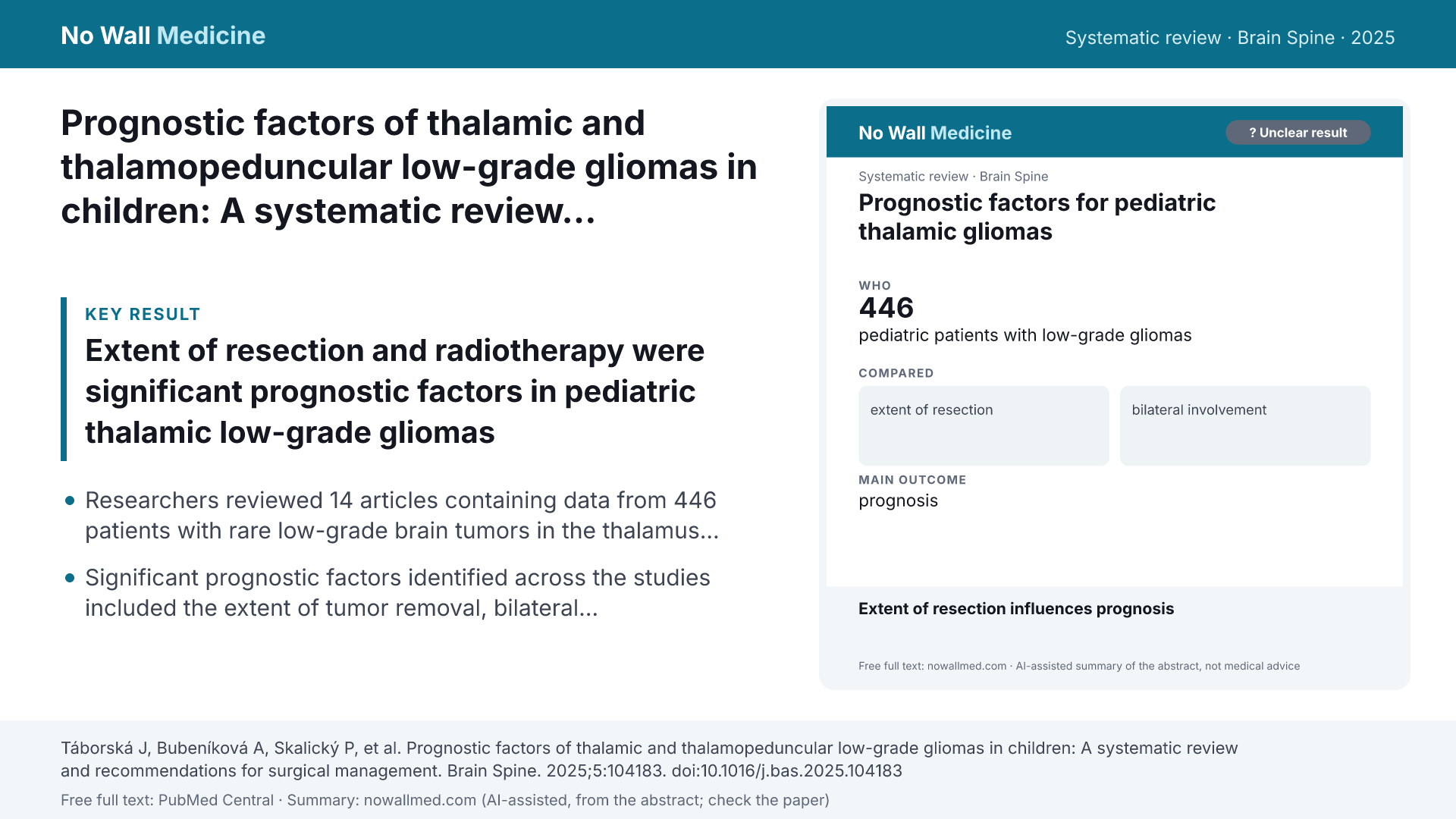
Extent of resection and radiotherapy were significant prognostic factors in pediatric thalamic low-grade gliomas
Prognostic factors of thalamic and thalamopeduncular low-grade gliomas in children: A systematic review and recommendations for surgical management
Systematic reviewUnclear result
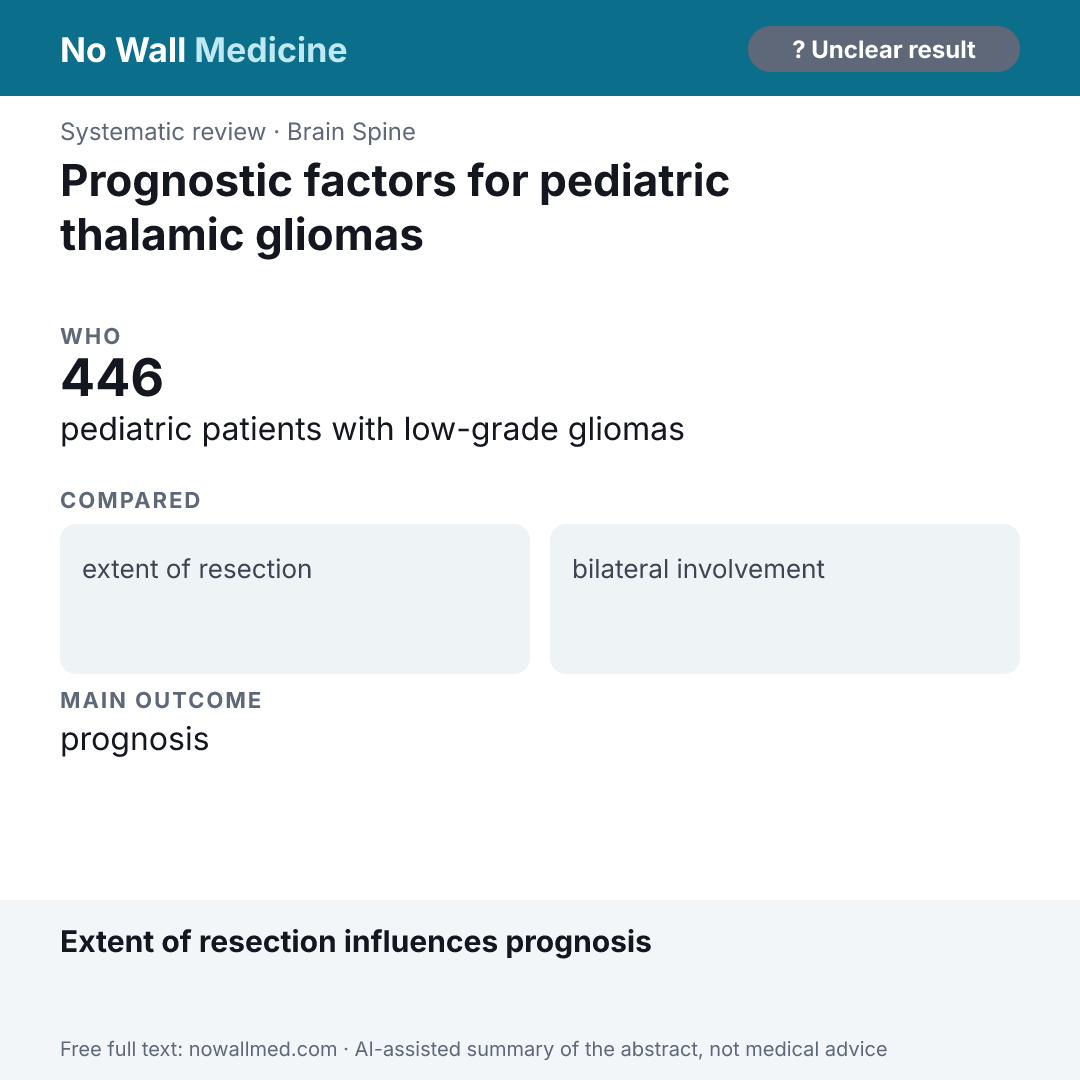
Prognostic factors for pediatric thalamic gliomas
Who
446
pediatric patients with low-grade gliomas
Compared
extent of resection
bilateral involvement
Main outcome
prognosis
Bottom line: Extent of resection influences prognosis
Brain Spine · 2025-01-17 · Save PNG
Why it matters: Prognostic factors for pediatric patients with rare low-grade gliomas arising from the thalamus or thalamopeduncular junction are seldom reported in existing literature.
Key points
- Researchers reviewed 14 articles containing data from 446 patients with rare low-grade brain tumors in the thalamus or thalamopeduncular junction.
- Significant prognostic factors identified across the studies included the extent of tumor removal, bilateral involvement, histology, and radiotherapy.
- Other reported factors included age, molecular genetics, sex, and tumor dissemination, though these were reported in fewer studies.
Headline and key points written with AI from the paper’s abstract, with every number checked against it. Read the paper before relying on them.
Was this summary helpful?
Headline, design, result, key points, caveat and citation as plain text.
Cite this article
Táborská J, Bubeníková A, Skalický P, et al. Prognostic factors of thalamic and thalamopeduncular low-grade gliomas in children: A systematic review and recommendations for surgical management. Brain Spine. 2025;5:104183. doi:10.1016/j.bas.2025.104183
Spotted a mistake? Suggest a correction