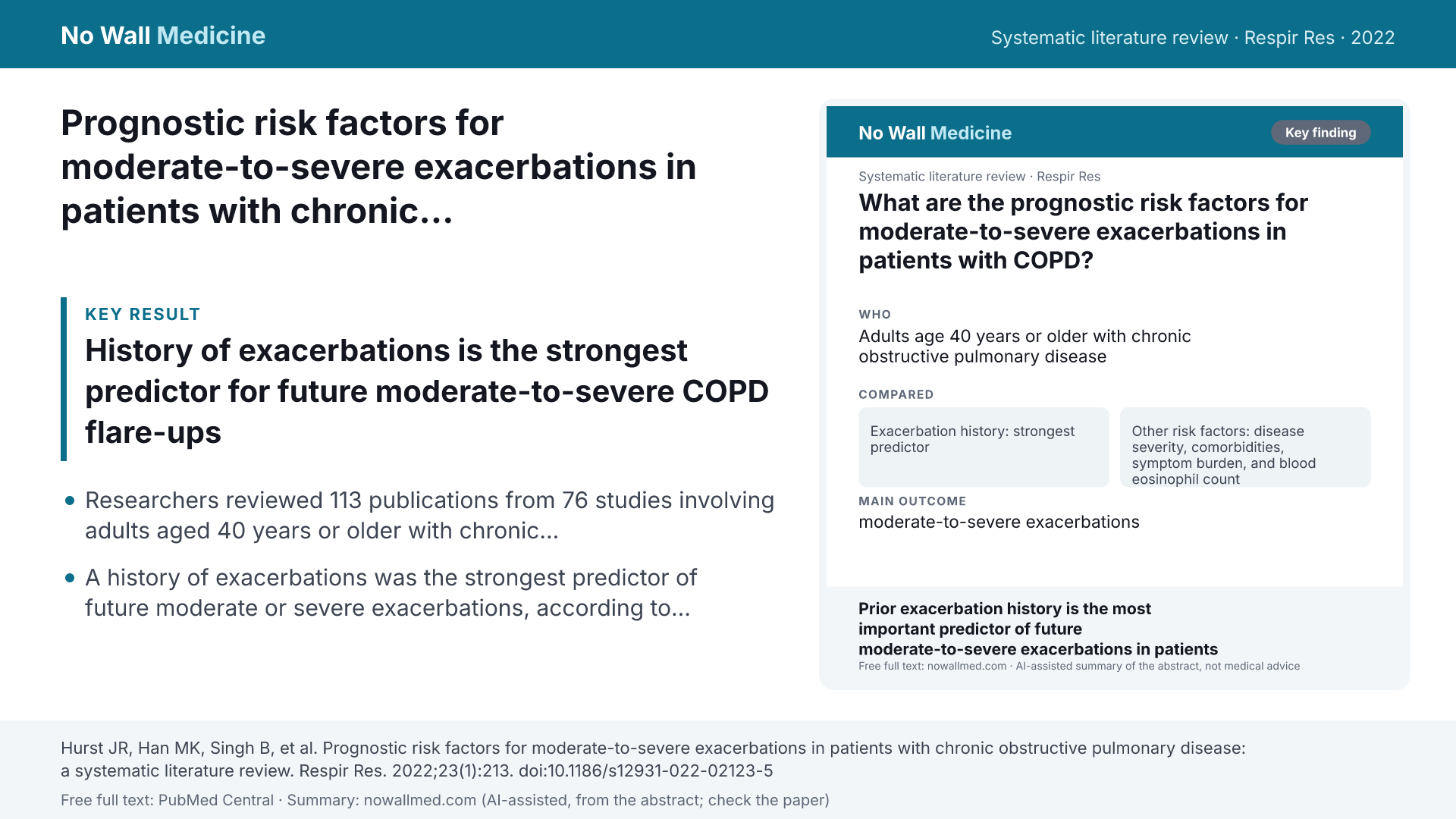
Prognostic risk factors for moderate-to-severe exacerbations in patients with chronic obstructive pulmonary disease: a systematic literature review
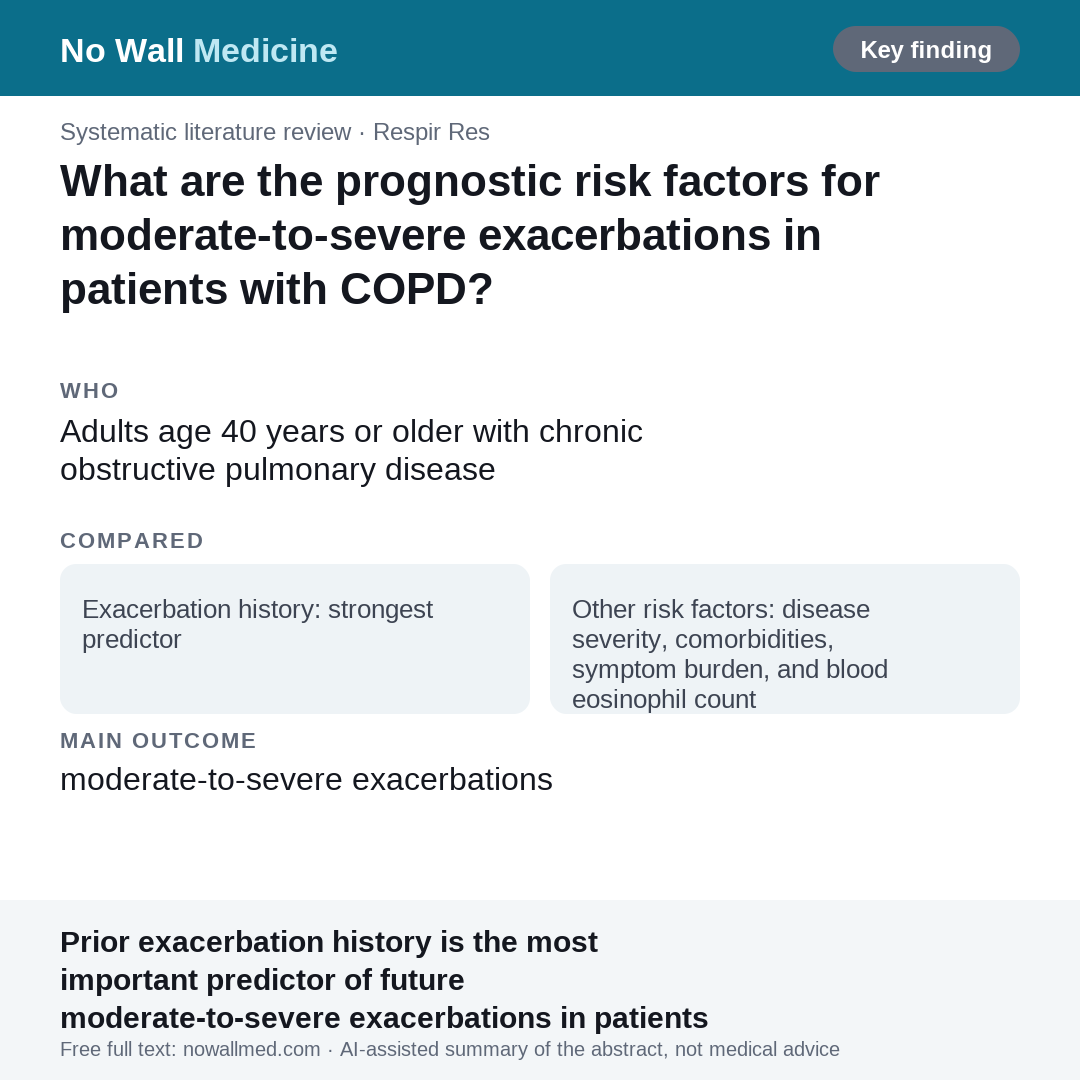
Key result: History of exacerbations is the strongest predictor for future moderate-to-severe COPD flare-ups
Key points
- Researchers reviewed 113 publications from 76 studies involving adults aged 40 years or older with chronic obstructive pulmonary disease.
- A history of exacerbations was the strongest predictor of future moderate or severe exacerbations, according to 34 studies.
- Other factors associated with exacerbations included disease severity or bronchodilator reversibility in 39 studies, comorbidities in 34 studies, and higher blood eosinophil counts in 16 studies.
Why it matters: The specific risk factors and predictors that identify patients at high risk for moderate-to-severe chronic obstructive pulmonary disease exacerbations were not clearly synthesized.
Discussion prompts
- Would these patients look like yours? Who was left out?
- Is the main outcome one that matters to patients?
- Is the difference large enough to change what you do?
Cite: Hurst JR, Han MK, Singh B, et al. Prognostic risk factors for moderate-to-severe exacerbations in patients with chronic obstructive pulmonary disease: a systematic literature review. Respir Res. 2022. doi:10.1186/s12931-022-02123-5
Free full text: PubMed Central · Summary and visual abstract: nowallmed.com/a/prognostic-risk-factors-for-moderate-to-severe-exacerbations-in-hlpskm/ (AI-assisted from the abstract; check the paper before relying on it).