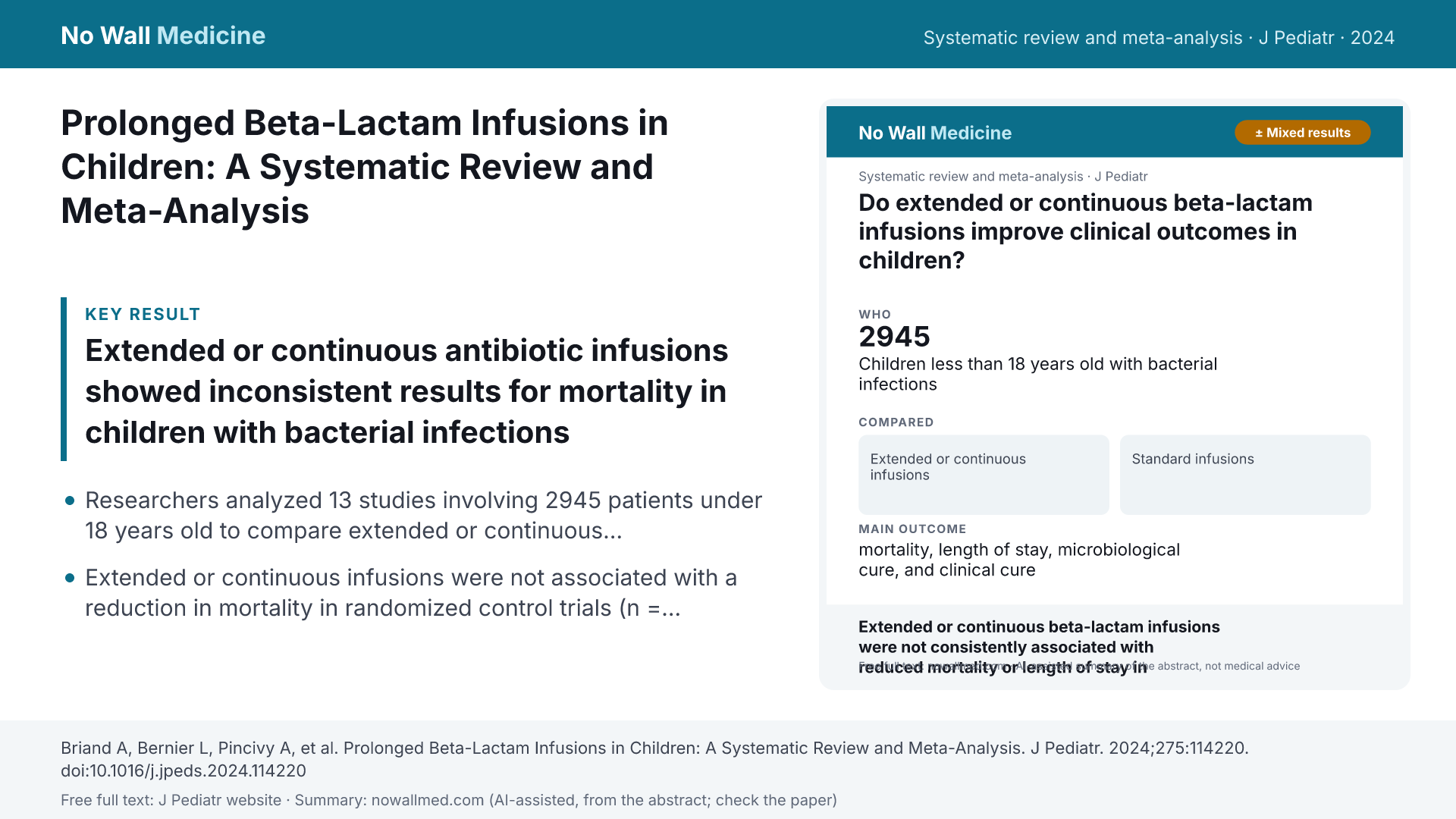
Extended or continuous antibiotic infusions showed inconsistent results for mortality in children with bacterial infections
Prolonged Beta-Lactam Infusions in Children: A Systematic Review and Meta-Analysis
Systematic review and meta-analysisMixed results
Do extended or continuous beta-lactam infusions improve clinical outcomes in children?
Who
2945
Children less than 18 years old with bacterial infections
Compared
Extended or continuous infusions
Standard infusions
Main outcome
mortality, length of stay, microbiological cure, and clinical cure
Result: RR 0.93 (95% CI 0.71, 1.21) in randomized control trials
Bottom line: Extended or continuous beta-lactam infusions were not consistently associated with reduced mortality or length of stay in children.
J Pediatr · 2024-08-02 · Save PNG
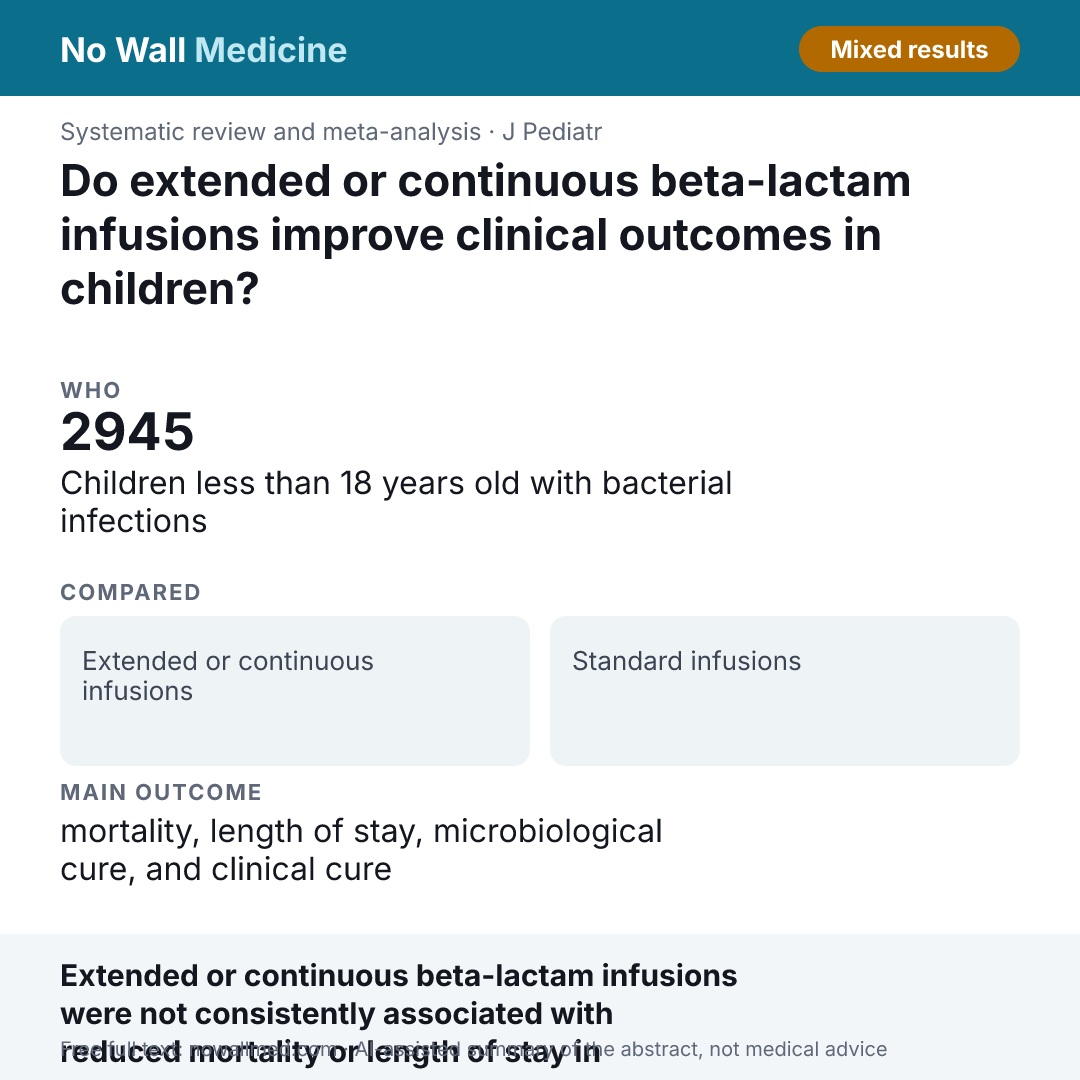
Clinical question: Do extended or continuous beta-lactam infusions improve clinical outcomes in children?
Key points
- Researchers analyzed 13 studies involving 2945 patients under 18 years old to compare extended or continuous antibiotic infusions with standard dosing methods.
- Extended or continuous infusions were not associated with a reduction in mortality in randomized control trials (n = 1464; RR 0.93, 95% CI 0.71, 1.21) but were associated with lower mortality in observational studies (n = 833; RR 0.43, 95% CI 0.19, 0.96).
- The analysis found no difference in hospital length of stay and reported conflicting results regarding clinical and microbiological cures.
Limitation the authors note: The included studies were highly heterogeneous and lacked shared definitions for clinical and microbiological cure outcomes, limiting the strength of the findings.
Headline and key points written with AI from the paper’s abstract, with every number checked against it. Read the paper before relying on them.
Was this summary helpful?
Subject terms
Headline, design, result, key points, caveat and citation as plain text.
Cite this article
Briand A, Bernier L, Pincivy A, et al. Prolonged Beta-Lactam Infusions in Children: A Systematic Review and Meta-Analysis. J Pediatr. 2024;275:114220. doi:10.1016/j.jpeds.2024.114220
Spotted a mistake? Suggest a correction