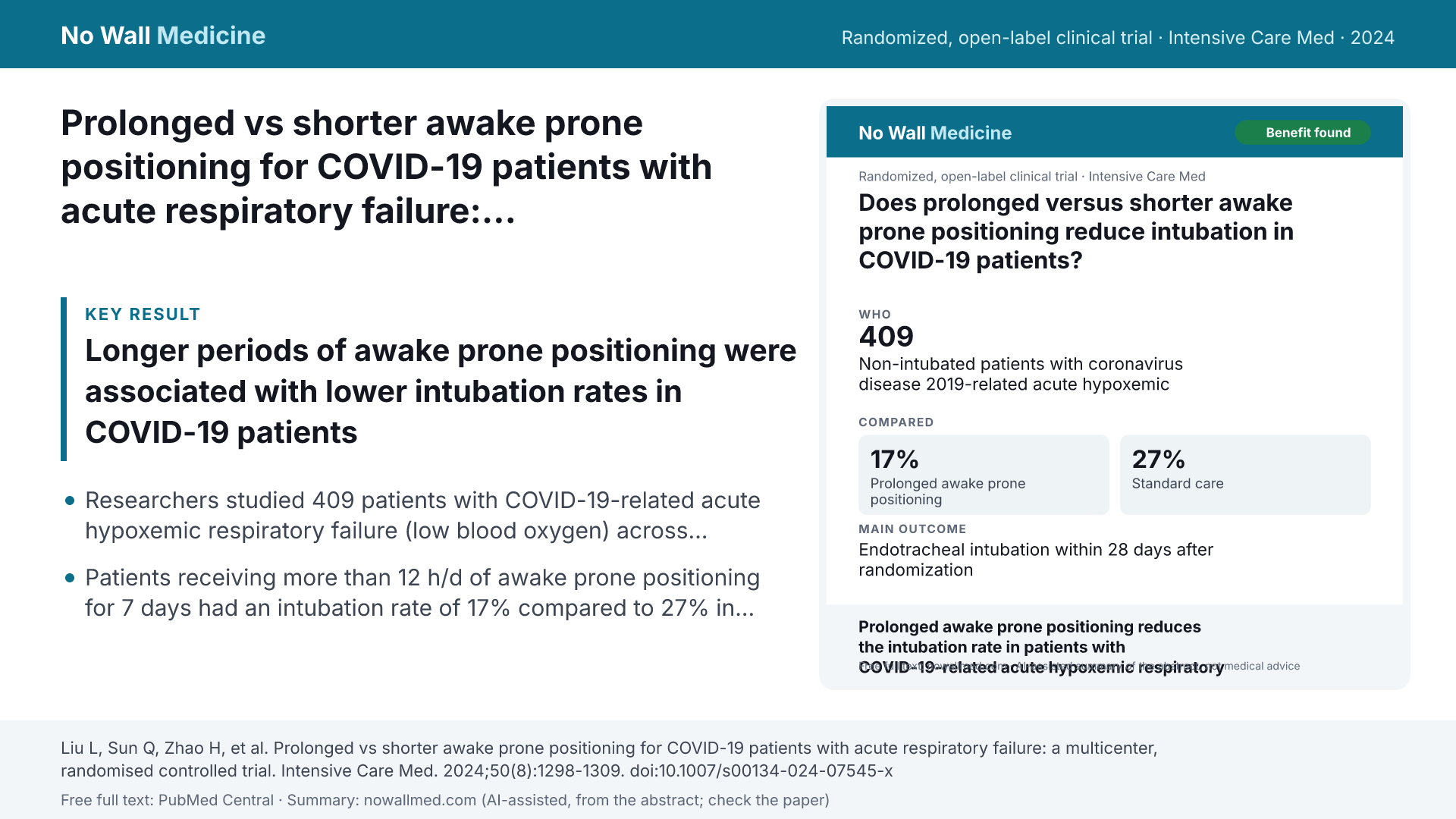
Longer periods of awake prone positioning were associated with lower intubation rates in COVID-19 patients
Prolonged vs shorter awake prone positioning for COVID-19 patients with acute respiratory failure: a multicenter, randomised controlled trial
Randomized, open-label clinical trialBenefit found
Does prolonged versus shorter awake prone positioning reduce intubation in COVID-19 patients?
Who
409
Non-intubated patients with coronavirus disease 2019-related acute hypoxemic respiratory failure · 12 hospitals in China
Compared
17%Prolonged awake prone positioning (35/205)
27%Standard care (56/204)
Main outcome
Endotracheal intubation within 28 days after randomization
Result: relative risk 0.62 (95% confidence interval 0.42-0.9)
Bottom line: Prolonged awake prone positioning reduces the intubation rate in patients with COVID-19-related acute hypoxemic respiratory failure.
Intensive Care Med · 2024-08-01Download image
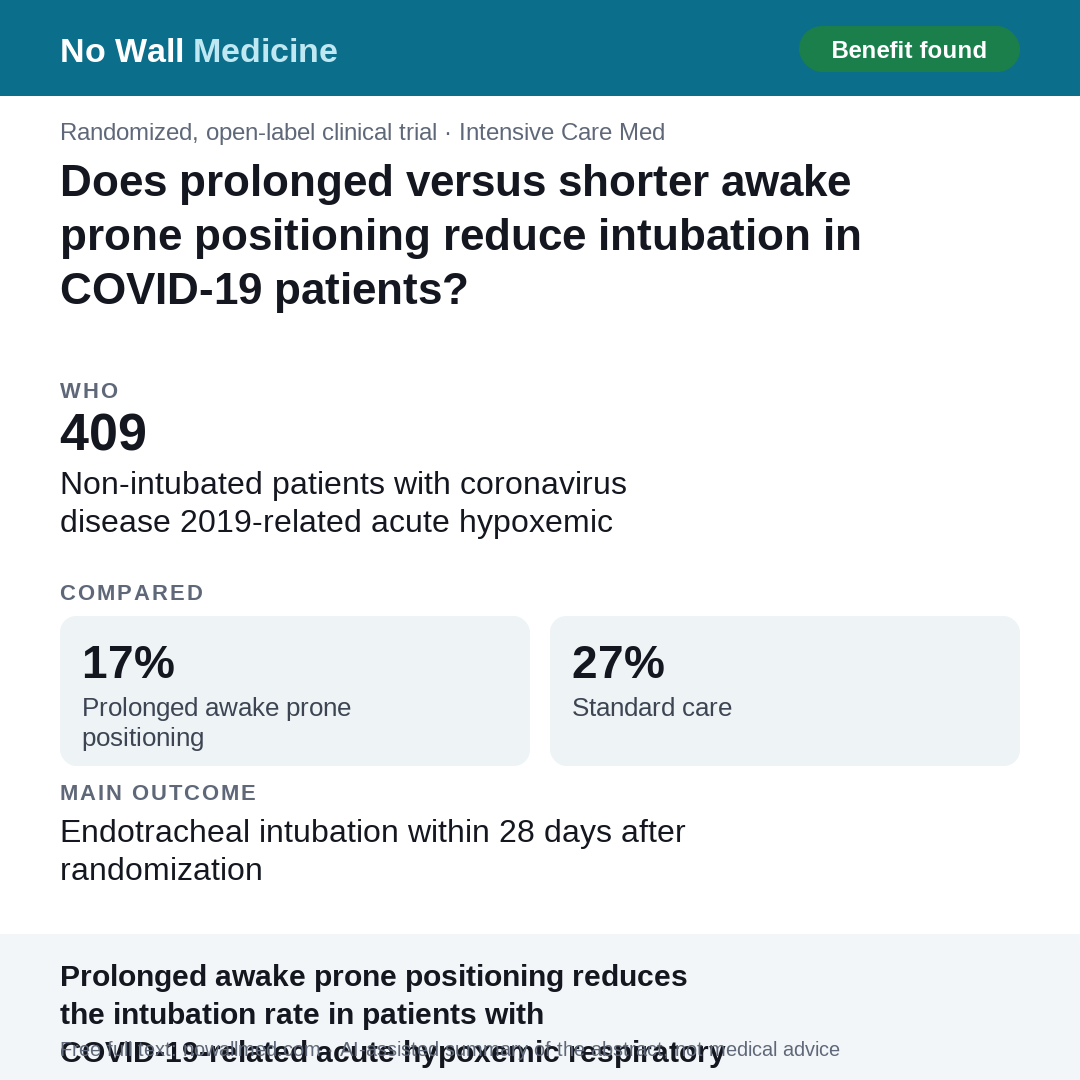
Clinical question: Does prolonged versus shorter awake prone positioning reduce intubation in COVID-19 patients?
Why it matters: It was unclear whether using awake prone positioning, which involves lying on the stomach while awake, for longer periods could further improve outcomes for patients with COVID-19.
Key points
- Researchers studied 409 patients with COVID-19-related acute hypoxemic respiratory failure (low blood oxygen) across 12 hospitals in China.
- Patients receiving more than 12 h/d of awake prone positioning for 7 days had an intubation rate of 17% compared to 27% in the standard care group.
- The hazard ratio for mortality was 0.63 (0.42-0.96) for the prolonged positioning group, and adverse events were low and similar in both groups.
Headline and key points written with AI from the paper’s abstract, with every number checked against it. Read the paper before relying on them.
Was this summary helpful?
Subject terms
Cite this article
Liu L, Sun Q, Zhao H, et al. Prolonged vs shorter awake prone positioning for COVID-19 patients with acute respiratory failure: a multicenter, randomised controlled trial. Intensive Care Med. 2024. doi:10.1007/s00134-024-07545-x
Spotted a mistake? Suggest a correction