Trial protocol compares brain radiation to MRI monitoring for patients with limited-stage small-cell lung cancer
Prophylactic cranial irradiation versus active MRI surveillance for limited-stage small-cell lung cancer achieving response after chemoradiotherapy: a protocol for a randomized, controlled, multicenter, phase III trial
Randomized, multicenter, phase III trialUnclear result
Is active MRI surveillance non-inferior to prophylactic cranial irradiation for overall survival?
Who
Limited-stage small-cell lung cancer patients achieving response after chemoradiotherapy
Compared
Prophylactic cranial irradiation
Active MRI surveillance
Main outcome
Overall survival
Bottom line: This protocol describes a trial to compare prophylactic cranial irradiation with MRI surveillance in small-cell lung cancer.
Respir Res · 2026-09-08Download image
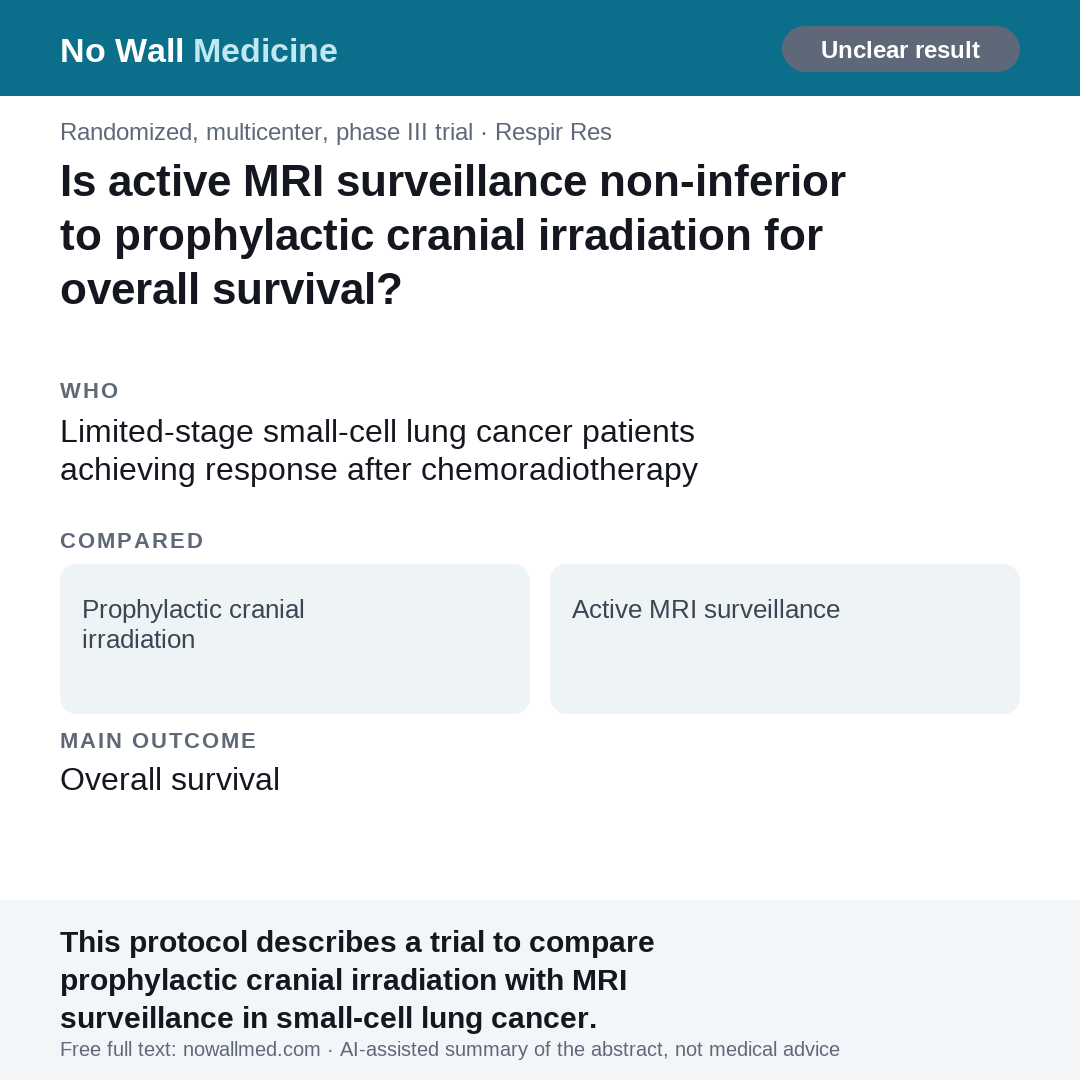
Clinical question: Is active MRI surveillance non-inferior to prophylactic cranial irradiation for overall survival?
Why it matters: The evidence for using preventive brain radiation is based on older technology, and its survival benefit remains unclear given potential neurocognitive toxicity in the modern MRI era.
Key points
- Researchers are starting a phase III trial to compare prophylactic cranial irradiation, which is preventive brain radiation, against active magnetic resonance imaging (MRI) surveillance.
- The study will enroll patients with limited-stage small-cell lung cancer who show a complete or partial response after receiving platinum-based chemoradiotherapy.
- The primary goal is to determine if MRI surveillance is non-inferior to brain radiation regarding overall survival.
Headline and key points written with AI from the paper’s abstract, with every number checked against it. Read the paper before relying on them.
Topics
Spotted a mistake? Suggest a correction