Prophylactic tranexamic acid in patients with hematologic malignancy: a placebo-controlled, randomized clinical trial
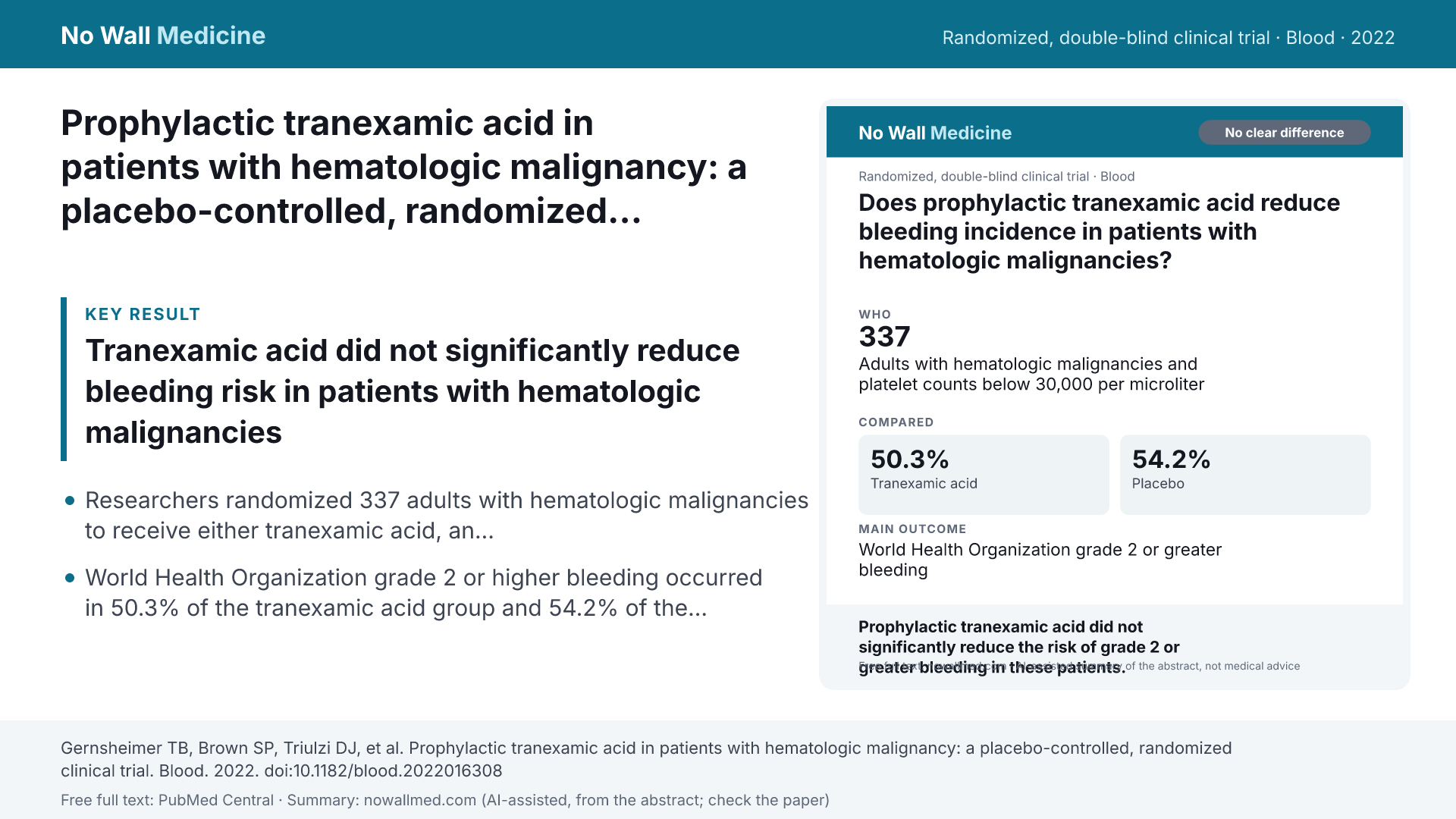
Key result: Tranexamic acid did not significantly reduce bleeding risk in patients with hematologic malignancies
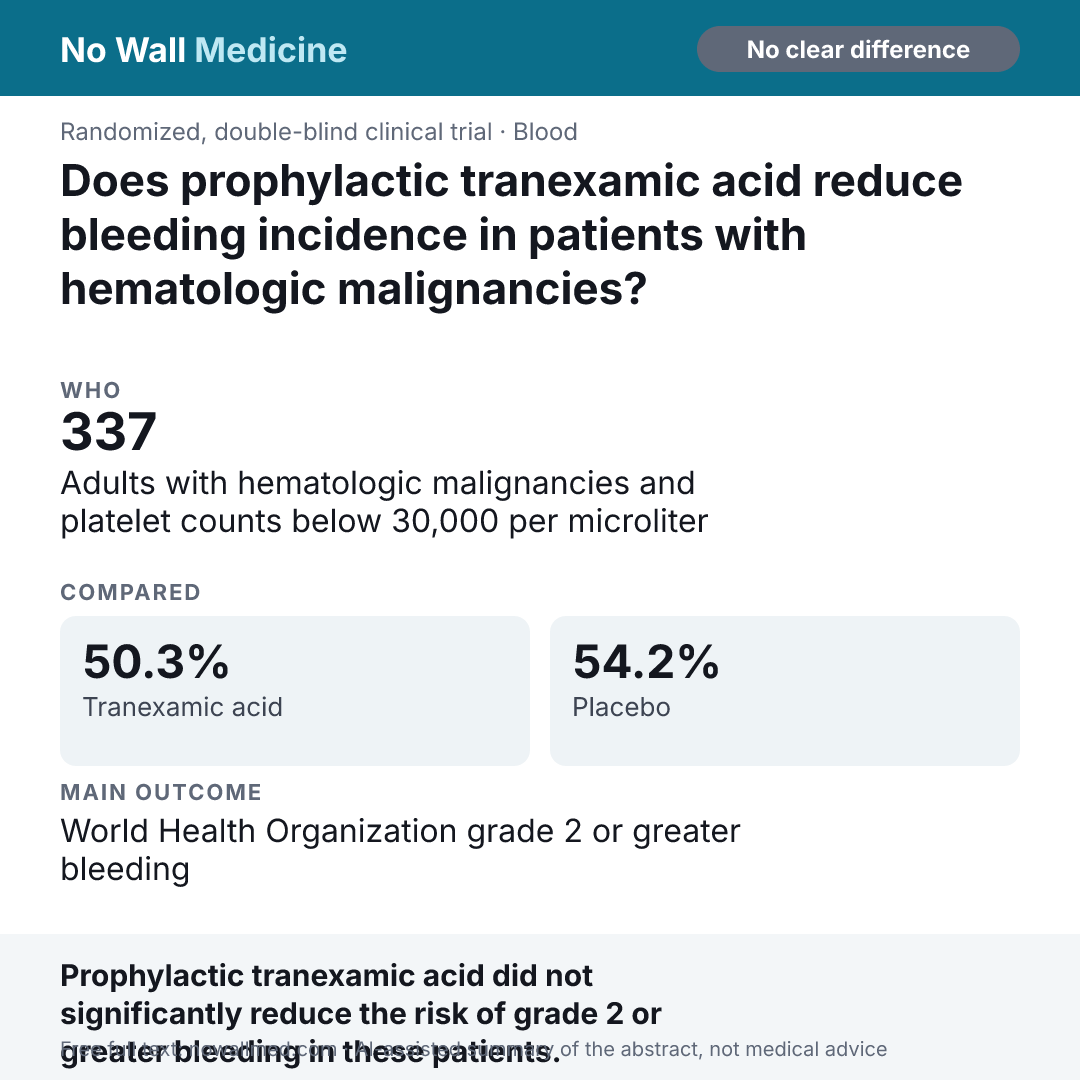
Randomized, double-blind clinical trialNo clear difference
Does prophylactic tranexamic acid reduce bleeding incidence in patients with hematologic malignancies?
Who
337
Adults with hematologic malignancies and platelet counts below 30,000 per microliter
Compared
50.3%Tranexamic acid (73/145)
54.2%Placebo (78/144)
Main outcome
World Health Organization grade 2 or greater bleeding
Result: adjusted odds ratio 0.83 (95% CI 0.50-1.34)
Bottom line: Prophylactic tranexamic acid did not significantly reduce the risk of grade 2 or greater bleeding in these patients.
Blood · 2022-06-07 · Save PNG
Key points
- Researchers randomized 337 adults with hematologic malignancies to receive either tranexamic acid, an antifibrinolytic medication, or a placebo when platelet counts fell below 30,000 per microliter.
- World Health Organization grade 2 or higher bleeding occurred in 50.3% of the tranexamic acid group and 54.2% of the placebo group, showing no statistically significant difference.
- There were no statistically significant differences in the mean number of platelet transfusions, days alive without significant bleeding, thrombotic events, or deaths due to serious bleeding.
Discussion prompts
- Would these patients look like yours? Who was left out?
- Is the main outcome one that matters to patients?
- Is the difference large enough to change what you do?
Cite: Gernsheimer TB, Brown SP, Triulzi DJ, et al. Prophylactic tranexamic acid in patients with hematologic malignancy: a placebo-controlled, randomized clinical trial. Blood. 2022. doi:10.1182/blood.2022016308
Free full text: PubMed Central · Summary and visual abstract: nowallmed.com/a/prophylactic-tranexamic-acid-in-patients-with-hematologic-malignancy-1qsjhf3/ (AI-assisted from the abstract; check the paper before relying on it).