Polypropylene sutures showed less inflammation than polyglactin 910 sutures in eyelid skin
Prospective randomised controlled trial to compare tissue reactions and scarring with polypropylene versus polyglactin 910 sutures in periocular skin
Prospective randomised controlled trialMixed results
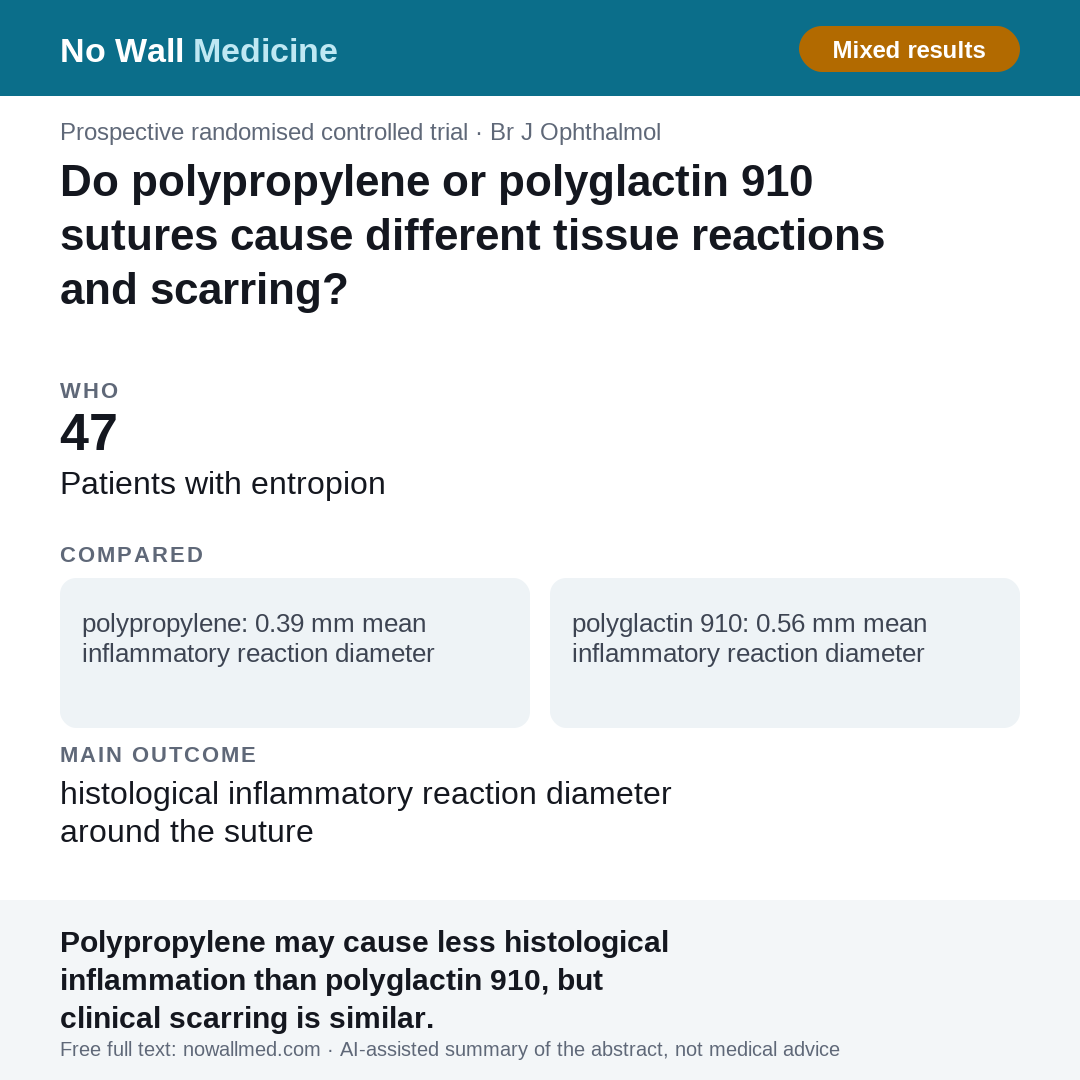
Do polypropylene or polyglactin 910 sutures cause different tissue reactions and scarring?
Who
47
Patients with entropion
Compared
polypropylene: 0.39 mm mean inflammatory reaction diameter
polyglactin 910: 0.56 mm mean inflammatory reaction diameter
Main outcome
histological inflammatory reaction diameter around the suture
Bottom line: Polypropylene may cause less histological inflammation than polyglactin 910, but clinical scarring is similar.
Limitation: The lack of significance for other results may be due to the small sample size.
Br J Ophthalmol · 2026-06-22Download image
Clinical question: Do polypropylene or polyglactin 910 sutures cause different tissue reactions and scarring?
Why it matters: Doctors needed to compare how different types of stitches affect tissue reactions and scarring in the delicate skin around the eyes.
Key points
- Researchers studied 47 patients with entropion, an inward turning of the eyelid, comparing polypropylene and polyglactin 910 sutures.
- Polypropylene had a mean inflammatory reaction diameter of 0.39 mm compared to 0.56 mm for polyglactin 910, and a median of 1 foreign body giant cells versus 4.
- There was no significant difference in clinical scarring between the two suture types when measured by patient questionnaires or clinical photography.
Limitation the authors note: The authors noted that the lack of statistical significance for some results may be due to the small sample size.
Headline and key points written with AI from the paper’s abstract, with every number checked against it. Read the paper before relying on them.
Abstract
Background/aims
The aim of this study was to compare tissue reactions and scarring produced by polypropylene (Prolene) versus polyglactin 910 (Vicryl) sutures in eyelid skin. Methods
47 patients with entropion were randomised to 6-0 Prolene or 6-0 Vicryl. Patients underwent everting sutures 1 month prior to definitive surgery involving wedge excision and retractor plication. Only the randomised suture type was used in both procedures. The study suture within the wedge was analysed histologically. Patients were assessed clinically 2 weeks and 6 months following definitive surgery.The primary outcome was histological inflammatory reaction diameter around the suture assessed by a masked histopathologist. Secondary outcomes were clinical scarring assessed using a validated scar grading questionnaire completed by patients and masked assessors and clinical photographs assessed by two masked oculoplastic surgeons. Results
Mean inflammatory reaction diameter was 0.39 mm for Prolene and 0.56 mm for Vicryl. Median histological grade sum was 32 (IQR 22-37) for Prolene and 40 (IQR 27-46) for Vicryl. The median number of foreign body giant cells around the suture was 1 (IQR 0-3) for Prolene and 4 (IQR 3-8) for Vicryl. Only this last result was statistically significant; the lack of significance for other results may be due to the small sample size. One patient developed a clinical granuloma following surgery with Vicryl. There was no significant difference between suture scarring assessed by questionnaire responses or clinical photography. Conclusion
Prolene may cause less histological inflammation than Vicryl in eyelid skin but clinical scarring is similar. Trial registration number
NCT04724512.
Abstract reproduced under the article’s CC BY NC licence.
Topics
Spotted a mistake? Suggest a correction