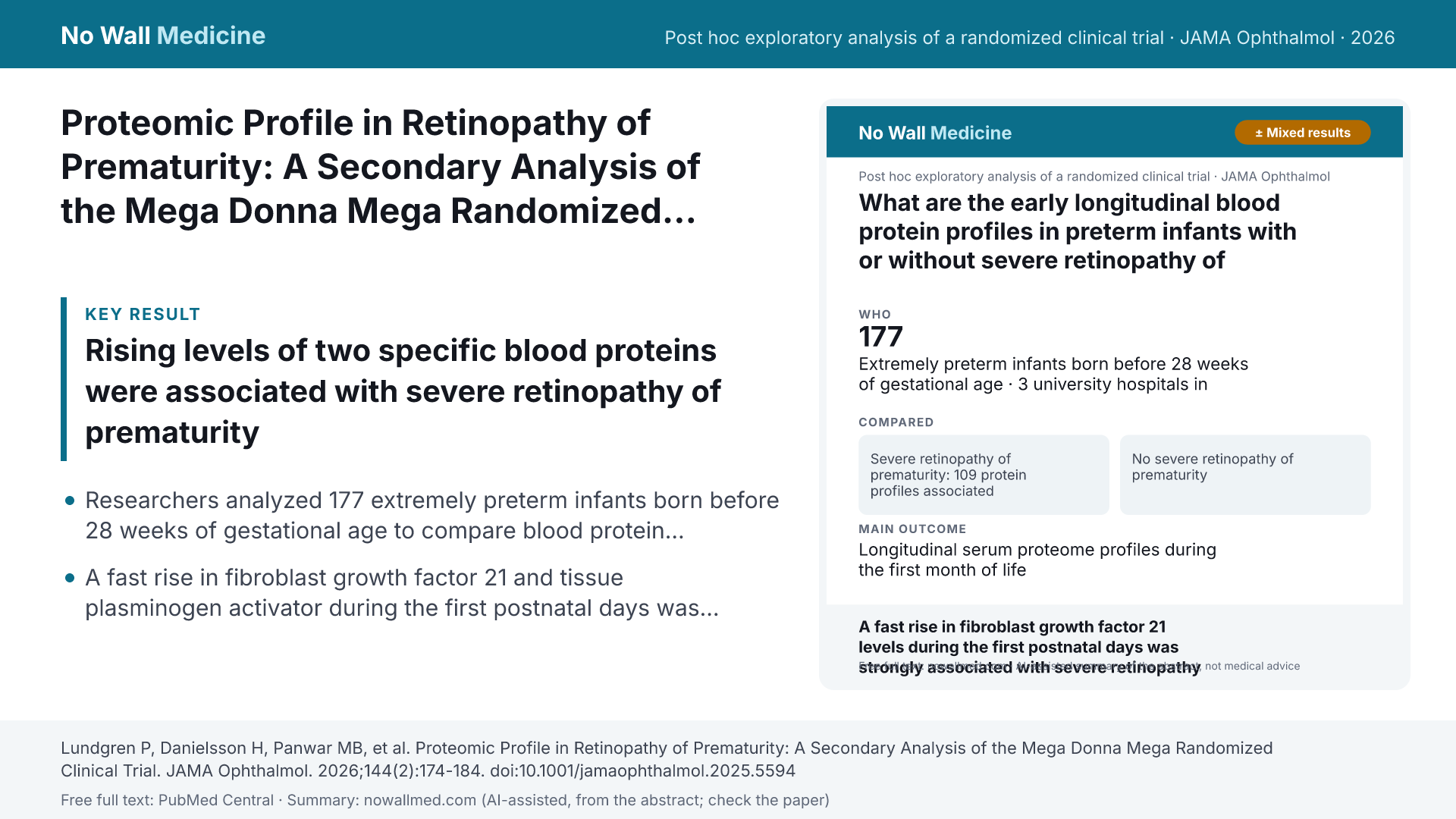
Rising levels of two specific blood proteins were associated with severe retinopathy of prematurity
Proteomic Profile in Retinopathy of Prematurity: A Secondary Analysis of the Mega Donna Mega Randomized Clinical Trial
Post hoc exploratory analysis of a randomized clinical trialMixed results
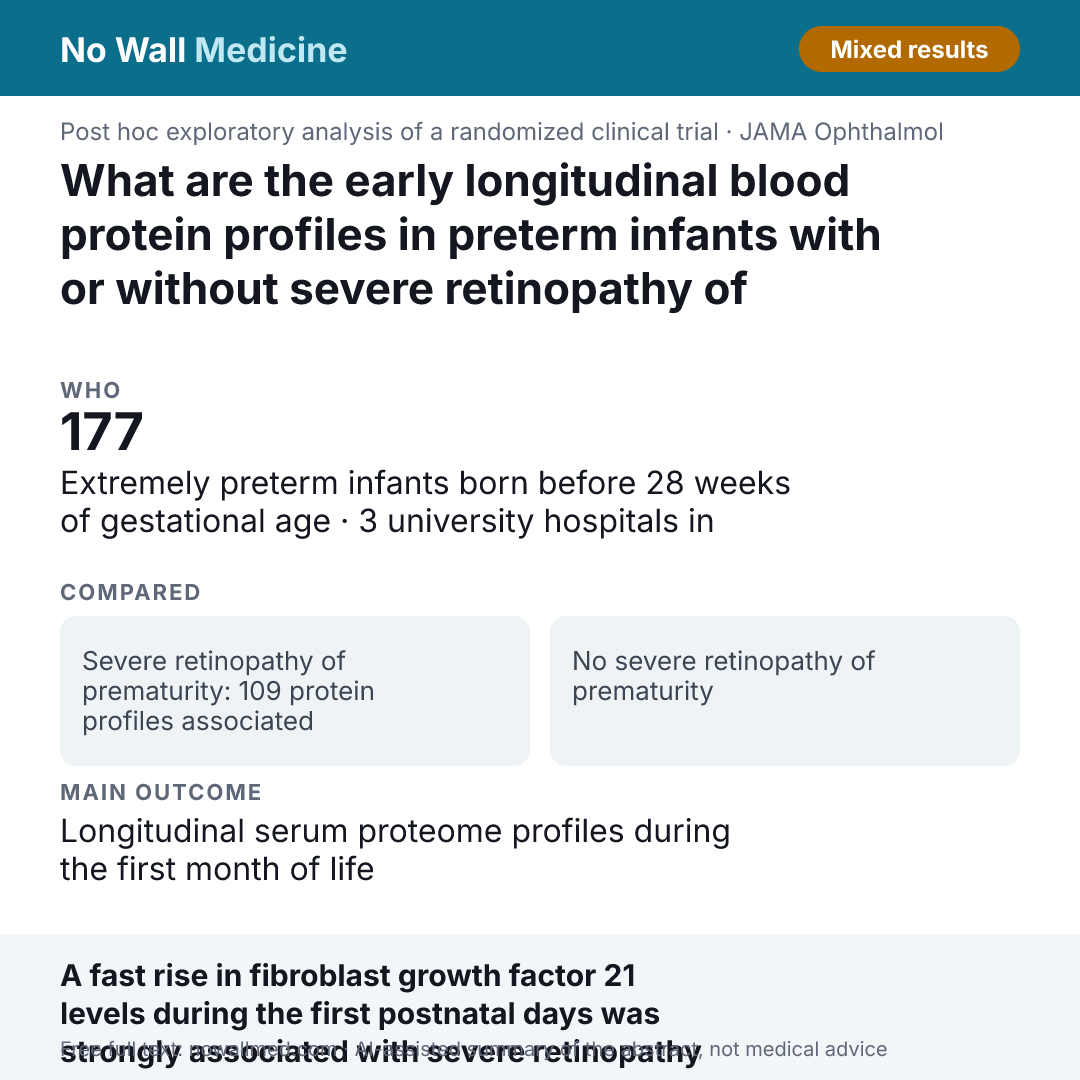
What are the early longitudinal blood protein profiles in preterm infants with or without severe retinopathy of prematurity?
Who
177
Extremely preterm infants born before 28 weeks of gestational age · 3 university hospitals in Sweden
Compared
Severe retinopathy of prematurity: 109 protein profiles associated
No severe retinopathy of prematurity
Main outcome
Longitudinal serum proteome profiles during the first month of life
Result: fibroblast growth factor 21 β = 0.68 (95% CI, 0.39-0.97)
Bottom line: A fast rise in fibroblast growth factor 21 levels during the first postnatal days was strongly associated with severe retinopathy of prematurity.
JAMA Ophthalmol · 2026-01-08 · Save PNG
Same trial (NCT03201588)
Papers we list that report this registered trial, oldest first. Read a secondary analysis alongside the main results.
- Main results Benefit found
Fatty acid supplementation reduced severe retinopathy of prematurity in extremely preterm infants JAMA Pediatr 2021-02 - Secondary analysis Mixed results
Enteral supplements increase target fatty acids while intravenous lipids are linked to lower relative levels Clin Nutr 2023-04 - Secondary analysis Benefit found
Docosahexaenoic acid and arachidonic acid levels were associated with inflammation proteins in preterm infants Clin Nutr 2024-04 - Secondary analysis Mixed results
This paper JAMA Ophthalmol 2026-01 - Related report
Early-life serum protein profiles associated with bronchopulmonary dysplasia in extremely preterm infants Respir Res 2026-09 - Secondary analysis Benefit found
Supplemented fatty acids entered infants' circulation within two weeks of birth Am J Clin Nutr 2026-11
Clinical question: What are the early longitudinal blood protein profiles in preterm infants with or without severe retinopathy of prematurity?
Why it matters: Identifying early blood protein profiles may reveal targets for preventive interventions to reduce retinal vessel loss and the risk of severe retinopathy of prematurity.
Key points
- Researchers analyzed 177 extremely preterm infants born before 28 weeks of gestational age to compare blood protein profiles in those with or without severe retinopathy of prematurity.
- A fast rise in fibroblast growth factor 21 and tissue plasminogen activator during the first postnatal days was most strongly associated with severe retinopathy of prematurity.
- No association was observed between the supplementation of arachidonic acid and docosahexaenoic acid and the protein profiles.
Headline and key points written with AI from the paper’s abstract, with every number checked against it. Read the paper before relying on them.
Was this summary helpful?
Subject terms
Headline, design, result, key points, caveat and citation as plain text.
Cite this article
Lundgren P, Danielsson H, Panwar MB, et al. Proteomic Profile in Retinopathy of Prematurity: A Secondary Analysis of the Mega Donna Mega Randomized Clinical Trial. JAMA Ophthalmol. 2026;144(2):174-184. doi:10.1001/jamaophthalmol.2025.5594
Spotted a mistake? Suggest a correction