PulsePoint mobile application trial aims to increase bystander chest compressions and defibrillator use
Protocol for a parallel-group, superiority randomized controlled trial of the PulsePoint mobile application to increase bystander resuscitation in out-of-hospital cardiac arrest
Multi-centre pragmatic randomized controlled trialUnclear result
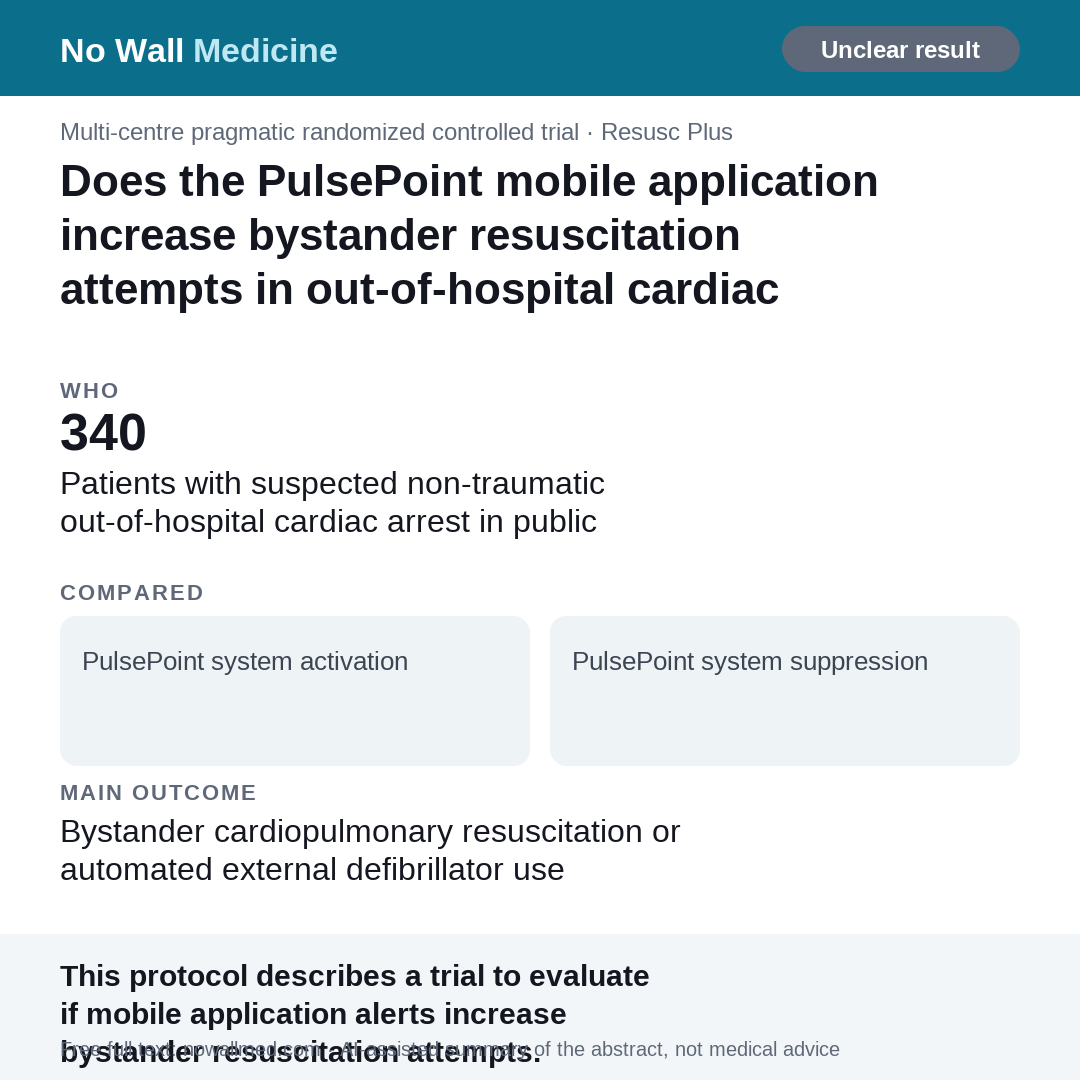
Does the PulsePoint mobile application increase bystander resuscitation attempts in out-of-hospital cardiac arrest?
Who
340
Patients with suspected non-traumatic out-of-hospital cardiac arrest in public locations · Canada and the United States
Compared
PulsePoint system activation
PulsePoint system suppression
Main outcome
Bystander cardiopulmonary resuscitation or automated external defibrillator use
Bottom line: This protocol describes a trial to evaluate if mobile application alerts increase bystander resuscitation attempts.
Resusc Plus · 2025-07-24Download image
Clinical question: Does the PulsePoint mobile application increase bystander resuscitation attempts in out-of-hospital cardiac arrest?
Why it matters: Bystander intervention during out-of-hospital cardiac arrest occurs inconsistently despite public awareness campaigns and the availability of public access defibrillators.
Key points
- Researchers are conducting a multi-centre randomized controlled trial to see if the PulsePoint Respond mobile application increases bystander resuscitation attempts during out-of-hospital cardiac arrest.
- The study aims to recruit 340 patients and is powered at 80% to detect a 15% absolute increase in bystander cardiopulmonary resuscitation or automated external defibrillator use.
Headline and key points written with AI from the paper’s abstract, with every number checked against it. Read the paper before relying on them.
Cite this article
Brooks SC, Tallon JM, Jenneson S, Panchal AR, Grierson R, Morrison LJ. Protocol for a parallel-group, superiority randomized controlled trial of the PulsePoint mobile application to increase bystander resuscitation in out-of-hospital cardiac arrest. Resusc Plus. 2025. doi:10.1016/j.resplu.2025.101036
Spotted a mistake? Suggest a correction
Top studies every Monday
The week’s key trials and guidelines in your specialties, by email. Free.
Get the weekly digest