Trial protocol describes testing cannabidiol to help people with clozapine-resistant schizophrenia
Protocol for Cancloz: multicentre randomised, placebo-controlled, double-blind, parallel-group adaptive trial of cannabidiol for clozapine-resistant schizophrenia
Randomised, placebo-controlled, double-blind, parallel-group trialUnclear result
Does cannabidiol augmentation improve clinical efficacy in clozapine-resistant schizophrenia?
Who
88
Individuals with clozapine-resistant schizophrenia aged 18 to 64 years
Compared
1000 mg daily cannabidiol
placebo
Main outcome
difference in Positive and Negative Syndrome Scale positive scores
Bottom line: This protocol describes a trial to examine cannabidiol efficacy for clozapine-resistant schizophrenia.
BJPsych Open · 2024-10-03Download image
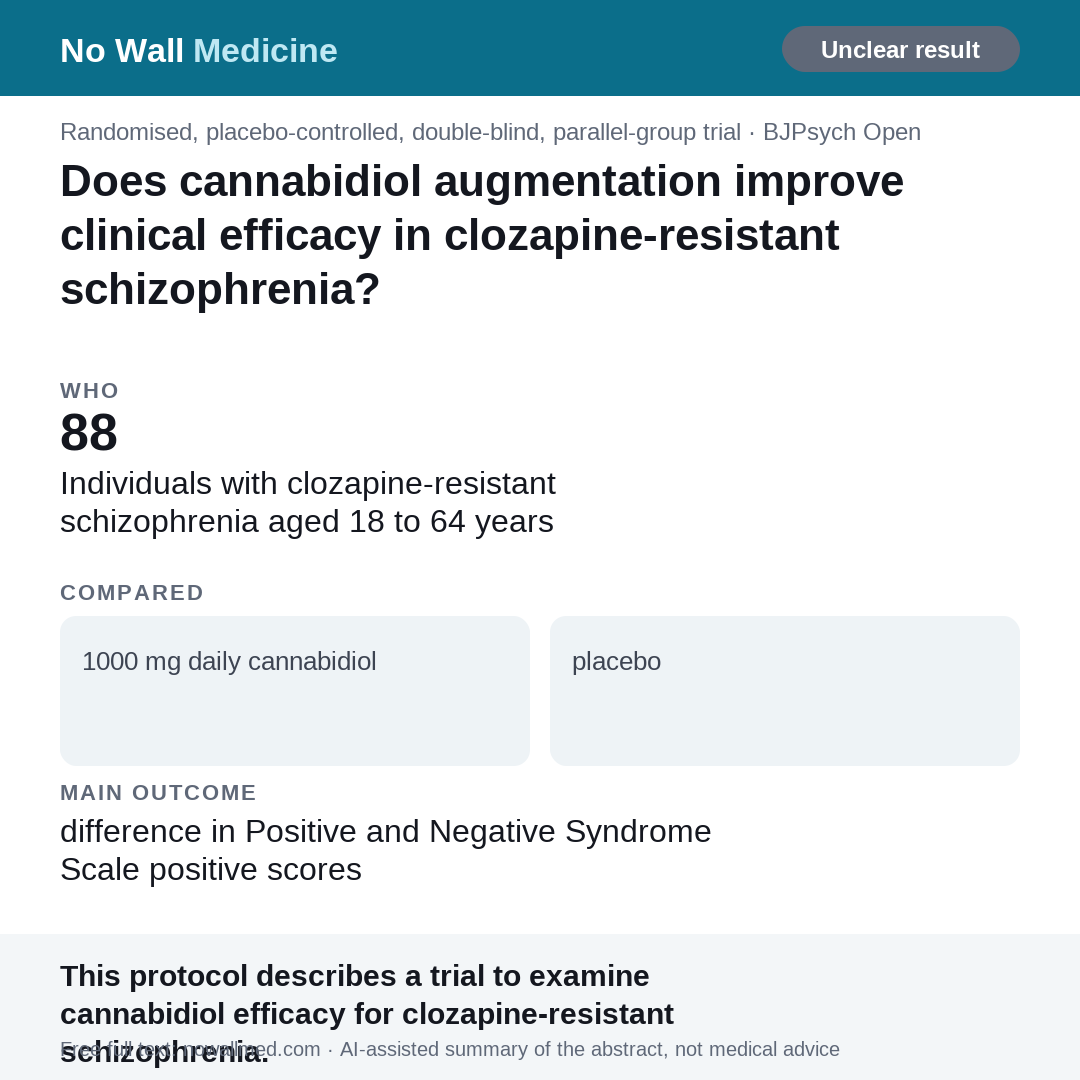
Clinical question: Does cannabidiol augmentation improve clinical efficacy in clozapine-resistant schizophrenia?
Why it matters: Only 40% of people with treatment-resistant schizophrenia respond to clozapine, and there is limited evidence for adding other medications to improve outcomes.
Key points
- The study will recruit 88 individuals with clozapine-resistant schizophrenia to receive either 1000 mg daily of cannabidiol or a placebo for 12 weeks.
- Researchers will measure the difference in Positive and Negative Syndrome Scale positive scores, which assess psychotic symptoms, at the end of the 12-week period.
- Secondary measures include depression, anxiety, sleep, quality of life, alcohol consumption, weight changes, metabolic syndrome components, and neurocognitive measures.
Headline and key points written with AI from the paper’s abstract, with every number checked against it. Read the paper before relying on them.
Cite this article
Siskind D, Bull C, Suetani S, Warren N, Suraev A, McGregor I. Protocol for Cancloz: multicentre randomised, placebo-controlled, double-blind, parallel-group adaptive trial of cannabidiol for clozapine-resistant schizophrenia. BJPsych Open. 2024. doi:10.1192/bjo.2024.748
Spotted a mistake? Suggest a correction
Top studies every Monday
The week’s key trials and guidelines in your specialties, plus any topics you follow. By email, free.
Get the weekly digest