Psychiatric and behavioural sequelae following encephalitis: a systematic review and meta-analysis
NeurologyAdult and pediatric
Systematic review and meta-analysisMixed results
What is the prevalence of psychiatric and behavioural symptoms following encephalitis?
Who
4703
Survivors of encephalitis with outcomes at least 3 months post-encephalitis
Compared
Infectious encephalitis: 75.2% mood symptoms
Autoimmune encephalitis: 30.9% mood symptoms
Main outcome
Prevalence of psychiatric and behavioural symptoms
Bottom line: Psychiatric sequelae occur frequently, with depression, anxiety, disinhibition, and emotional instability affecting many encephalitis survivors.
Brain Commun · 2026-06-18Download image
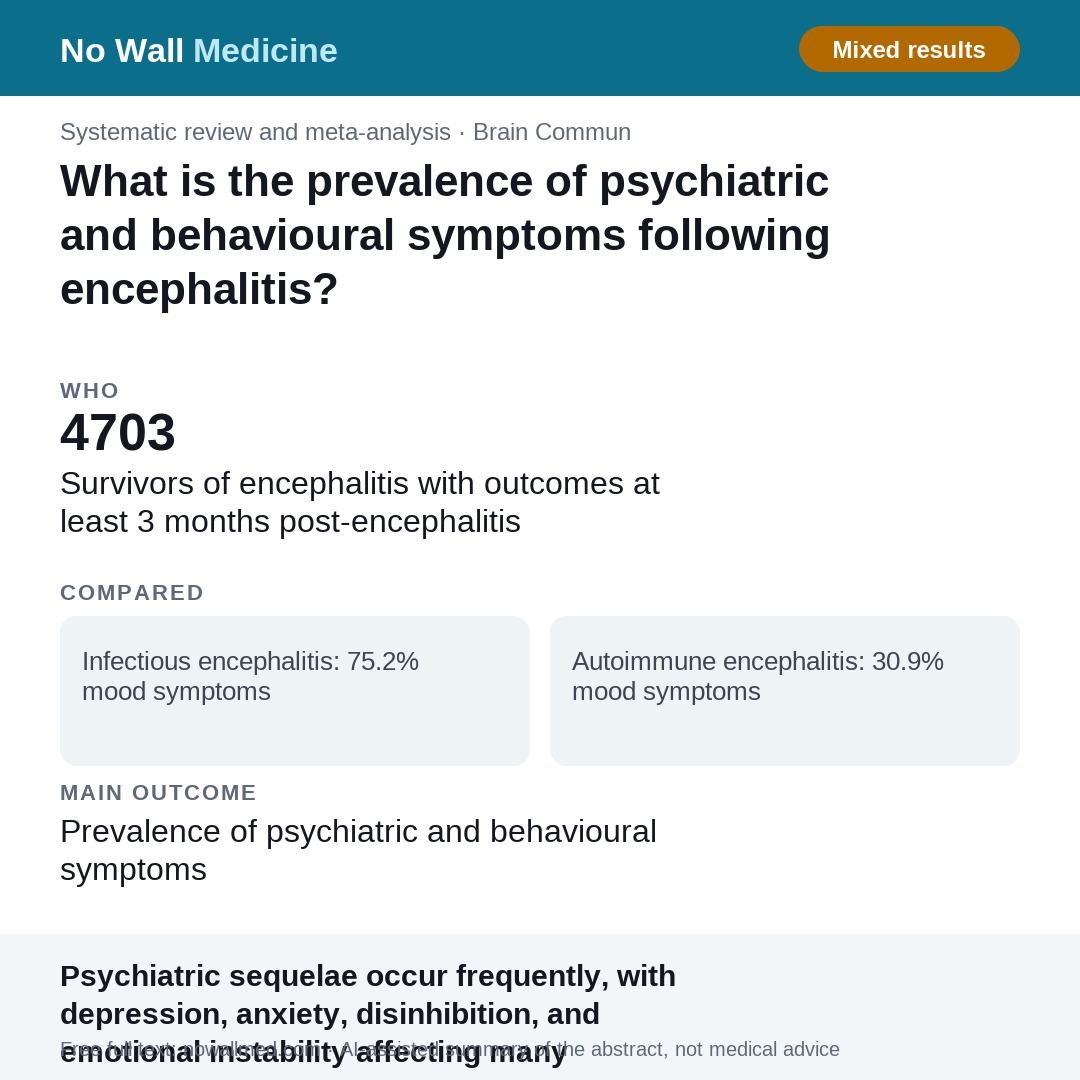
Clinical question: What is the prevalence of psychiatric and behavioural symptoms following encephalitis?
Abstract
Survivors of encephalitis frequently experience chronic neuropsychiatric sequelae, yet the prevalence and patterns of mental health outcomes remain poorly characterized. We conducted a systematic review and meta-analysis to quantify the prevalence of psychiatric and behavioural symptoms following encephalitis. We also aimed to compare infectious with autoimmune encephalitis, explore specific aetiological associations as well as age-related differences. Following PRISMA guidelines, MEDLINE, EMBASE, PsycINFO, CINAHL, and PubMed were searched through 13 December 2024. Observational studies reporting psychiatric outcomes ≥3 months post-encephalitis were included. Two reviewers independently screened titles/abstracts and extracted data on symptom prevalence, study design, aetiology, and demographics. Random-effects meta-analyses estimated pooled prevalence of depression, anxiety, disinhibition, emotional instability, and other neuropsychiatric domains. Subgroup analyses compared infectious versus autoimmune causes and paediatric versus adult cohorts. Meta-regression assessed the influence of follow-up duration, sex percentage and cohort age. One hundred one studies (n = 4703 patients; weighted mean age 36.5 years) met inclusion. Across all aetiologies, pooled prevalence estimates included: depression, 26.9% (95% CI 22.2-32.3%); anxiety, 22.8% (95% CI 14.2-32.0%); disinhibition, 20.5% (95% CI 15.1-27.3%); emotional instability, 22.9% (95% CI 15.6-32.4%). Infectious encephalitis demonstrated higher rates of mood symptoms (75.2% versus 30.9% in autoimmune; P < 0.001). Meta-regression revealed that follow-up duration, mean cohort age, and female proportion influenced the prevalence of several neuropsychiatric symptoms. Heterogeneity was substantial across analyses, reflecting aetiologic, methodological, and demographic diversity in included studies. Psychiatric sequelae following encephalitis occur at rates comparable to neurological complications, with depression, anxiety, disinhibition, and emotional instability each affecting at least one-quarter of survivors. The substantial heterogeneity across studies highlights the need for prospective comparative cohorts, consistent diagnostic criteria, and the development of a standardized mental health outcome set to improve both care and research.
Spotted a mistake? Suggest a correction
More in Neurology
Automated model correctly identified 68 out of 90 seizure events as epileptic or nonepileptic
Video-Based Automated Seizure Classification Using Multimodal Large Language Models
Neuroimmune interactions contribute to migraine headache generation
Cortical and meningeal neuroimmune interactions contribute to the generation of migraine headaches
Pain and depressive symptoms linked to lower cognitive performance in older adults
Joint trajectories of pain and depressive symptoms in relation to repeated cognitive performance: a harmonized longitudinal analysis of four aging cohorts
AD biomarker-positive participants with DLB had faster cognitive decline than biomarker-negative ones
Biomarker-informed differences in treatment-associated cognitive decline in dementia with Lewy bodies