Symptomatic vitreous opacities are linked to higher depression, anxiety, and stress in patients
Psychological Burden and Interventional Outcomes in Symptomatic Vitreous Opacities: A Systematic Review
Systematic reviewBenefit found
What is the psychological burden of symptomatic vitreous opacities and interventional outcomes?
Who
635
Patients with symptomatic vitreous opacities · Europe, Asia, and the Americas
Compared
Symptomatic vitreous opacities: significantly higher levels of depression, anxiety, and perceived stress
Healthy controls
Main outcome
Psychological burden and psychological changes following interventions
Bottom line: Symptomatic vitreous opacities cause significant psychological distress, which can improve following laser or surgical interventions.
Am J Ophthalmol · 2026-04-09Download image
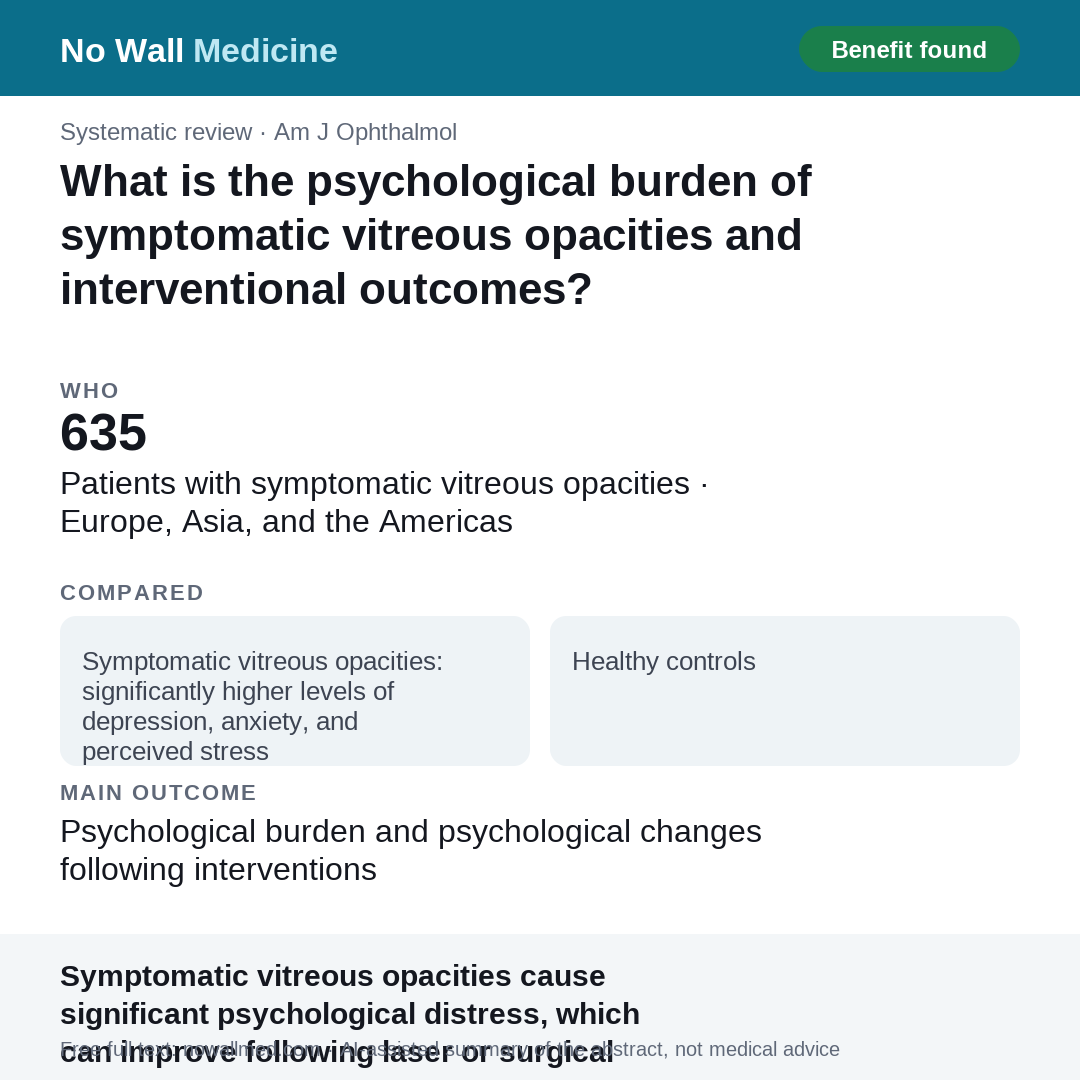
Clinical question: What is the psychological burden of symptomatic vitreous opacities and interventional outcomes?
Why it matters: The psychological implications of symptomatic vitreous opacities remain underexplored despite patients reporting significant distress and impaired well-being.
Key points
- Researchers reviewed thirteen studies involving 635 patients aged 18 to 88 years to assess the psychological impact of vitreous opacities, which are floaters in the eye.
- Patients with symptomatic vitreous opacities reported significantly higher levels of depression, anxiety, and perceived stress compared to healthy controls, even when their vision remained clear.
- Treatments including Nd:YAG laser vitreolysis and pars plana vitrectomy, a surgical procedure to remove the vitreous gel, showed improvements in psychological well-being and vision-related quality of life.
Headline and key points written with AI from the paper’s abstract, with every number checked against it. Read the paper before relying on them.
Topics
Spotted a mistake? Suggest a correction