Transanal and laparoscopic rectal cancer surgeries showed similar long-term cancer outcomes and quality of life
Quality of life, bowel dysfunction, and long-term oncological outcomes after transanal versus laparoscopic total mesorectal excision for mid- and low- rectal cancer (Ta-LaTME study): multicentre randomized open-label trial
Multicentre randomized open-label trialNo clear difference
Does transanal versus laparoscopic total mesorectal excision affect quality of life and oncological outcomes?
Who
116
Patients with resectable mid-low rectal adenocarcinoma · Multicentre
Compared
Laparoscopic total mesorectal excision: median LARS score 24
Transanal total mesorectal excision: median LARS score 27
Main outcome
Quality of life, bowel function, and long-term oncological outcomes
Bottom line: Laparoscopic and transanal total mesorectal excision showed similar long-term oncological outcomes and overall quality of life.
BJS Open · 2026-08-06Download image
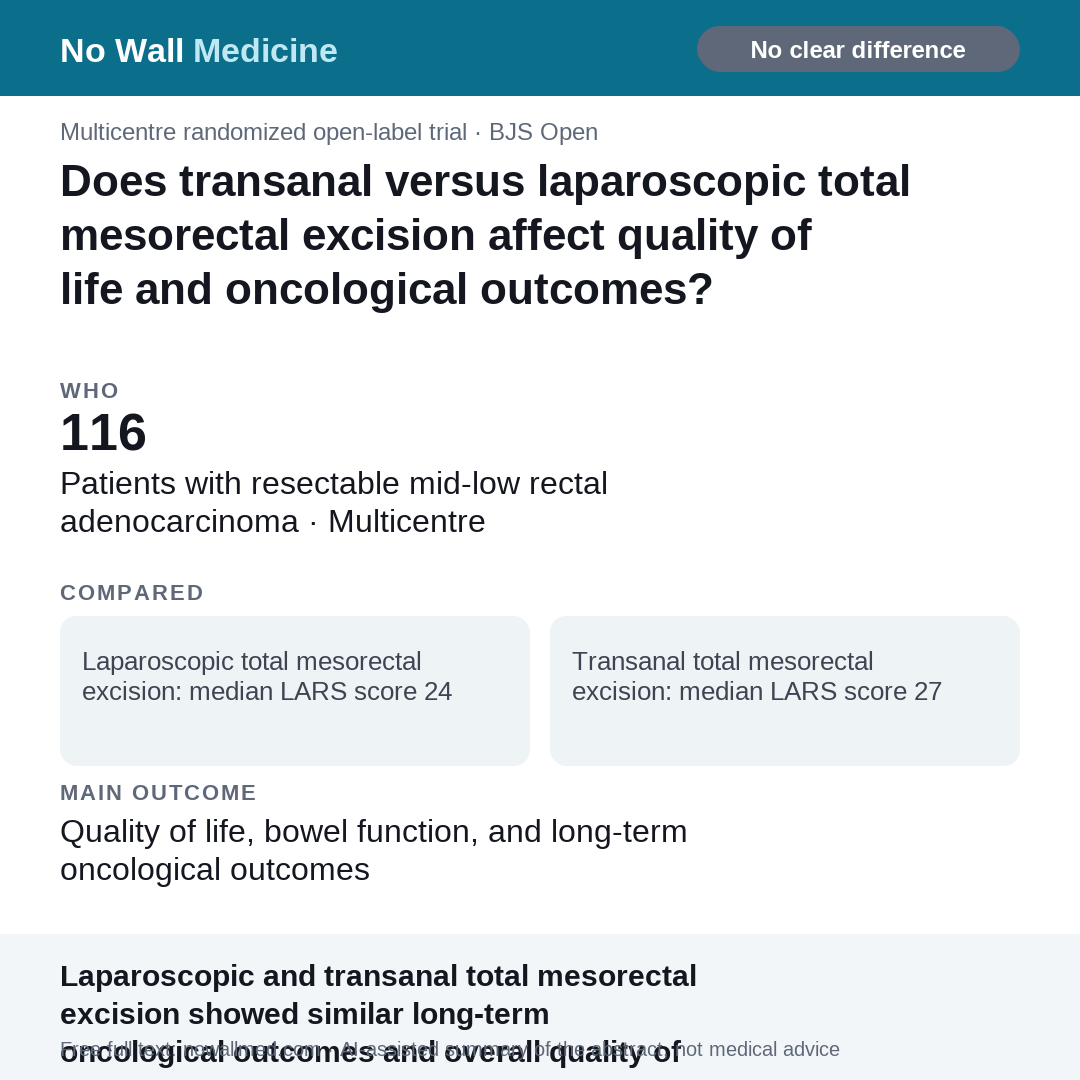
Clinical question: Does transanal versus laparoscopic total mesorectal excision affect quality of life and oncological outcomes?
Why it matters: The comparative impact of transanal versus laparoscopic total mesorectal excision on patient-reported outcomes and long-term cancer results remains unclear.
Key points
- Researchers studied 116 patients with mid-low rectal cancer to compare transanal total mesorectal excision (TaTME) against laparoscopic total mesorectal excision (LaTME).
- There were no significant differences in local recurrence (6.4% versus 3.7%), distant recurrence (14.9% versus 18.5%), disease-free survival, or overall survival.
- Transanal surgery was associated with higher postoperative stool frequency, flatulence, and faecal incontinence compared to the laparoscopic approach.
Headline and key points written with AI from the paper’s abstract, with every number checked against it. Read the paper before relying on them.
Topics
Spotted a mistake? Suggest a correction