Radiation-emitting metallic stents improved survival compared to standard metallic stents for certain bile duct cancers
Radiation-emitting metallic stent for unresectable Bismuth type III or IV perihilar cholangiocarcinoma: a multicenter randomized trial
Multicenter randomized controlled trialBenefit found
Does radiation-emitting metallic stent plus chemotherapy improve outcomes in unresectable perihilar cholangiocarcinoma?
Who
126
Patients with unresectable Bismuth type III or IV perihilar cholangiocarcinoma
Compared
10.2 monthsRadiation-emitting metallic stent plus hepatic arterial infusion chemotherapy
6.7 monthsSelf-expandable metallic stent plus hepatic arterial infusion chemotherapy
Main outcome
overall survival
Bottom line: Radiation-emitting metallic stent plus hepatic arterial infusion chemotherapy improved overall survival and stent patency compared to self-expandable metallic stents.
Int J Surg · 2025-01-01Download image
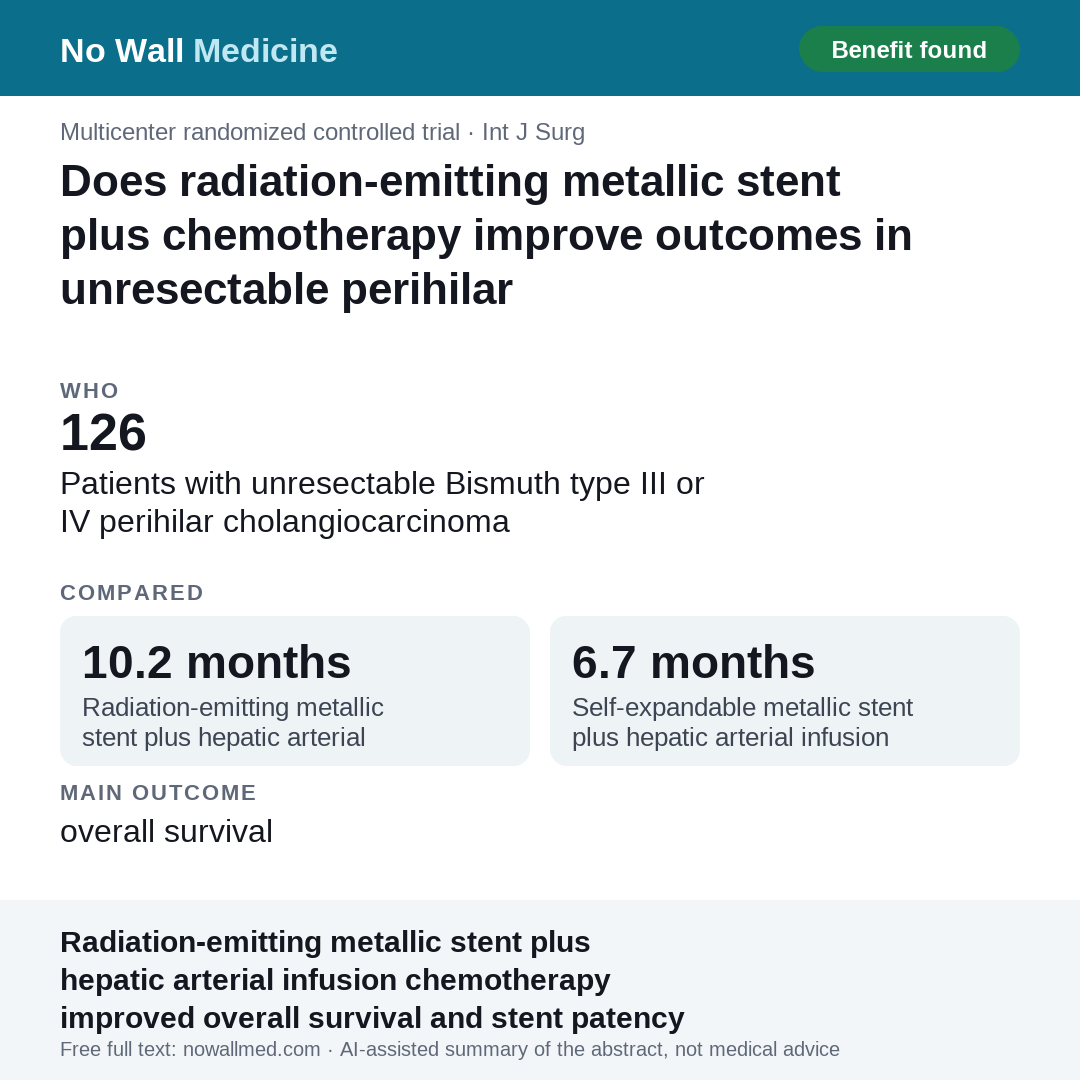
Clinical question: Does radiation-emitting metallic stent plus chemotherapy improve outcomes in unresectable perihilar cholangiocarcinoma?
Why it matters: It was unknown if adding radiation-emitting metallic stents to hepatic arterial infusion chemotherapy improved survival for patients with unresectable Bismuth type III or IV perihilar cholangiocarcinoma.
Key points
- Researchers studied 126 patients with unresectable Bismuth type III or IV perihilar cholangiocarcinoma, a type of bile duct cancer, comparing radiation-emitting metallic stents plus chemotherapy to standard metallic stents plus chemotherapy.
- The radiation-emitting stent group had a median overall survival of 10.2 months compared to 6.7 months in the standard stent group.
- The radiation-emitting stent group also showed longer median time to symptomatic progression, longer median stent patency, and better physical functioning and fatigue symptoms.
Headline and key points written with AI from the paper’s abstract, with every number checked against it. Read the paper before relying on them.
Was this summary helpful?
Subject terms
Cite this article
Chen Q, Ge NJ, Li YL, Huang M, Li WH, Lu D. Radiation-emitting metallic stent for unresectable Bismuth type III or IV perihilar cholangiocarcinoma: a multicenter randomized trial. Int J Surg. 2025. doi:10.1097/JS9.0000000000002089
Spotted a mistake? Suggest a correction
Top studies every Monday
The week’s key trials and guidelines in your specialties, plus any topics you follow. By email, free.
Get the weekly digest