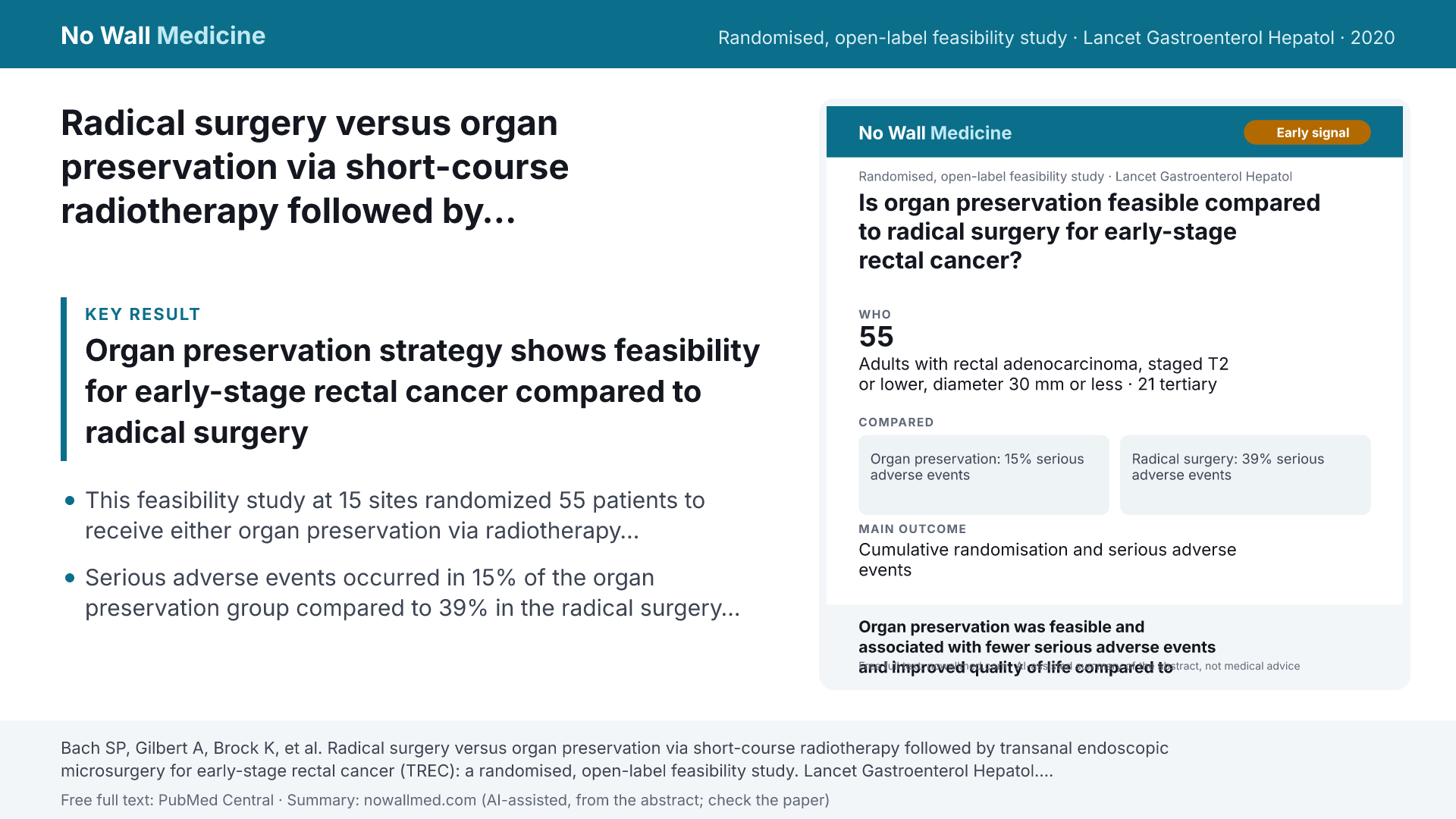
Radical surgery versus organ preservation via short-course radiotherapy followed by transanal endoscopic microsurgery for early-stage rectal cancer (TREC): a randomised, open-label feasibility study
Key result: Organ preservation strategy shows feasibility for early-stage rectal cancer compared to radical surgery
Randomised, open-label feasibility studyEarly signal
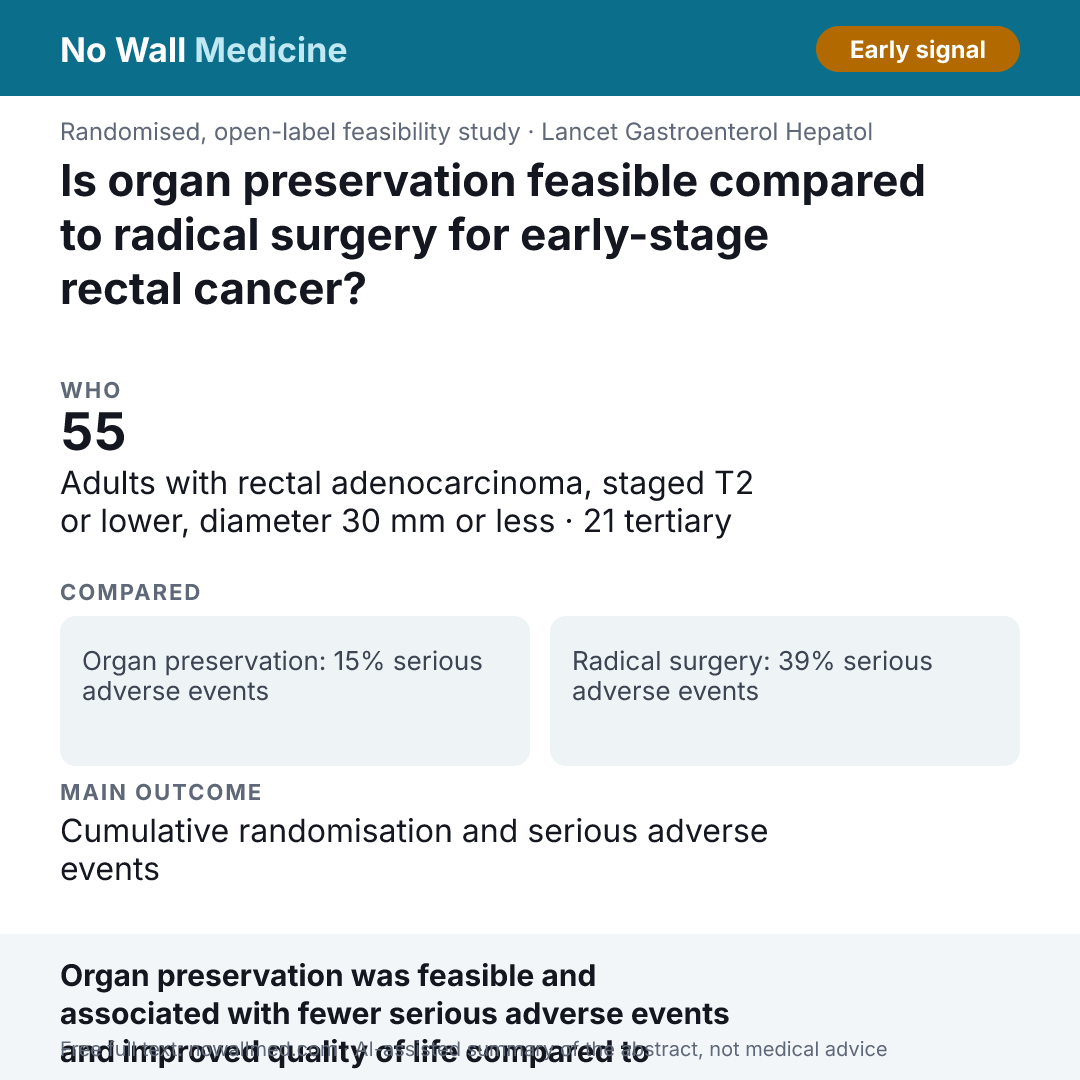
Is organ preservation feasible compared to radical surgery for early-stage rectal cancer?
Who
55
Adults with rectal adenocarcinoma, staged T2 or lower, diameter 30 mm or less · 21 tertiary referral centres in the United Kingdom
Compared
Organ preservation: 15% serious adverse events
Radical surgery: 39% serious adverse events
Main outcome
Cumulative randomisation and serious adverse events
Result: p=0·04
Bottom line: Organ preservation was feasible and associated with fewer serious adverse events and improved quality of life compared to radical surgery.
Lancet Gastroenterol Hepatol · 2020-12-11 · Save PNG
Key points
- This feasibility study at 15 sites randomized 55 patients to receive either organ preservation via radiotherapy and microsurgery or radical surgery through total mesorectal excision.
- Serious adverse events occurred in 15% of the organ preservation group compared to 39% in the radical surgery group (p=0.04).
- Patients receiving organ preservation reported improvements in bowel toxicities and quality of life scores compared to those receiving radical surgery over 36 months.
Discussion prompts
- Would these patients look like yours? Who was left out?
- Is the main outcome one that matters to patients?
- Is the difference large enough to change what you do?
Cite: Bach SP, Gilbert A, Brock K, et al. Radical surgery versus organ preservation via short-course radiotherapy followed by transanal endoscopic microsurgery for early-stage rectal cancer (TREC): a randomised, open-label feasibility study. Lancet Gastroenterol Hepatol. 2021;6(2):92-105. doi:10.1016/S2468-1253(20)30333-2
Free full text: PubMed Central · Summary and visual abstract: nowallmed.com/a/radical-surgery-versus-organ-preservation-via-short-course-1oin9no/ (AI-assisted from the abstract; check the paper before relying on it).