Radiotherapy in younger patients with advanced aggressive B-cell lymphoma-long-term results from the phase 3 R-MegaCHOEP trial
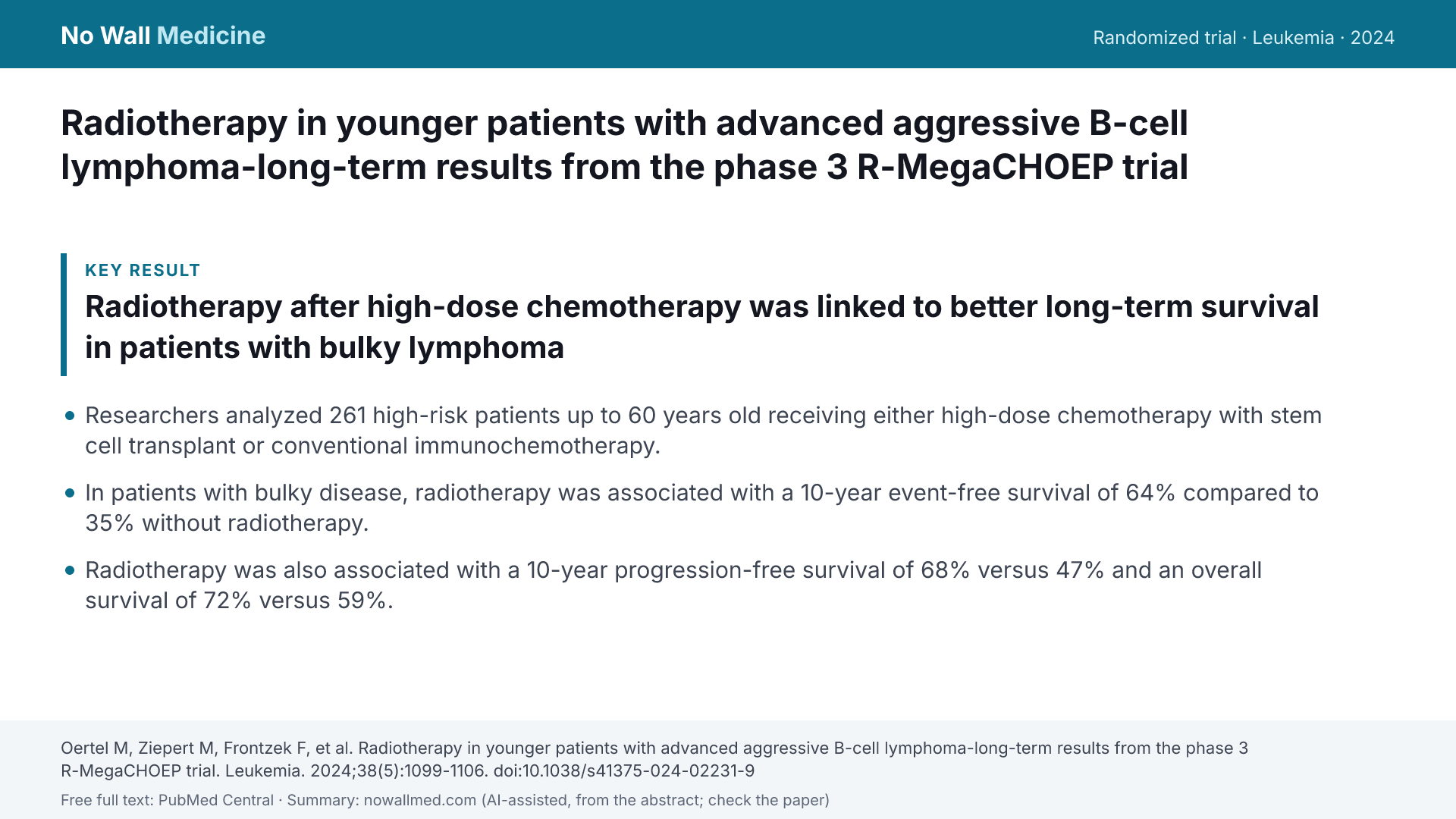
Key result: Radiotherapy after high-dose chemotherapy was linked to better long-term survival in patients with bulky lymphoma
Key points
- Researchers analyzed 261 high-risk patients up to 60 years old receiving either high-dose chemotherapy with stem cell transplant or conventional immunochemotherapy.
- In patients with bulky disease, radiotherapy was associated with a 10-year event-free survival of 64% compared to 35% without radiotherapy.
- Radiotherapy was also associated with a 10-year progression-free survival of 68% versus 47% and an overall survival of 72% versus 59%.
Why it matters: The role of consolidative radiotherapy, which is radiation therapy used after initial treatment to prevent recurrence, remains unclear for patients with aggressive B-cell lymphoma.
Discussion prompts
- Would these patients look like yours? Who was left out?
- Is the main outcome one that matters to patients?
- Is the difference large enough to change what you do?
Cite: Oertel M, Ziepert M, Frontzek F, et al. Radiotherapy in younger patients with advanced aggressive B-cell lymphoma-long-term results from the phase 3 R-MegaCHOEP trial. Leukemia. 2024;38(5):1099-1106. doi:10.1038/s41375-024-02231-9
Free full text: PubMed Central · Summary and visual abstract: nowallmed.com/a/radiotherapy-in-younger-patients-with-advanced-aggressive-b-cell-1oownlq/ (AI-assisted from the abstract; check the paper before relying on it).