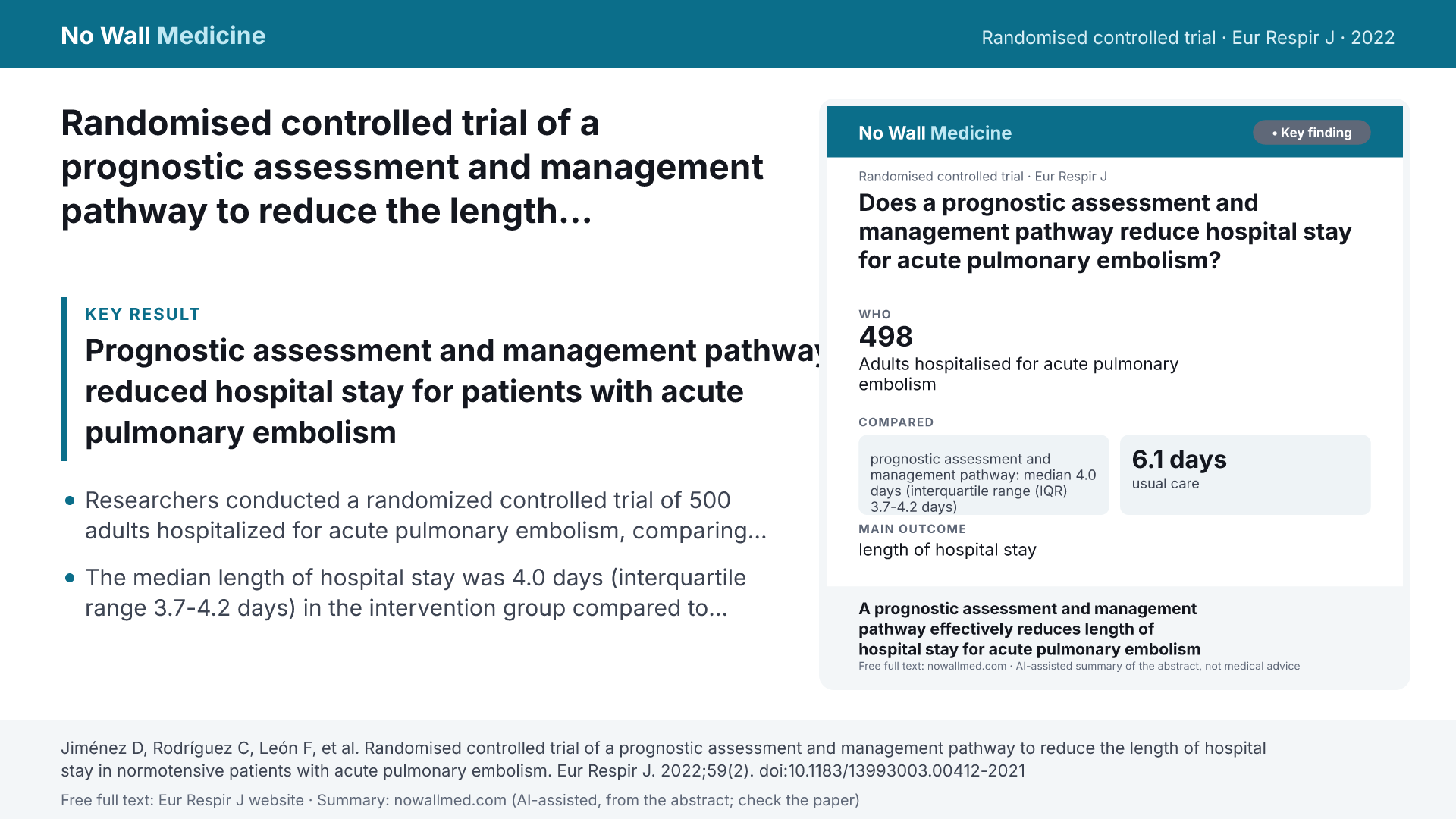
Prognostic assessment and management pathway reduced hospital stay for patients with acute pulmonary embolism
Randomised controlled trial of a prognostic assessment and management pathway to reduce the length of hospital stay in normotensive patients with acute pulmonary embolism
Randomised controlled trialBenefit found
Does a prognostic assessment and management pathway reduce hospital stay for acute pulmonary embolism?
Who
498
Adults hospitalised for acute pulmonary embolism
Compared
prognostic assessment and management pathway: median 4.0 days (interquartile range (IQR) 3.7-4.2 days)
6.1 daysusual care (IQR 5.7-6.5 days)
Main outcome
length of hospital stay
Bottom line: A prognostic assessment and management pathway effectively reduces length of hospital stay for acute pulmonary embolism patients.
Eur Respir J · 2022-02-10Download image
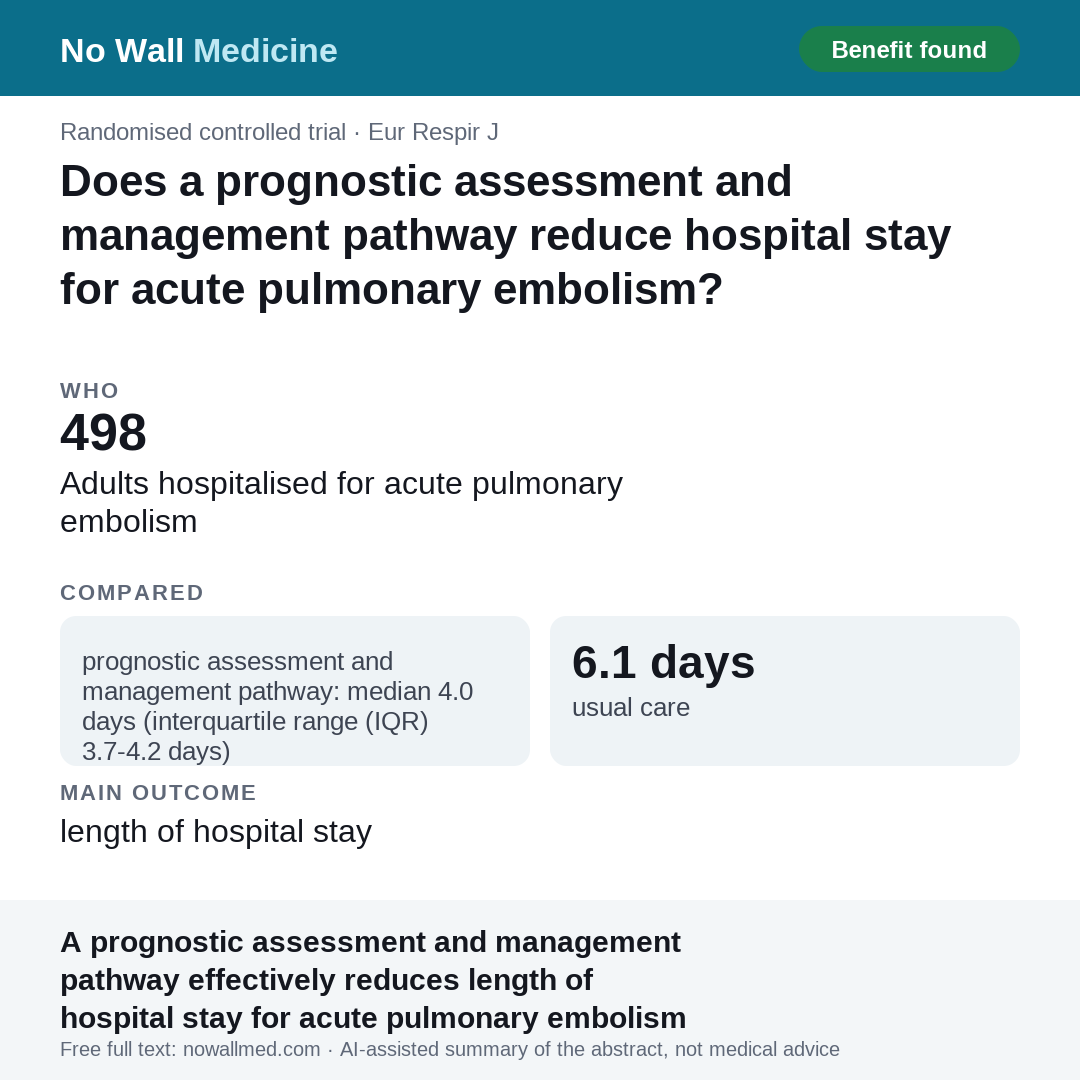
Clinical question: Does a prognostic assessment and management pathway reduce hospital stay for acute pulmonary embolism?
Why it matters: It was unknown whether using an upfront prognostic assessment and management pathway is effective in reducing the length of hospital stay for patients with acute pulmonary embolism.
Key points
- Researchers conducted a randomized controlled trial of 500 adults hospitalized for acute pulmonary embolism, comparing a management pathway to usual care.
- The median length of hospital stay was 4.0 days (interquartile range 3.7-4.2 days) in the intervention group compared to 6.1 days (interquartile range 5.7-6.5 days) in the control group.
- The intervention group had a mean total hospitalization cost of EUR 2085.66 compared to EUR 3232.97 in the control group, while 30-day mortality rates showed no significant differences.
Headline and key points written with AI from the paper’s abstract, with every number checked against it. Read the paper before relying on them.
Was this summary helpful?
Subject terms
Cite this article
Jiménez D, Rodríguez C, León F, et al. Randomised controlled trial of a prognostic assessment and management pathway to reduce the length of hospital stay in normotensive patients with acute pulmonary embolism. Eur Respir J. 2022. doi:10.1183/13993003.00412-2021
Spotted a mistake? Suggest a correction