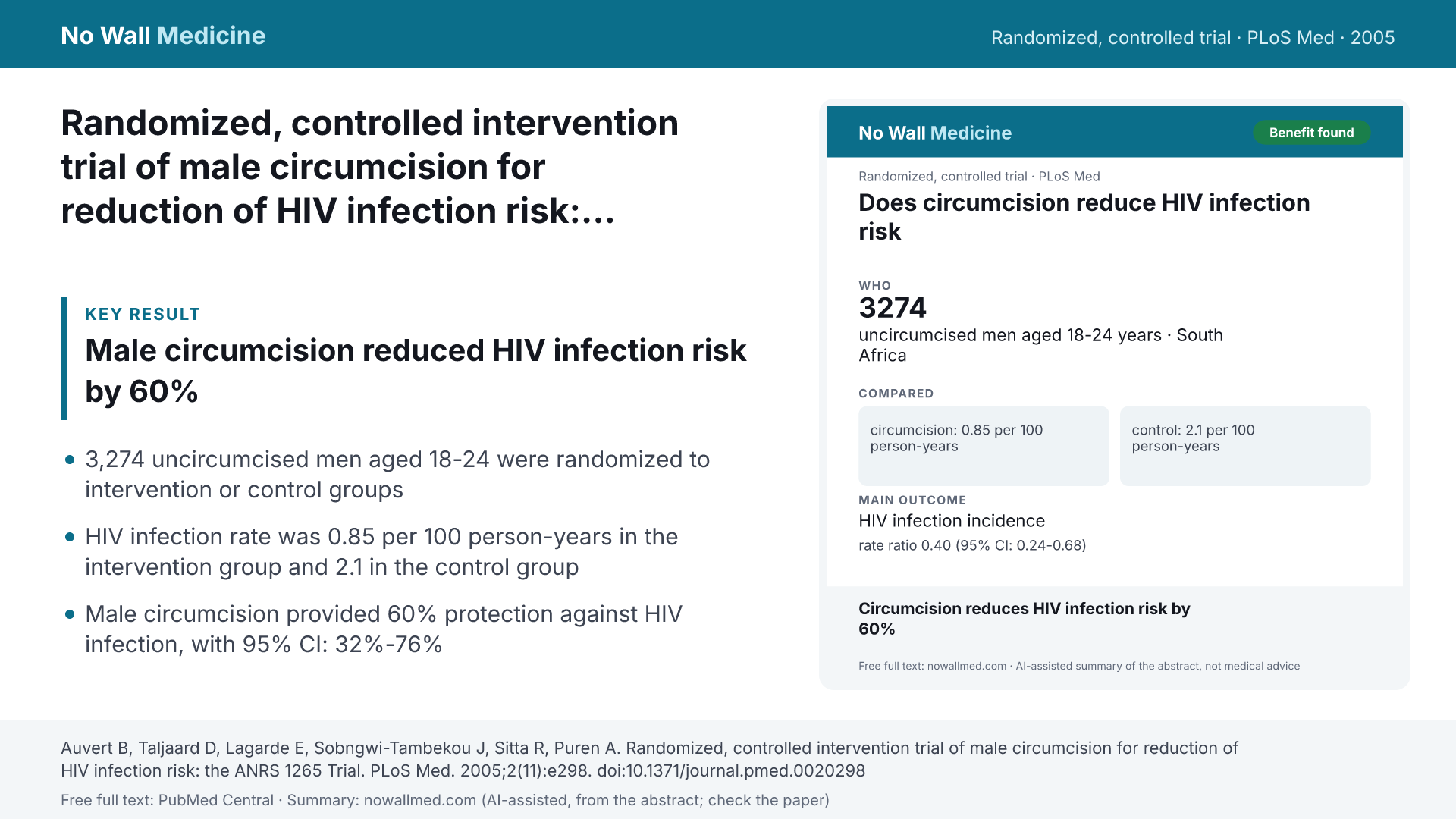
Randomized, controlled intervention trial of male circumcision for reduction of HIV infection risk: the ANRS 1265 Trial
Key result: Male circumcision reduced HIV infection risk by 60%
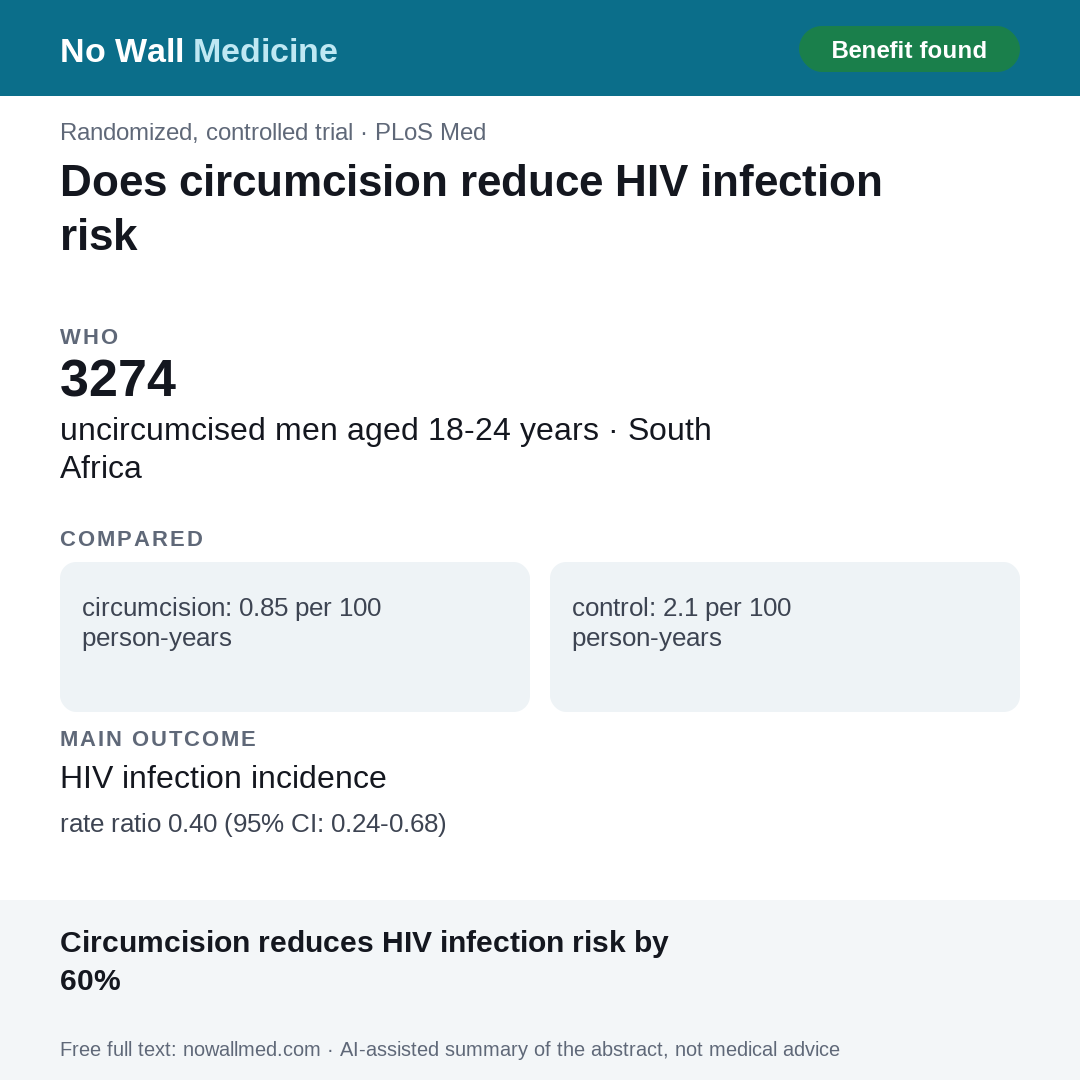
Randomized, controlled trialBenefit found
Does circumcision reduce HIV infection risk
Who
3274
uncircumcised men aged 18-24 years · South Africa
Compared
circumcision: 0.85 per 100 person-years
control: 2.1 per 100 person-years
Main outcome
HIV infection incidence
Result: rate ratio 0.40 (95% CI: 0.24-0.68)
Bottom line: Circumcision reduces HIV infection risk by 60%
PLoS Med · 2005-10-25Download image
Key points
- 3,274 uncircumcised men aged 18-24 were randomized to intervention or control groups.
- HIV infection rate was 0.85 per 100 person-years in the intervention group and 2.1 in the control group.
- Male circumcision provided 60% protection against HIV infection, with 95% CI: 32%-76%.
Why it matters: Observational studies suggested male circumcision may protect against HIV-1 infection, but a randomized trial was needed
Limitation the authors note: None stated in the abstract
Discussion prompts
- Would these patients look like yours? Who was left out?
- Is the main outcome one that matters to patients?
- Is the difference large enough to change what you do?
Cite: Auvert B, Taljaard D, Lagarde E, Sobngwi-Tambekou J, Sitta R, Puren A. Randomized, controlled intervention trial of male circumcision for reduction of HIV infection risk: the ANRS 1265 Trial. PLoS Med. 2005;2(11):e298. doi:10.1371/journal.pmed.0020298
Free full text: PubMed Central · Summary and visual abstract: nowallmed.com/a/randomized-controlled-intervention-trial-of-male-circumcision-for-1ghx68h/ (AI-assisted from the abstract; check the paper before relying on it).