Intensive or brief cultural safety training increased patient recommendations and experience scores in a randomized trial
Randomized controlled trial demonstrates novel tools to assess patient outcomes of Indigenous cultural safety training
Prospective parallel group three-arm randomized controlled trialBenefit found
Do intensive or brief Indigenous cultural safety training programs improve patient outcomes?
Who
58
Non-Indigenous staff physicians, resident physicians and nurse practitioners · Four teaching hospitals in Toronto, Canada
Compared
Intensive interactive training: OR 6.88 (95% CI 1.17 to 40.45)
Brief anti-bias training: OR 7.78 (95% CI 1.05 to 58.03)
Control continuing medical education
Main outcome
Quality of care during unannounced Indigenous standardized patient visits
Result: OR 6.88 (95% CI 1.17 to 40.45) and OR 7.78 (95% CI 1.05 to 58.03)
Bottom line: Intensive or brief Indigenous cultural safety training improved clinician recommendation rates and patient experience scores.
Limitation: Small sample size precluded detection of training impacts on clinical practice guideline adherence.
BMC Med · 2024-01-09Download image
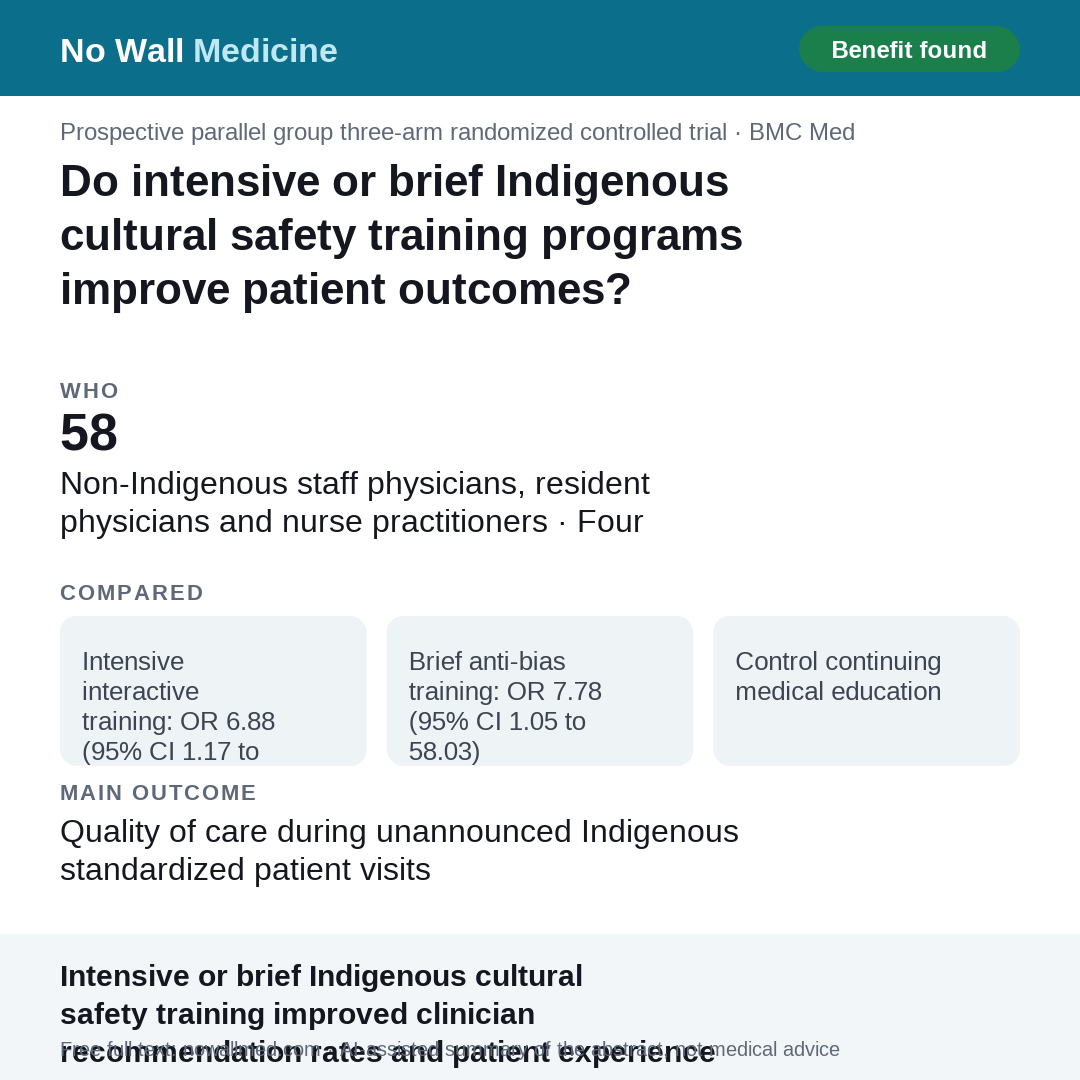
Clinical question: Do intensive or brief Indigenous cultural safety training programs improve patient outcomes?
Why it matters: Current training programs for Indigenous cultural safety often rely on clinician self-assessments, which correlate poorly with actual patient outcomes or observational reports.
Key points
- The study compared 58 non-Indigenous physicians and nurse practitioners receiving intensive training, brief training, or control time-matched education.
- Clinicians in the intensive or brief training groups had higher adjusted odds of being recommended to friends or family by standardized patients (OR 6.88 and OR 7.78, respectively).
- Adjusted mean patient experience scores were 46% higher for the intensive group and 40% higher for the brief group compared to the control group.
Limitation the authors note: Small sample size precluded detection of training impacts on clinical practice guideline adherence.
Headline and key points written with AI from the paper’s abstract, with every number checked against it. Read the paper before relying on them.
Was this summary helpful?
Subject terms
Cite this article
Smylie J, Rotondi MA, Filipenko S, Cox WTL, Smylie D, Ward C. Randomized controlled trial demonstrates novel tools to assess patient outcomes of Indigenous cultural safety training. BMC Med. 2024. doi:10.1186/s12916-023-03193-y
Spotted a mistake? Suggest a correction
Top studies every Monday
The week’s key trials and guidelines in your specialties, plus any topics you follow. By email, free.
Get the weekly digest