Randomized Controlled Trial of a Dichoptic Digital Therapeutic for Amblyopia
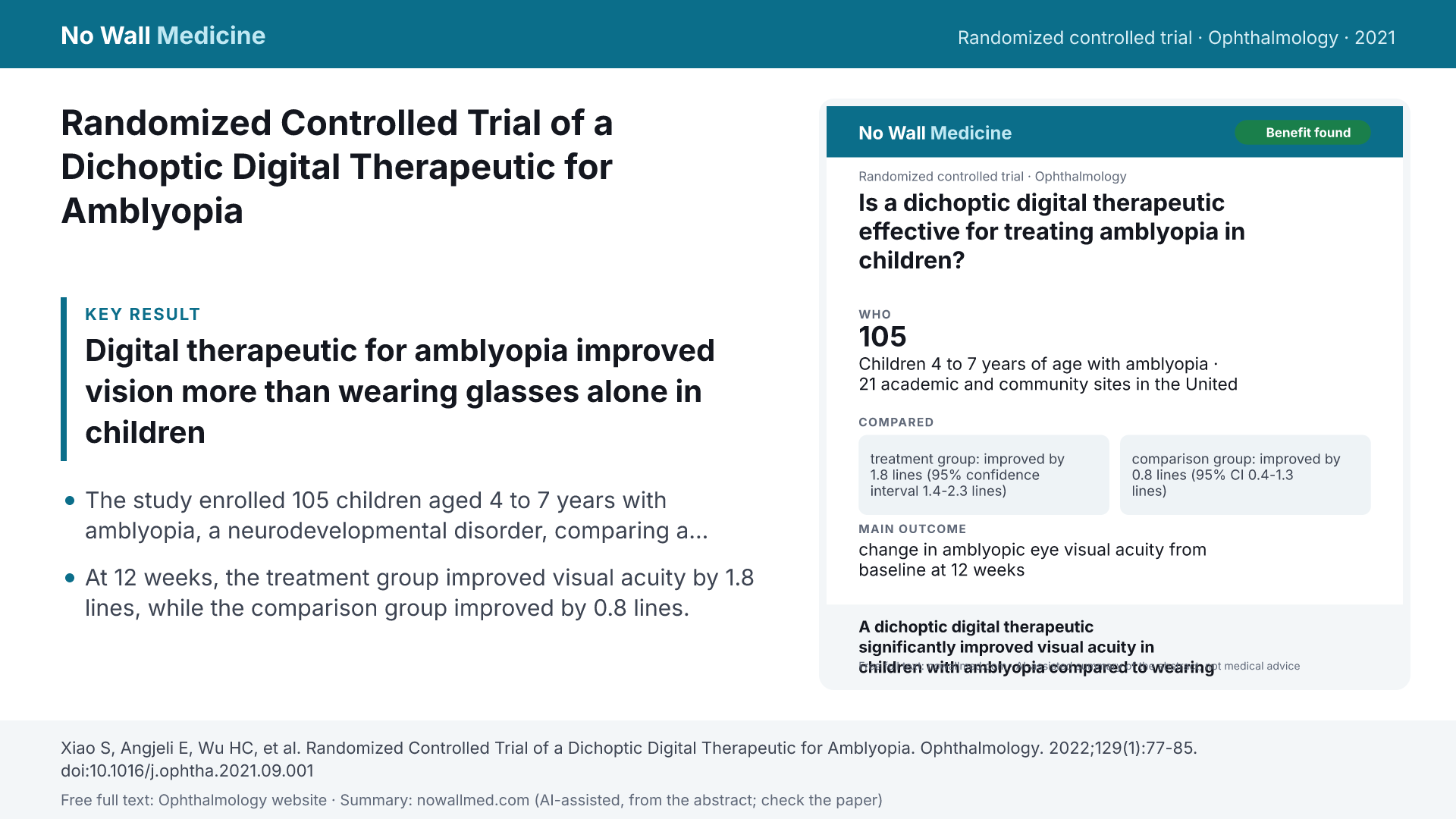
Key result: Digital therapeutic for amblyopia improved vision more than wearing glasses alone in children
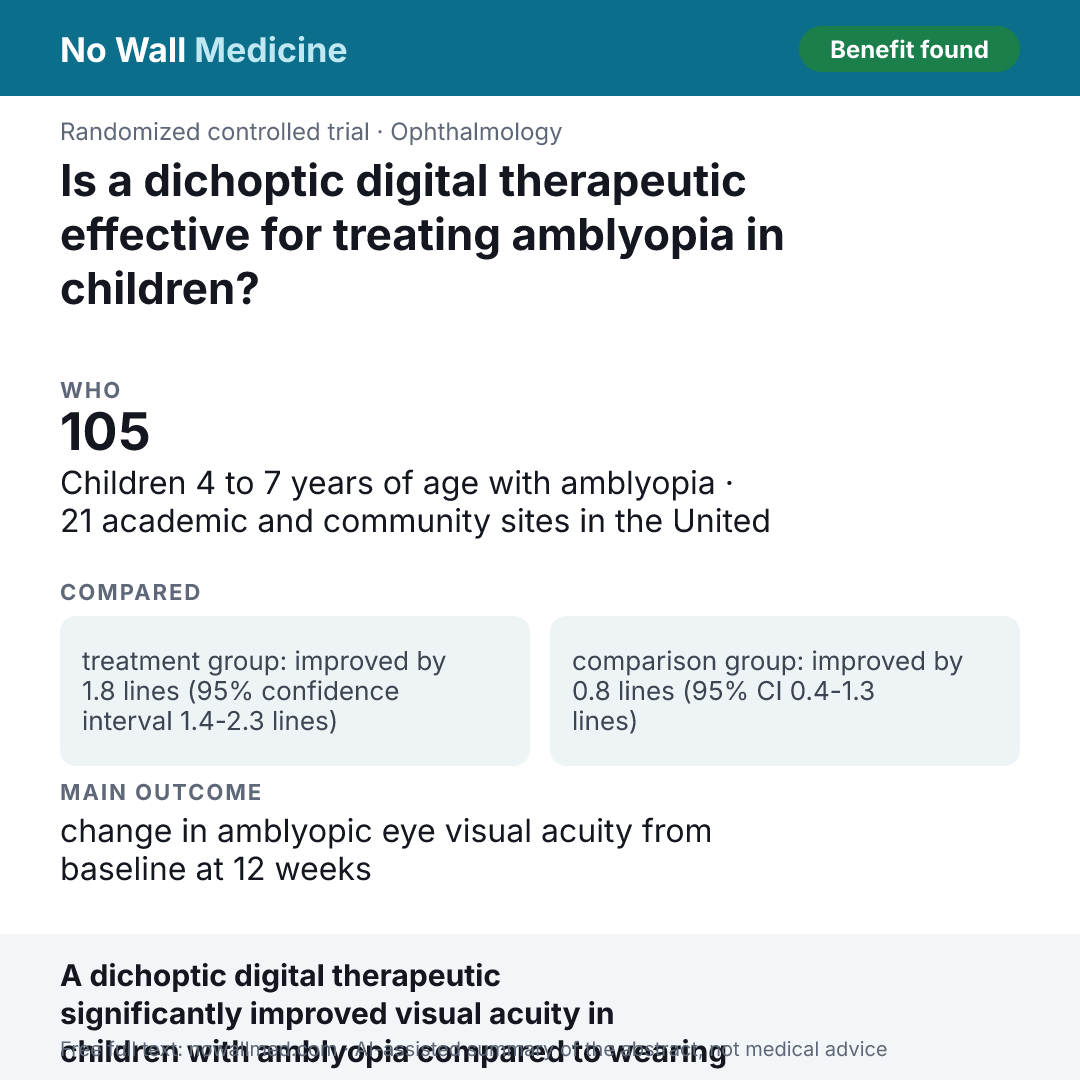
Randomized controlled trialBenefit found
Is a dichoptic digital therapeutic effective for treating amblyopia in children?
Who
105
Children 4 to 7 years of age with amblyopia · 21 academic and community sites in the United States
Compared
treatment group: improved by 1.8 lines (95% confidence interval 1.4-2.3 lines)
comparison group: improved by 0.8 lines (95% CI 0.4-1.3 lines)
Main outcome
change in amblyopic eye visual acuity from baseline at 12 weeks
Result: 1.0 lines; P = 0.0011; 96.14% CI, 0.33-1.63 lines
Bottom line: A dichoptic digital therapeutic significantly improved visual acuity in children with amblyopia compared to wearing glasses alone.
Limitation: Future studies should evaluate the therapeutic compared with other methods and in additional patient populations.
Ophthalmology · 2021-09-14 · Save PNG
Key points
- The study enrolled 105 children aged 4 to 7 years with amblyopia, a neurodevelopmental disorder, comparing a digital therapeutic to wearing glasses alone.
- At 12 weeks, the treatment group improved visual acuity by 1.8 lines, while the comparison group improved by 0.8 lines.
- The difference between the two groups was 1.0 lines with a P value of 0.0011, and no serious adverse events were reported.
Why it matters: Current treatments for amblyopia may be limited by poor adherence and residual vision deficits.
Discussion prompts
- Would these patients look like yours? Who was left out?
- Is the main outcome one that matters to patients?
- Is the difference large enough to change what you do?
Cite: Xiao S, Angjeli E, Wu HC, et al. Randomized Controlled Trial of a Dichoptic Digital Therapeutic for Amblyopia. Ophthalmology. 2022;129(1):77-85. doi:10.1016/j.ophtha.2021.09.001
Free full text: Ophthalmology website · Summary and visual abstract: nowallmed.com/a/randomized-controlled-trial-of-a-dichoptic-digital-therapeutic-for-1je0vhi/ (AI-assisted from the abstract; check the paper before relying on it).