Internet-delivered cognitive behavioral therapy may reduce stress and anxiety after certain heart events
Randomized Controlled Trial of Internet-Delivered Cognitive Behavioral Therapy After Myocardial Infarction With Nonobstructive Coronary Arteries or Takotsubo Syndrome
Parallel, multicenter, randomized controlled trialMixed results
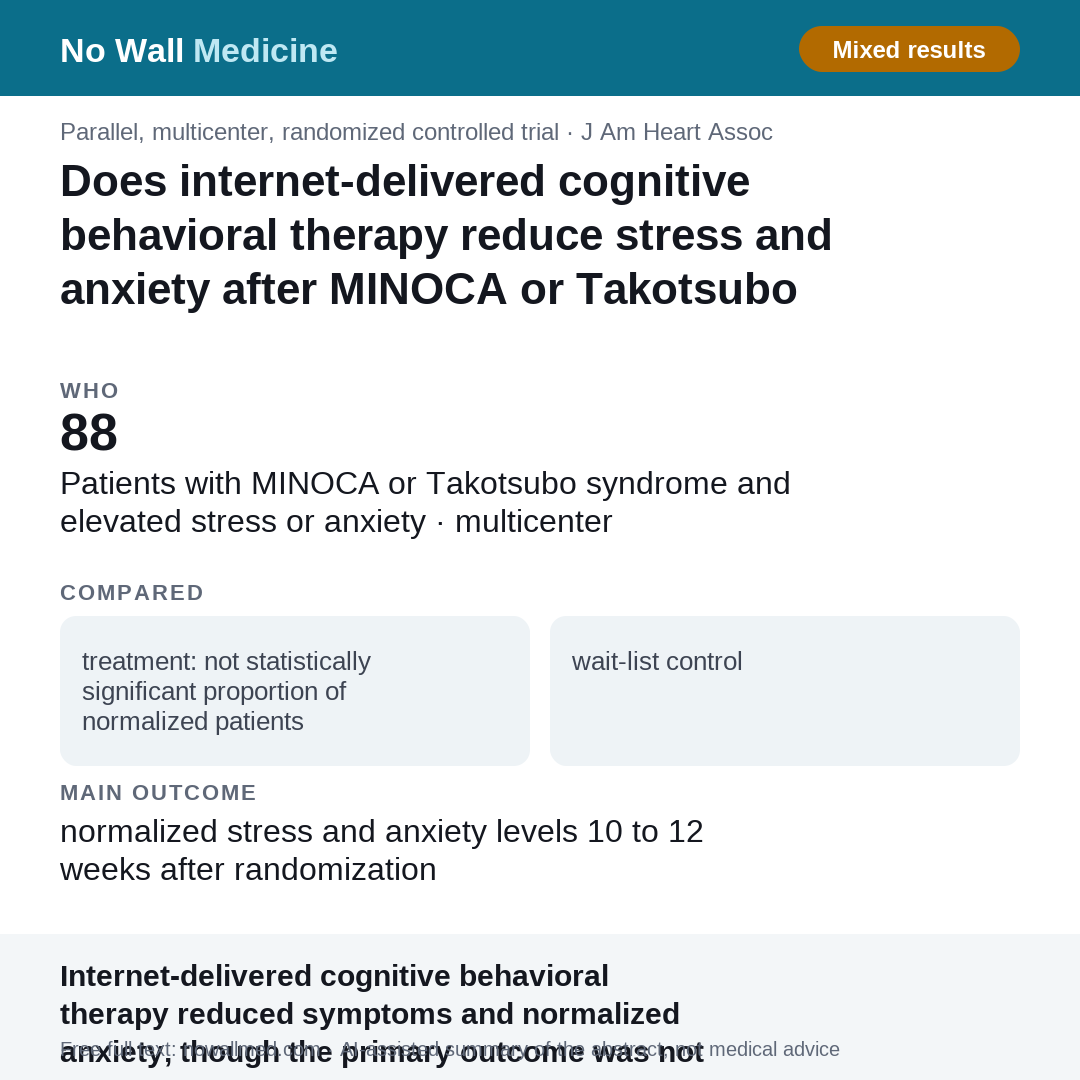
Does internet-delivered cognitive behavioral therapy reduce stress and anxiety after MINOCA or Takotsubo syndrome?
Who
88
Patients with MINOCA or Takotsubo syndrome and elevated stress or anxiety · multicenter
Compared
treatment: not statistically significant proportion of normalized patients
wait-list control
Main outcome
normalized stress and anxiety levels 10 to 12 weeks after randomization
Result: odds ratio 2.37 (95% CI 0.88-6.38)
Bottom line: Internet-delivered cognitive behavioral therapy reduced symptoms and normalized anxiety, though the primary outcome was not statistically significant.
J Am Heart Assoc · 2026-06-15Download image
Clinical question: Does internet-delivered cognitive behavioral therapy reduce stress and anxiety after MINOCA or Takotsubo syndrome?
Why it matters: Patients with these specific heart conditions often experience poor mental health and low quality of life, but no evidence-based treatments are currently available.
Key points
- Researchers studied 88 patients with myocardial infarction with nonobstructive coronary arteries or Takotsubo syndrome to test an internet-delivered cognitive behavioral therapy program.
- The treatment group showed a greater proportion of normalized stress and anxiety levels, though this primary result was not statistically significant (P=0.09).
- Secondary analyses showed treatment effects on anxiety normalization and continuous symptom measures, with a possible greater benefit for patients with Takotsubo syndrome (P=0.016).
Headline and key points written with AI from the paper’s abstract, with every number checked against it. Read the paper before relying on them.
Topics
Spotted a mistake? Suggest a correction