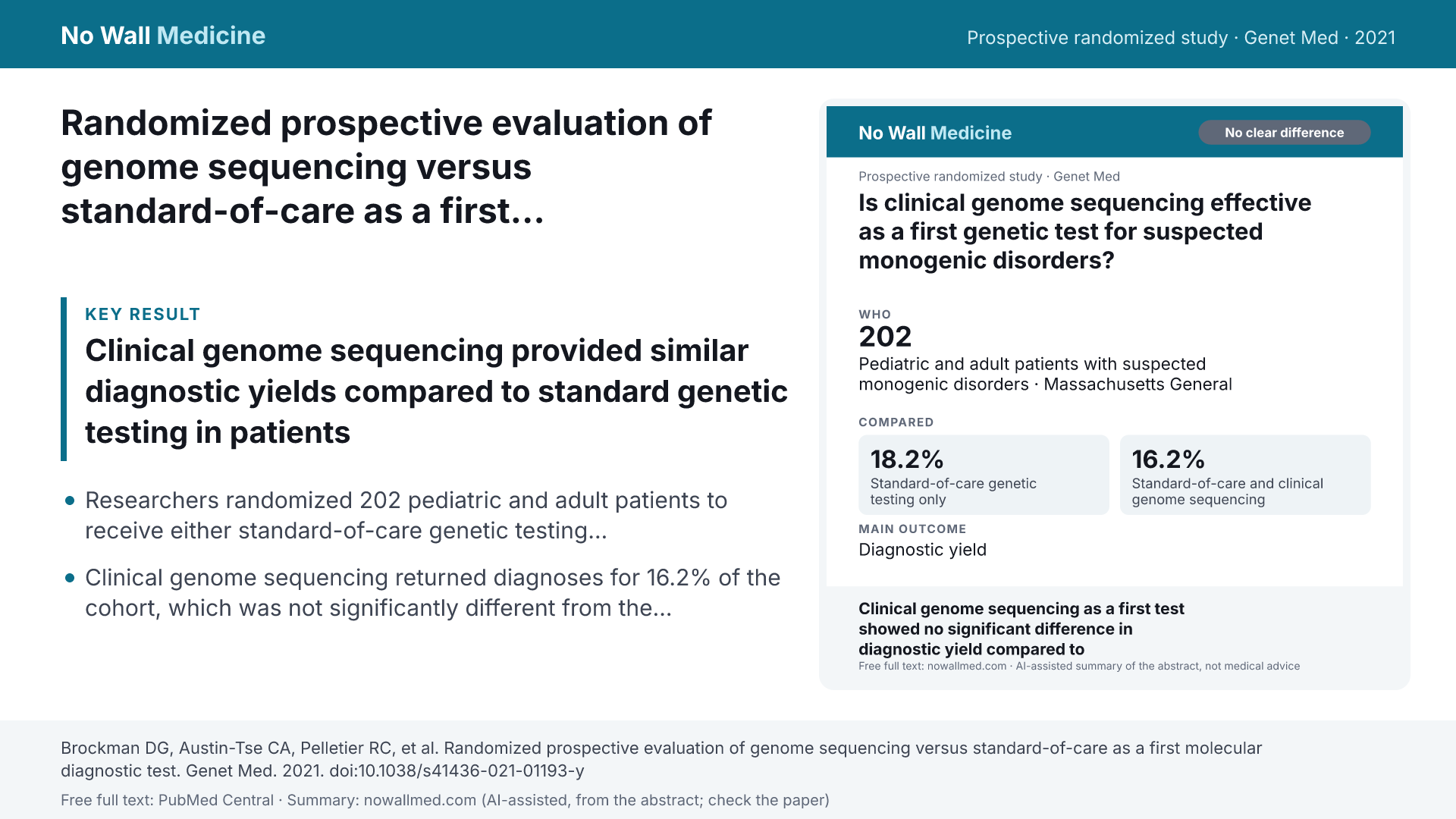
Randomized prospective evaluation of genome sequencing versus standard-of-care as a first molecular diagnostic test
Key result: Clinical genome sequencing provided similar diagnostic yields compared to standard genetic testing in patients
Key points
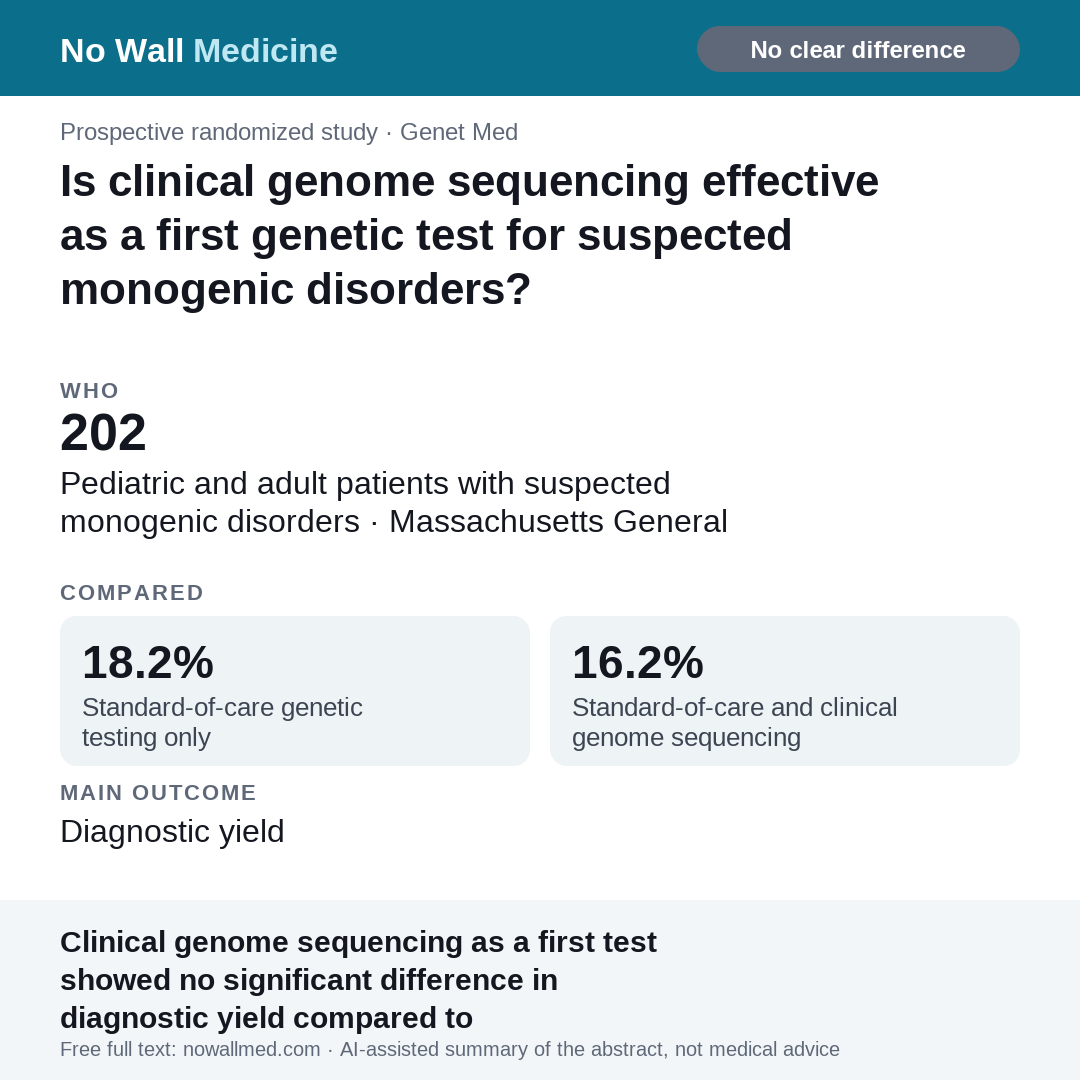
- Researchers randomized 202 pediatric and adult patients to receive either standard-of-care genetic testing or standard-of-care plus clinical genome sequencing.
- Clinical genome sequencing returned diagnoses for 16.2% of the cohort, which was not significantly different from the 18.2% found with standard-of-care testing.
- Referring providers considered 83% of the 24 total molecular diagnoses reported by clinical genome sequencing to be explanatory or worthy of more workup.
Why it matters: It is unknown whether using clinical genome sequencing as a first-line genetic test provides a higher diagnostic yield than standard-of-care testing for suspected monogenic disorders.
Discussion prompts
- Would these patients look like yours? Who was left out?
- Is the main outcome one that matters to patients?
- Is the difference large enough to change what you do?
Cite: Brockman DG, Austin-Tse CA, Pelletier RC, et al. Randomized prospective evaluation of genome sequencing versus standard-of-care as a first molecular diagnostic test. Genet Med. 2021. doi:10.1038/s41436-021-01193-y
Free full text: PubMed Central · Summary and visual abstract: nowallmed.com/a/randomized-prospective-evaluation-of-genome-sequencing-versus-2164v/ (AI-assisted from the abstract; check the paper before relying on it).