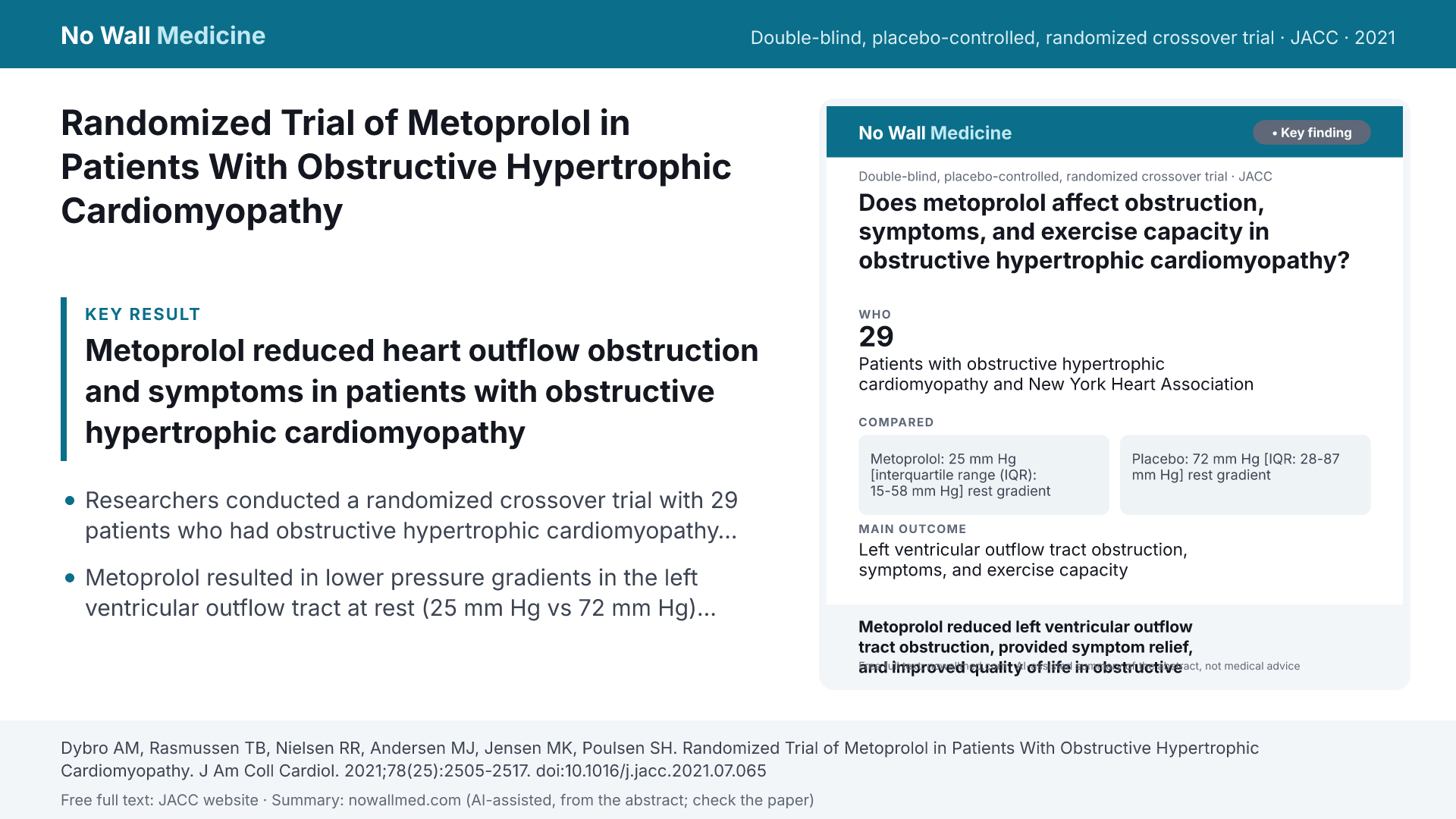
Metoprolol reduced heart outflow obstruction and symptoms in patients with obstructive hypertrophic cardiomyopathy
Randomized Trial of Metoprolol in Patients With Obstructive Hypertrophic Cardiomyopathy
Double-blind, placebo-controlled, randomized crossover trialBenefit found
Does metoprolol affect obstruction, symptoms, and exercise capacity in obstructive hypertrophic cardiomyopathy?
Who
29
Patients with obstructive hypertrophic cardiomyopathy and New York Heart Association class II or higher
Compared
Metoprolol: 25 mm Hg [interquartile range (IQR): 15-58 mm Hg] rest gradient
Placebo: 72 mm Hg [IQR: 28-87 mm Hg] rest gradient
Main outcome
Left ventricular outflow tract obstruction, symptoms, and exercise capacity
Bottom line: Metoprolol reduced left ventricular outflow tract obstruction, provided symptom relief, and improved quality of life in obstructive hypertrophic cardiomyopathy.
JACC · 2021-12-17Download image
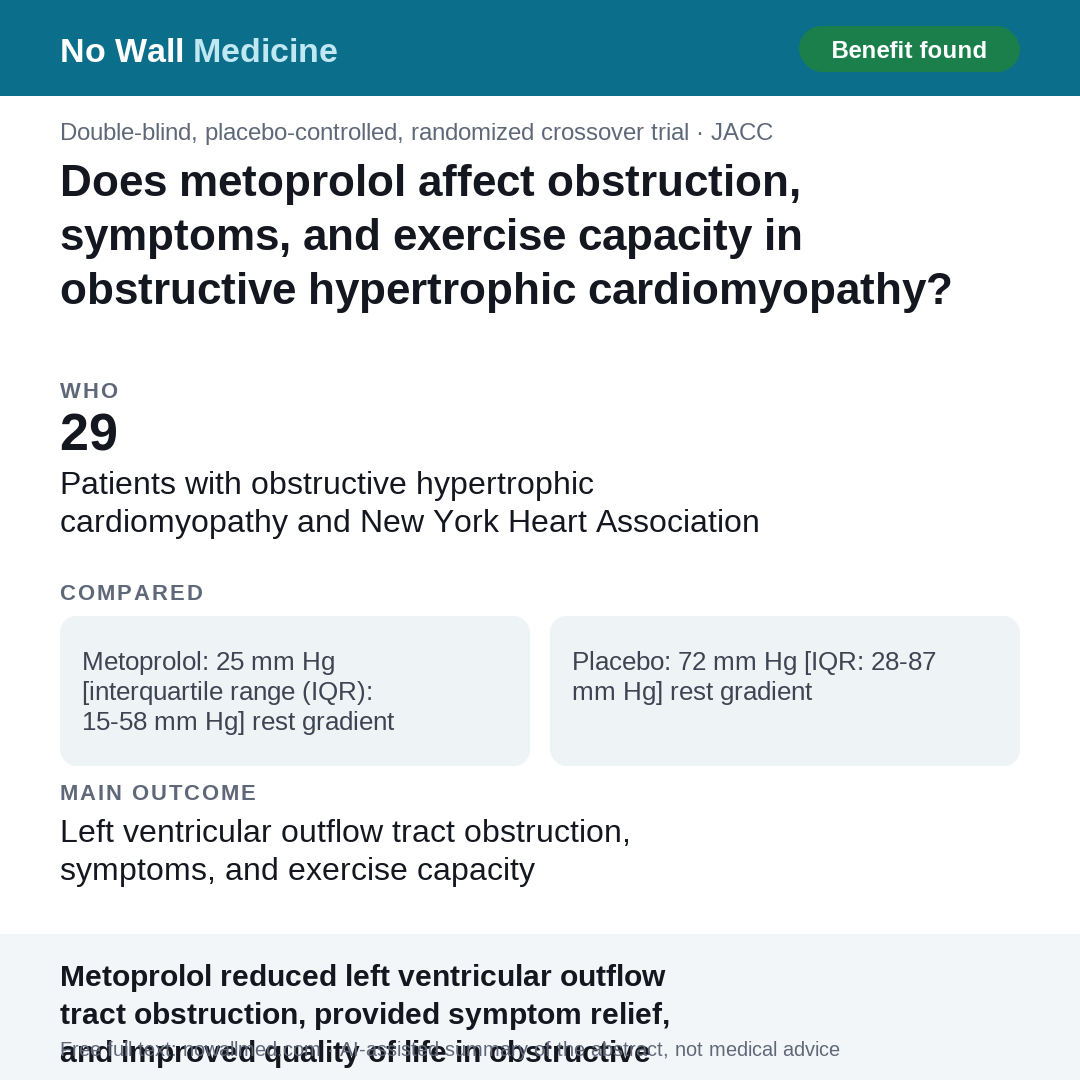
Clinical question: Does metoprolol affect obstruction, symptoms, and exercise capacity in obstructive hypertrophic cardiomyopathy?
Why it matters: The use of beta-blockers for symptomatic patients with obstructive hypertrophic cardiomyopathy has previously relied on clinical experience and observational studies rather than randomized trials.
Key points
- Researchers conducted a randomized crossover trial with 29 patients who had obstructive hypertrophic cardiomyopathy and symptomatic heart disease.
- Metoprolol resulted in lower pressure gradients in the left ventricular outflow tract at rest (25 mm Hg vs 72 mm Hg) and during peak exercise (28 mm Hg vs 62 mm Hg).
- Metoprolol was associated with fewer patients in severe symptom classes and higher quality of life scores, though exercise capacity and oxygen consumption did not differ.
Headline and key points written with AI from the paper’s abstract, with every number checked against it. Read the paper before relying on them.
Was this summary helpful?
Subject terms
Cite this article
Dybro AM, Rasmussen TB, Nielsen RR, Andersen MJ, Jensen MK, Poulsen SH. Randomized Trial of Metoprolol in Patients With Obstructive Hypertrophic Cardiomyopathy. JACC. 2021. doi:10.1016/j.jacc.2021.07.065
Spotted a mistake? Suggest a correction