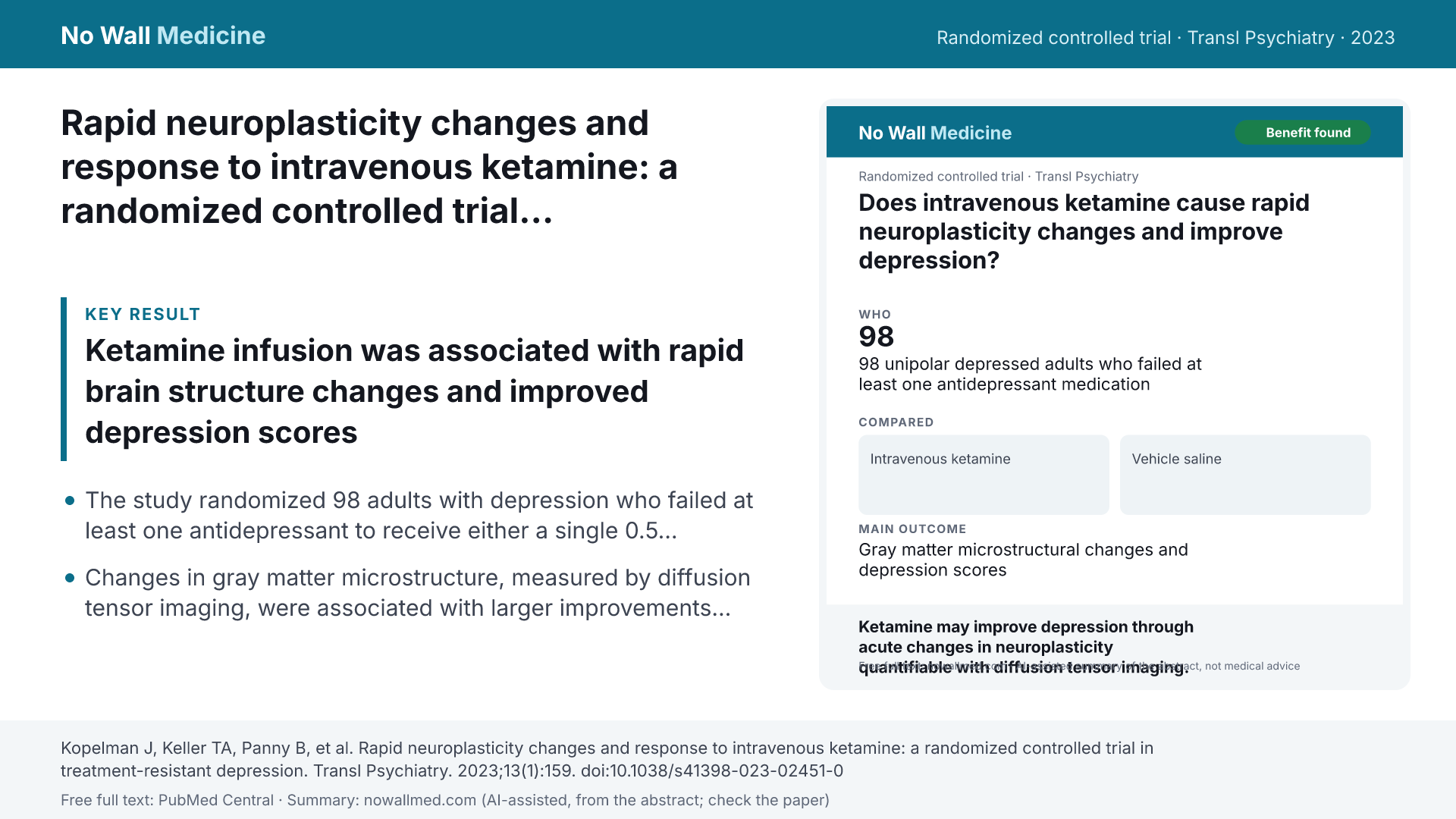
Ketamine infusion was associated with rapid brain structure changes and improved depression scores
Rapid neuroplasticity changes and response to intravenous ketamine: a randomized controlled trial in treatment-resistant depression
Randomized controlled trialBenefit found
Does intravenous ketamine cause rapid neuroplasticity changes and improve depression?
Who
98
98 unipolar depressed adults who failed at least one antidepressant medication
Compared
Intravenous ketamine
Vehicle saline
Main outcome
Gray matter microstructural changes and depression scores
Bottom line: Ketamine may improve depression through acute changes in neuroplasticity quantifiable with diffusion tensor imaging.
Transl Psychiatry · 2023-05-09Download image
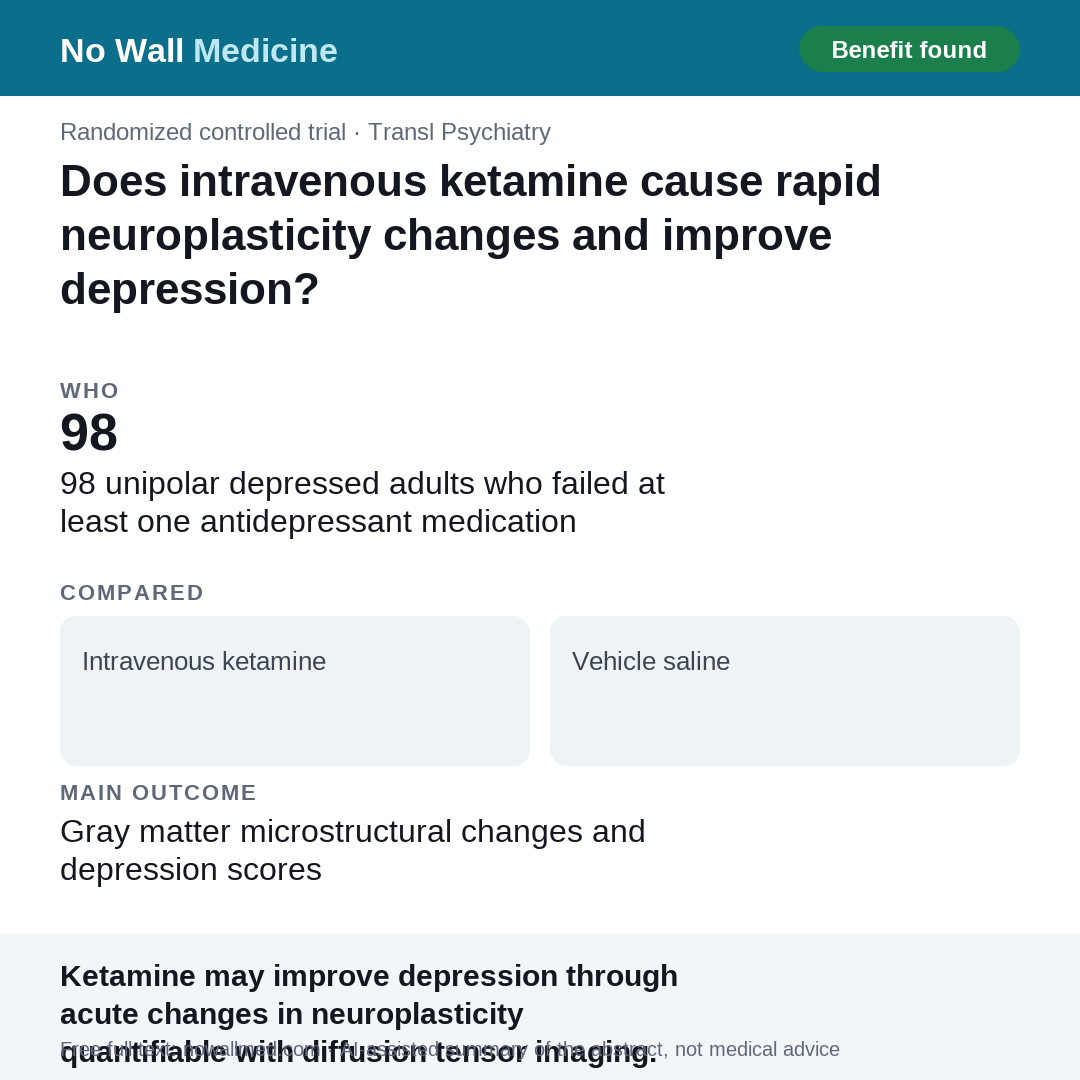
Clinical question: Does intravenous ketamine cause rapid neuroplasticity changes and improve depression?
Why it matters: It was unknown if intravenous ketamine rapidly reverses depression by enhancing neuroplasticity, which refers to the brain's ability to reorganize its structure.
Key points
- The study randomized 98 adults with depression who failed at least one antidepressant to receive either a single 0.5 mg/kg intravenous ketamine infusion or a saline placebo.
- Changes in gray matter microstructure, measured by diffusion tensor imaging, were associated with larger improvements in depression scores across several brain regions within 24 hours.
- In the left BA10 and left amygdala, these relationships were driven primarily by the ketamine group with interaction effects between p = 0.016-0.082.
Headline and key points written with AI from the paper’s abstract, with every number checked against it. Read the paper before relying on them.
Was this summary helpful?
Subject terms
Cite this article
Kopelman J, Keller TA, Panny B, Griffo A, Degutis M, Spotts C. Rapid neuroplasticity changes and response to intravenous ketamine: a randomized controlled trial in treatment-resistant depression. Transl Psychiatry. 2023. doi:10.1038/s41398-023-02451-0
Spotted a mistake? Suggest a correction
Top studies every Monday
The week’s key trials and guidelines in your specialties, plus any topics you follow. By email, free.
Get the weekly digest