Recombinant human thrombopoietin reduces platelet transfusion needs in patients with chronic liver disease
Recombinant Human Thrombopoietin Reduces the Need for Platelet Transfusion in Patients With Chronic Liver Disease and Thrombocytopenia
Multicenter, randomized, double-blind, placebo-controlled phase III trialBenefit found
Does recombinant human thrombopoietin reduce platelet transfusion needs in chronic liver disease patients?
Who
120
Adult Chinese patients with chronic liver disease-related thrombocytopenia · Multicenter
Compared
85.0%recombinant human thrombopoietin
12.5%placebo
Main outcome
proportion of patients with sustained platelet counts ≥ 50 × 109/L
Bottom line: Recombinant human thrombopoietin effectively increases sustained platelet counts and reduces platelet transfusion needs in chronic liver disease patients.
Am J Hematol · 2026-07-28Download image
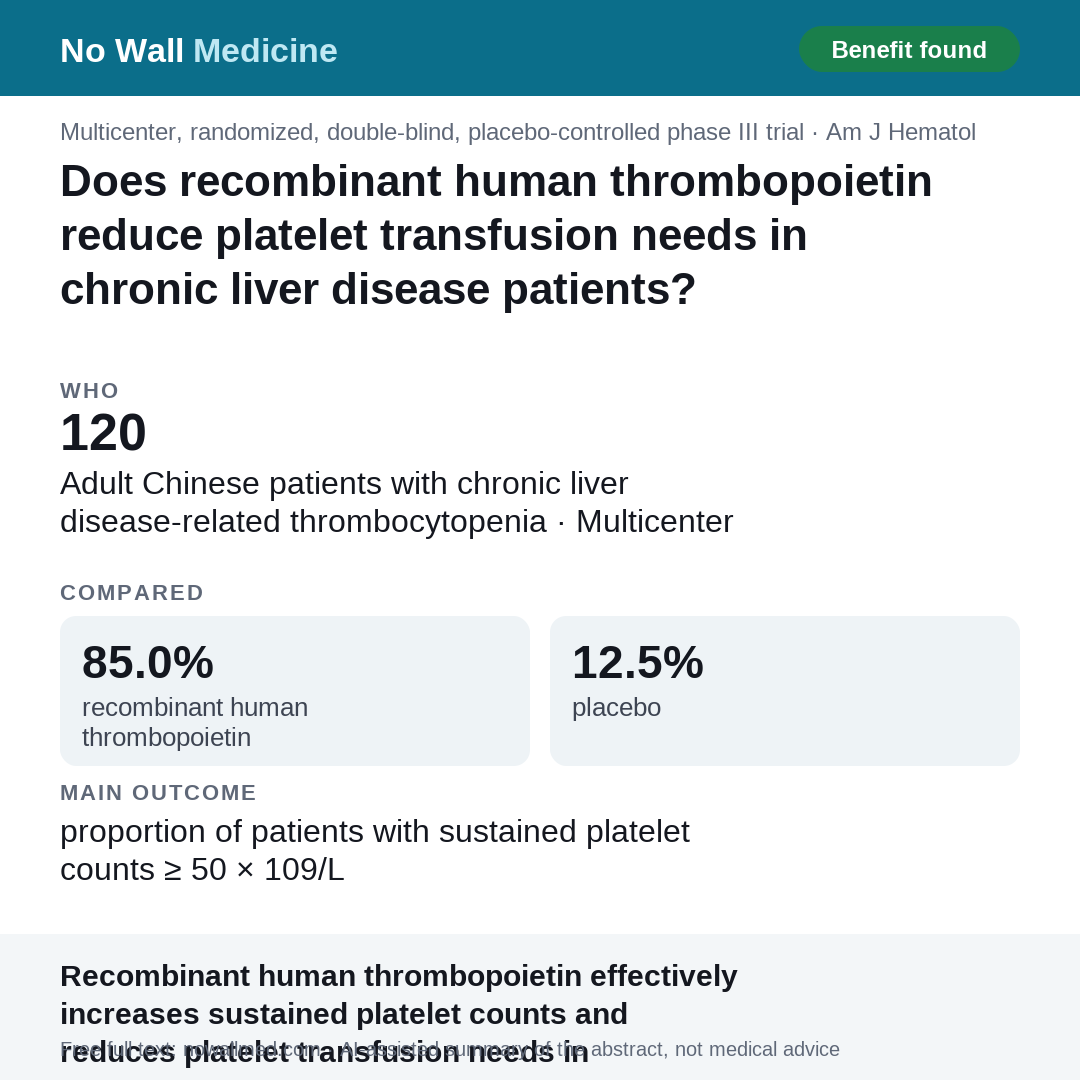
Clinical question: Does recombinant human thrombopoietin reduce platelet transfusion needs in chronic liver disease patients?
Why it matters: Low platelet counts caused by chronic liver disease can make it difficult to perform invasive medical procedures safely.
In absolute numbers
recombinant human thrombopoietin: 85% · placebo: 12.5% → a difference of 72.5 percentage points, so about 2 people would need the treatment for 1 more to benefit (number needed to treat) over the trial’s follow-up.
Worked out by us from the two group results above, not reported by the authors. Check the paper for the exact outcome and timing.
Key points
- Researchers studied 120 Chinese adults with chronic liver disease and low platelet counts, comparing recombinant human thrombopoietin to a placebo.
- The recombinant human thrombopoietin group had a higher rate of sustained platelet counts of 50 × 109/L compared to 12.5% in the placebo group.
- Platelet transfusions were avoided in 92.5% of patients receiving the treatment compared to 25.0% of those receiving the placebo.
Headline and key points written with AI from the paper’s abstract, with every number checked against it. Read the paper before relying on them.
Topics
Spotted a mistake? Suggest a correction