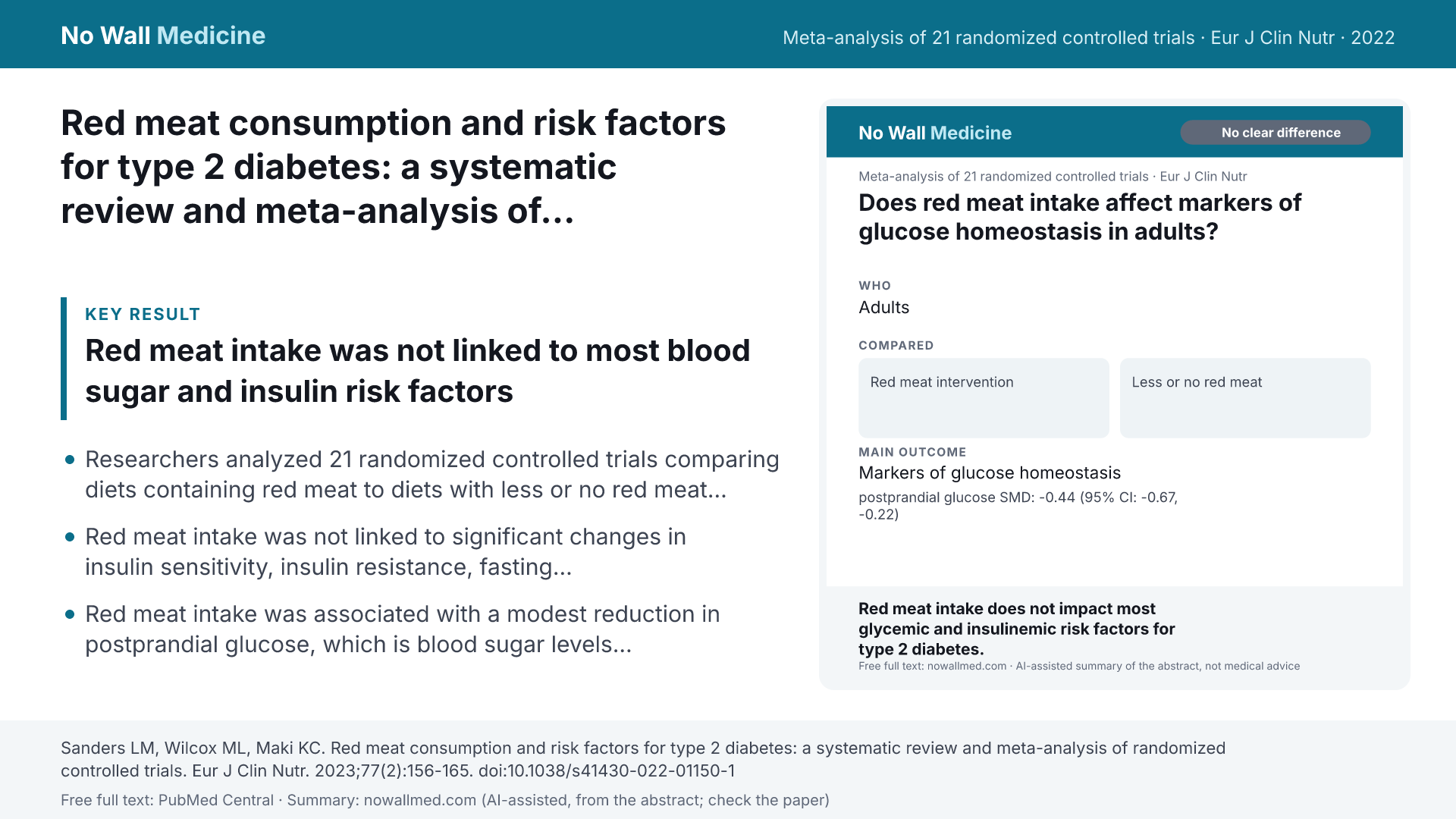
Red meat intake was not linked to most blood sugar and insulin risk factors
Red meat consumption and risk factors for type 2 diabetes: a systematic review and meta-analysis of randomized controlled trials
Meta-analysis of 21 randomized controlled trialsNo clear difference
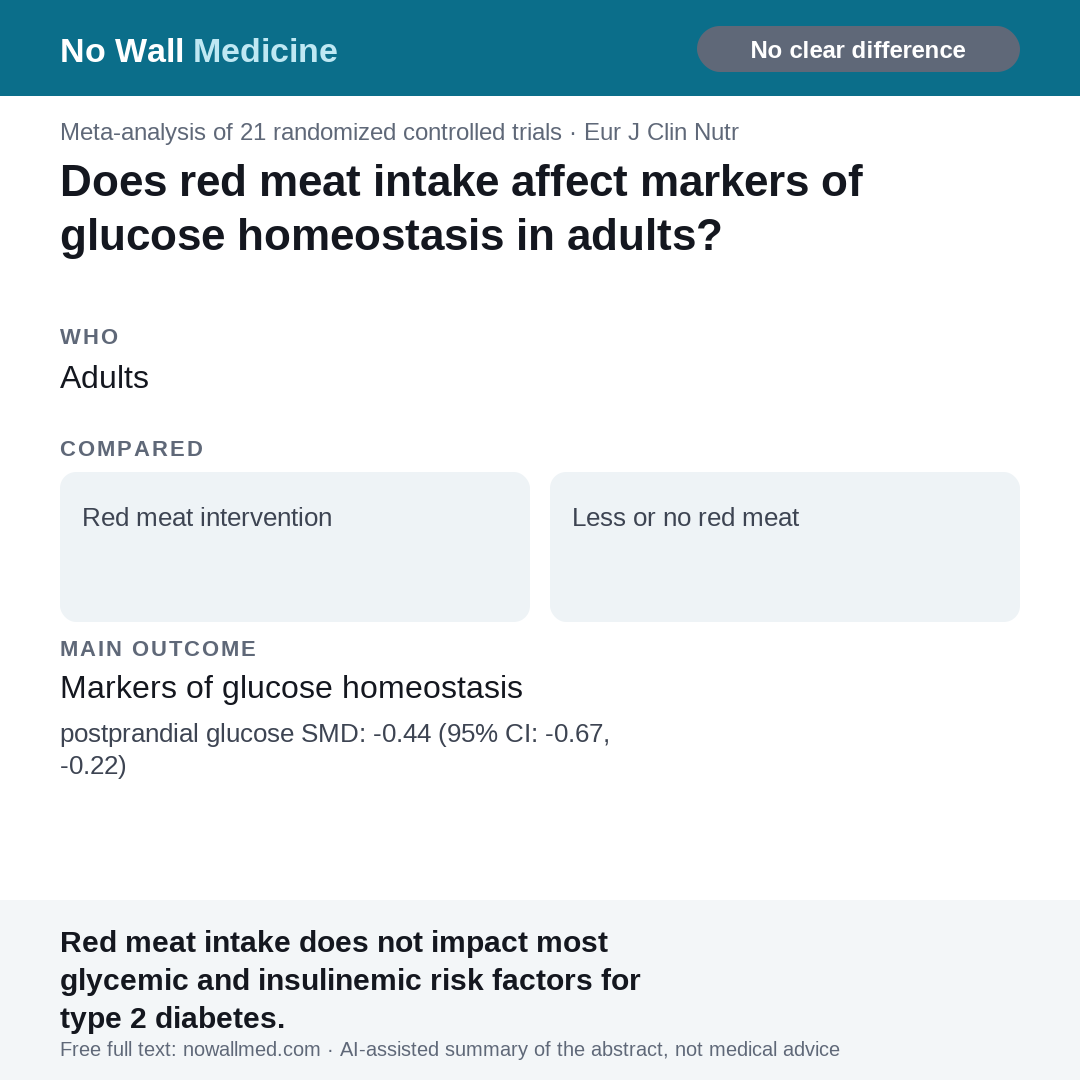
Does red meat intake affect markers of glucose homeostasis in adults?
Who
Adults
Compared
Red meat intervention
Less or no red meat
Main outcome
Markers of glucose homeostasis
Result: postprandial glucose SMD: -0.44 (95% CI: -0.67, -0.22)
Bottom line: Red meat intake does not impact most glycemic and insulinemic risk factors for type 2 diabetes.
Limitation: The quality of evidence was low to moderate for all outcomes.
Eur J Clin Nutr · 2022-05-05Download image
Clinical question: Does red meat intake affect markers of glucose homeostasis in adults?
Why it matters: It was unknown if randomized controlled trials could support a mechanistic link between red meat intake and risk factors for type 2 diabetes.
Key points
- Researchers analyzed 21 randomized controlled trials comparing diets containing red meat to diets with less or no red meat in adults.
- Red meat intake was not linked to significant changes in insulin sensitivity, insulin resistance, fasting glucose, fasting insulin, glycated hemoglobin, or pancreatic beta-cell function.
- Red meat intake was associated with a modest reduction in postprandial glucose, which is blood sugar levels measured after eating (SMD: -0.44; 95% CI: -0.67, -0.22; P < 0.001).
Limitation the authors note: The quality of evidence was low to moderate for all outcomes.
Headline and key points written with AI from the paper’s abstract, with every number checked against it. Read the paper before relying on them.
Was this summary helpful?
Subject terms
Cite this article
Sanders LM, Wilcox ML, Maki KC. Red meat consumption and risk factors for type 2 diabetes: a systematic review and meta-analysis of randomized controlled trials. Eur J Clin Nutr. 2022. doi:10.1038/s41430-022-01150-1
Spotted a mistake? Suggest a correction