Reduced-carbohydrate diet feasibility trial shows high retention but small reduction in carbohydrate intake
REduced-Carbohydrate intervention for managing Obesity and Reduction of gestational Diabetes (RECORD): A randomized controlled feasibility trial
Randomized controlled feasibility trialMixed results
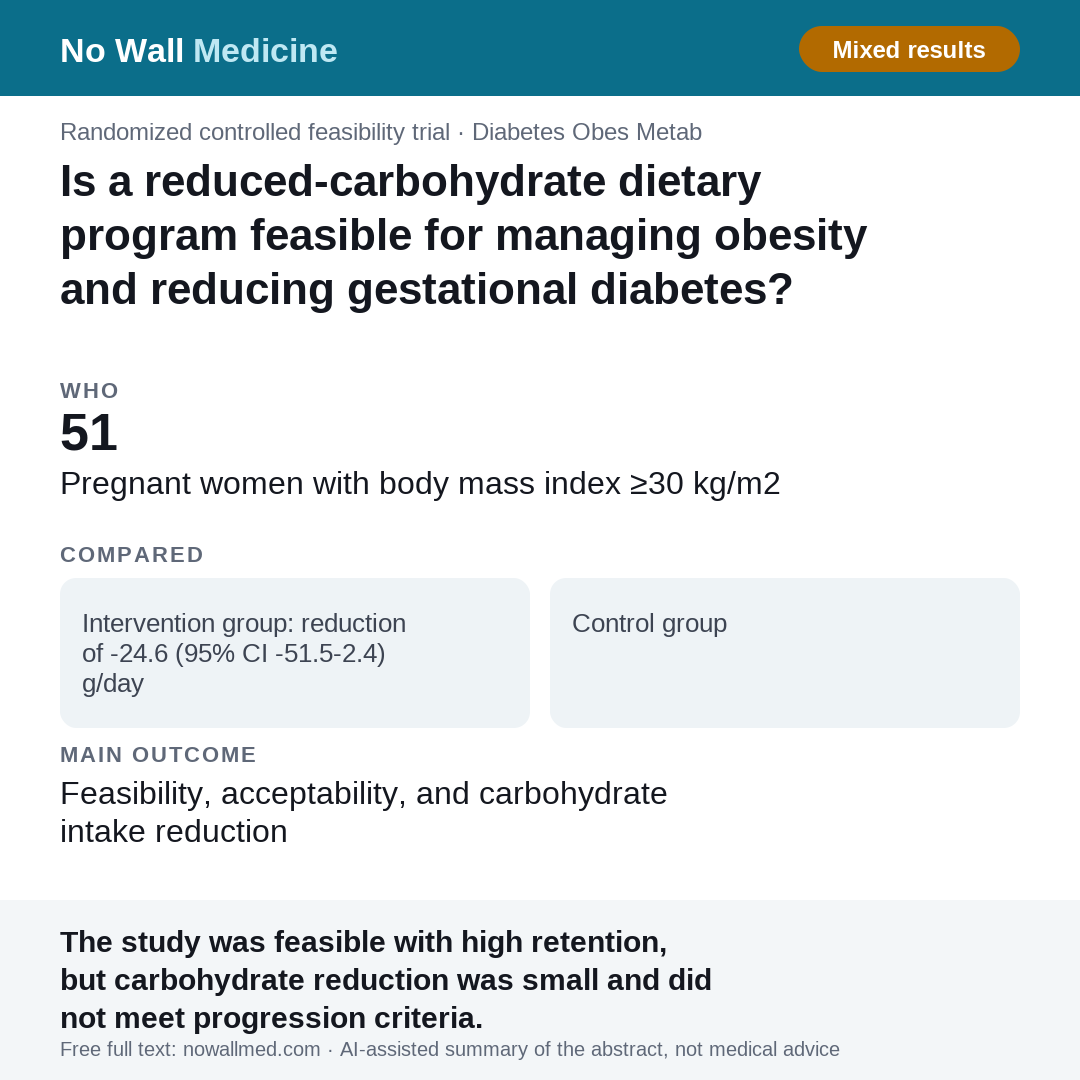
Is a reduced-carbohydrate dietary program feasible for managing obesity and reducing gestational diabetes?
Who
51
Pregnant women with body mass index ≥30 kg/m2
Compared
Intervention group: reduction of -24.6 (95% CI -51.5-2.4) g/day
Control group
Main outcome
Feasibility, acceptability, and carbohydrate intake reduction
Bottom line: The study was feasible with high retention, but carbohydrate reduction was small and did not meet progression criteria.
Diabetes Obes Metab · 2024-01-16Download image
Clinical question: Is a reduced-carbohydrate dietary program feasible for managing obesity and reducing gestational diabetes?
Why it matters: It was unknown if a reduced-carbohydrate dietary program is feasible and acceptable for pregnant women to prevent gestational diabetes.
Key points
- Fifty-one pregnant women with a body mass index of 30 kg/m2 or higher were randomized to either a reduced-carbohydrate diet or a control group.
- The intervention group had a carbohydrate intake of 190.4 g/day at follow-up, which was a reduction of -24.6 g/day from baseline.
- The study had a 96% retention rate, but the small reduction in carbohydrate intake did not meet the criteria to prevent gestational diabetes.
Limitation the authors note: The study was not powered to detect significant differences in glucose control, weight gain, and blood pressure.
Headline and key points written with AI from the paper’s abstract, with every number checked against it. Read the paper before relying on them.
Was this summary helpful?
Subject terms
Cite this article
Michalopoulou M, Jebb SA, MacKillop LH, Dyson P, Hirst JE, Zhu S. REduced-Carbohydrate intervention for managing Obesity and Reduction of gestational Diabetes (RECORD): A randomized controlled feasibility trial. Diabetes Obes Metab. 2024. doi:10.1111/dom.15442
Spotted a mistake? Suggest a correction
Top studies every Monday
The week’s key trials and guidelines in your specialties, plus any topics you follow. By email, free.
Get the weekly digest