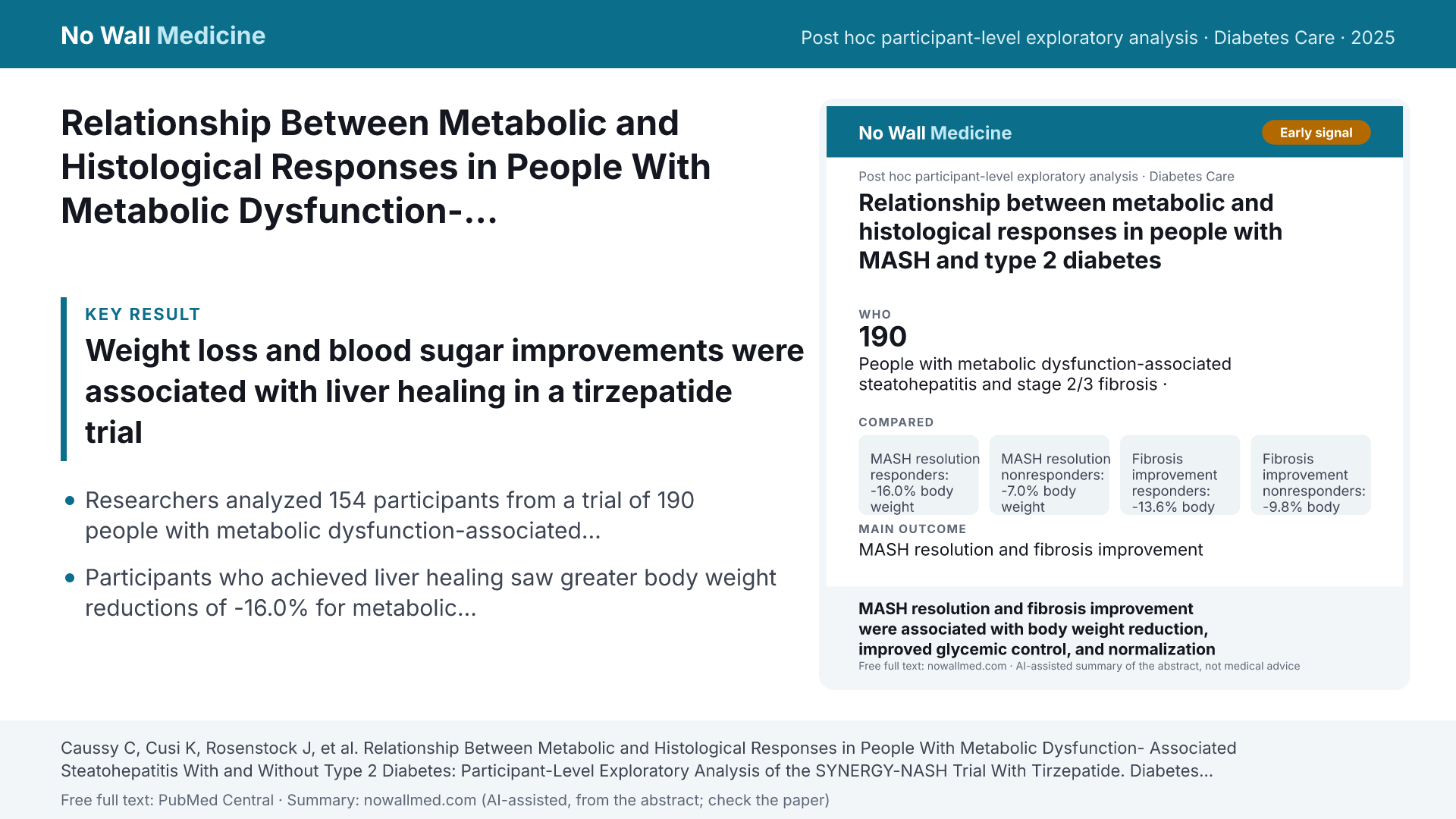
Relationship Between Metabolic and Histological Responses in People With Metabolic Dysfunction- Associated Steatohepatitis With and Without Type 2 Diabetes: Participant-Level Exploratory Analysis of the SYNERGY-NASH Trial With Tirzepatide
Key result: Weight loss and blood sugar improvements were associated with liver healing in a tirzepatide trial
Key points
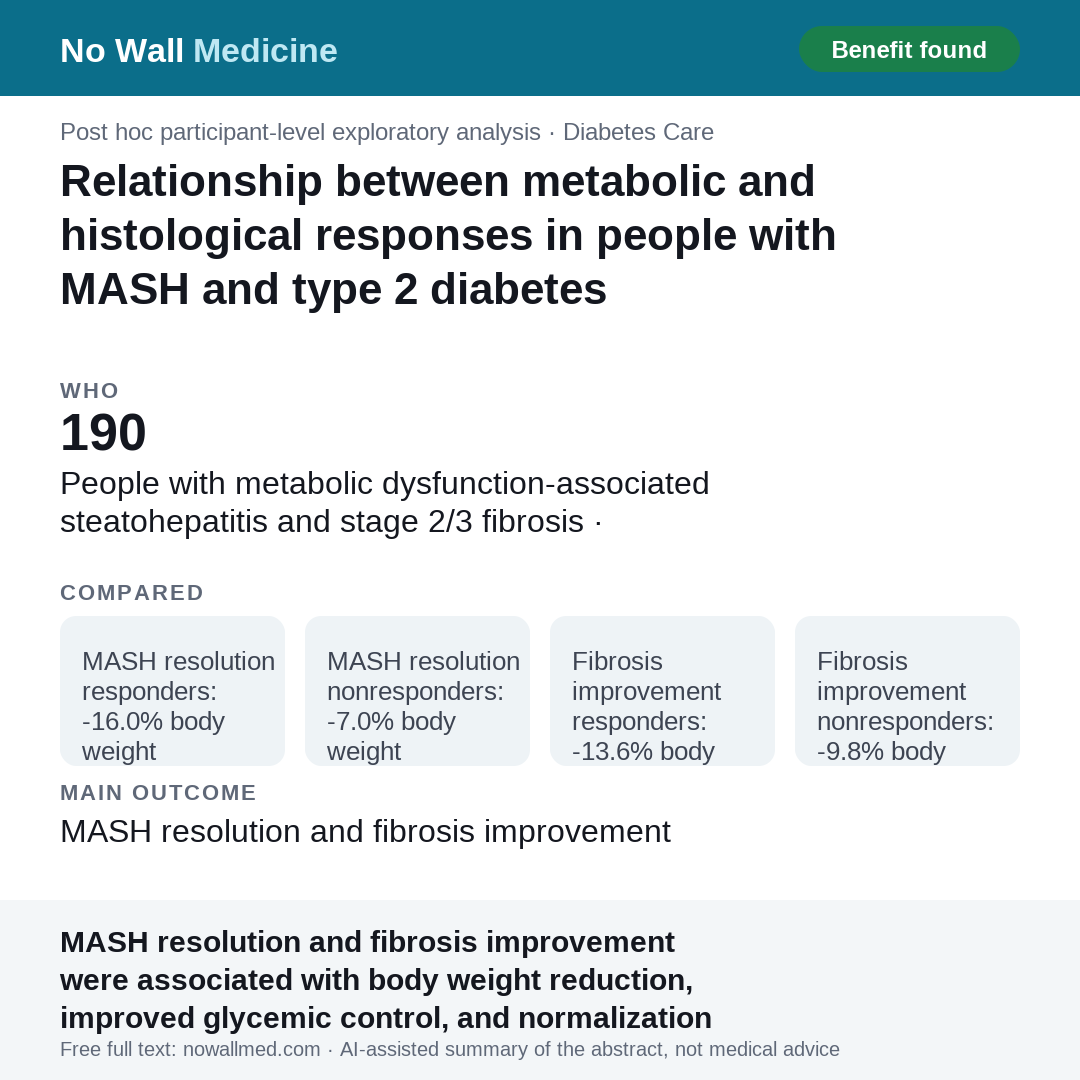
- Researchers analyzed 154 participants from a trial of 190 people with metabolic dysfunction-associated steatohepatitis and stage 2 or 3 liver scarring.
- Participants who achieved liver healing saw greater body weight reductions of -16.0% for metabolic dysfunction-associated steatohepatitis resolution and -13.6% for fibrosis improvement.
- Greater reductions in HbA1c, a measure of long-term blood sugar, were associated with responders compared to nonresponders.
Why it matters: It is unclear how metabolic changes relate to histological responses, which refers to changes seen in liver tissue, in people treated with tirzepatide.
Discussion prompts
- Would these patients look like yours? Who was left out?
- Is the main outcome one that matters to patients?
- Is the difference large enough to change what you do?
Cite: Caussy C, Cusi K, Rosenstock J, et al. Relationship Between Metabolic and Histological Responses in People With Metabolic Dysfunction- Associated Steatohepatitis With and Without Type 2 Diabetes: Participant-Level Exploratory Analysis of the SYNERGY-NASH Trial With Tirzepatide. Diabetes Care. 2025. doi:10.2337/dc25-1306
Free full text: PubMed Central · Summary and visual abstract: nowallmed.com/a/relationship-between-metabolic-and-histological-responses-in-people-rltqjp/ (AI-assisted from the abstract; check the paper before relying on it).