Stress hyperglycemia ratio is associated with increased mortality and morbidity in various critical illnesses
Relationship between stress hyperglycaemic ratio (SHR) and critical illness: a systematic review
Systematic reviewMixed results
What is the relationship between stress hyperglycaemic ratio and critical illness?
Who
Patients with acute or critical illnesses
Compared
Low stress hyperglycaemic ratio: increased mortality and morbidity
High stress hyperglycaemic ratio: increased mortality and morbidity
Main outcome
mortality and morbidity
Bottom line: Both low and high stress hyperglycaemic ratios are associated with increased mortality and morbidity in critical illness.
Cardiovasc Diabetol · 2025-05-02Download image
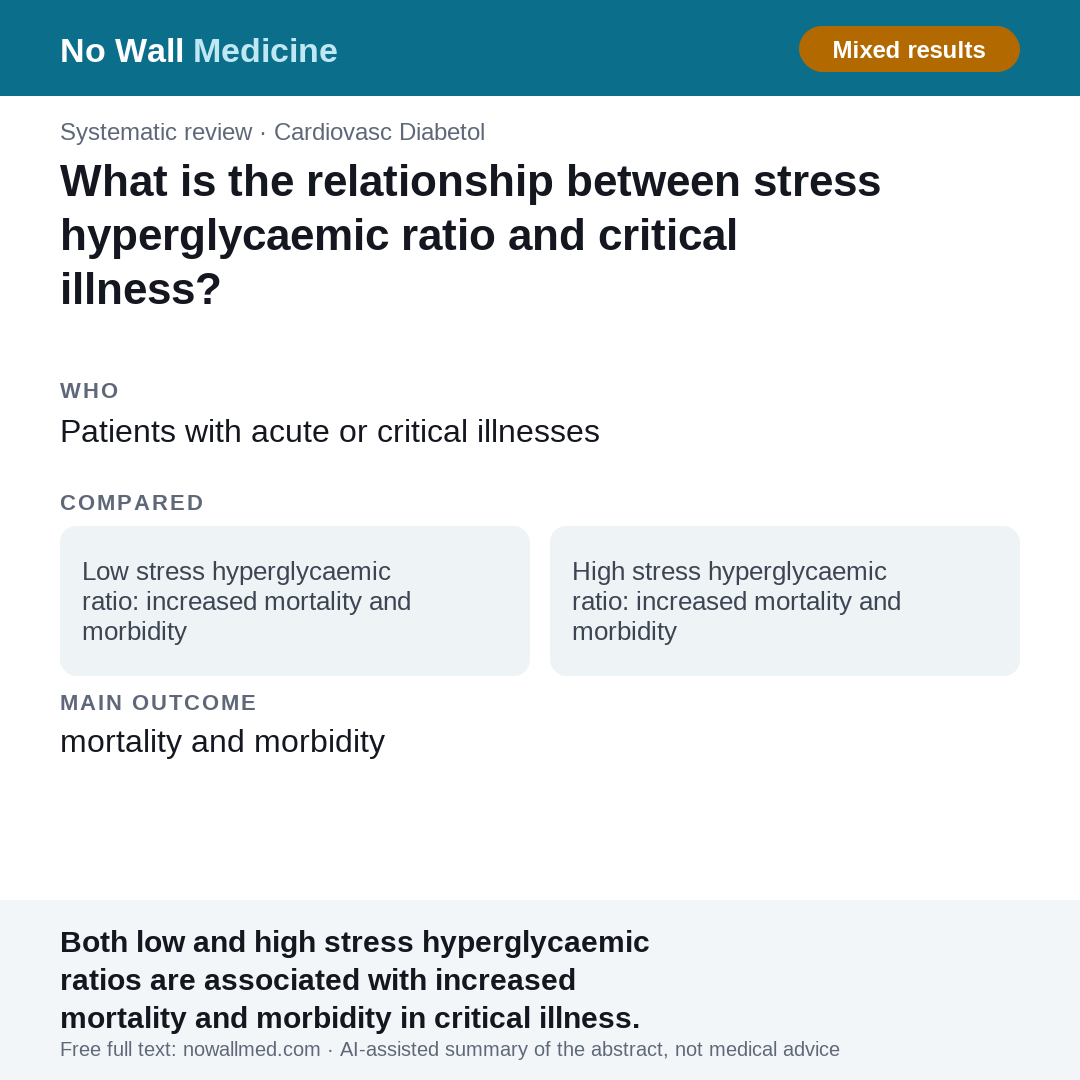
Clinical question: What is the relationship between stress hyperglycaemic ratio and critical illness?
Why it matters: The stress hyperglycemia ratio, calculated using admission glucose and glycated hemoglobin, is used to quantify glucose elevation relative to a patient's background levels.
Key points
- Researchers conducted a systematic review examining the relationship between the stress hyperglycemia ratio and outcomes in patients with critical illnesses.
- A U-shaped or J-shaped relationship was found, meaning both low and high ratios were associated with increased mortality and morbidity.
- The ratio showed predictive value in cardiovascular diseases, cerebrovascular diseases, infectious diseases, acute pancreatitis, and certain cancers.
Headline and key points written with AI from the paper’s abstract, with every number checked against it. Read the paper before relying on them.
Topics
Cite this article
Song G, Liu X, Lu Z, Guan J, Chen X, Li Y. Relationship between stress hyperglycaemic ratio (SHR) and critical illness: a systematic review. Cardiovasc Diabetol. 2025. doi:10.1186/s12933-025-02751-3
Spotted a mistake? Suggest a correction
Top studies every Monday
The week’s key trials and guidelines in your specialties, plus any topics you follow. By email, free.
Get the weekly digest