Relationship of the Esophageal Microbiome and Tissue Gene Expression and Links to the Oral Microbiome: A Randomized Clinical Trial
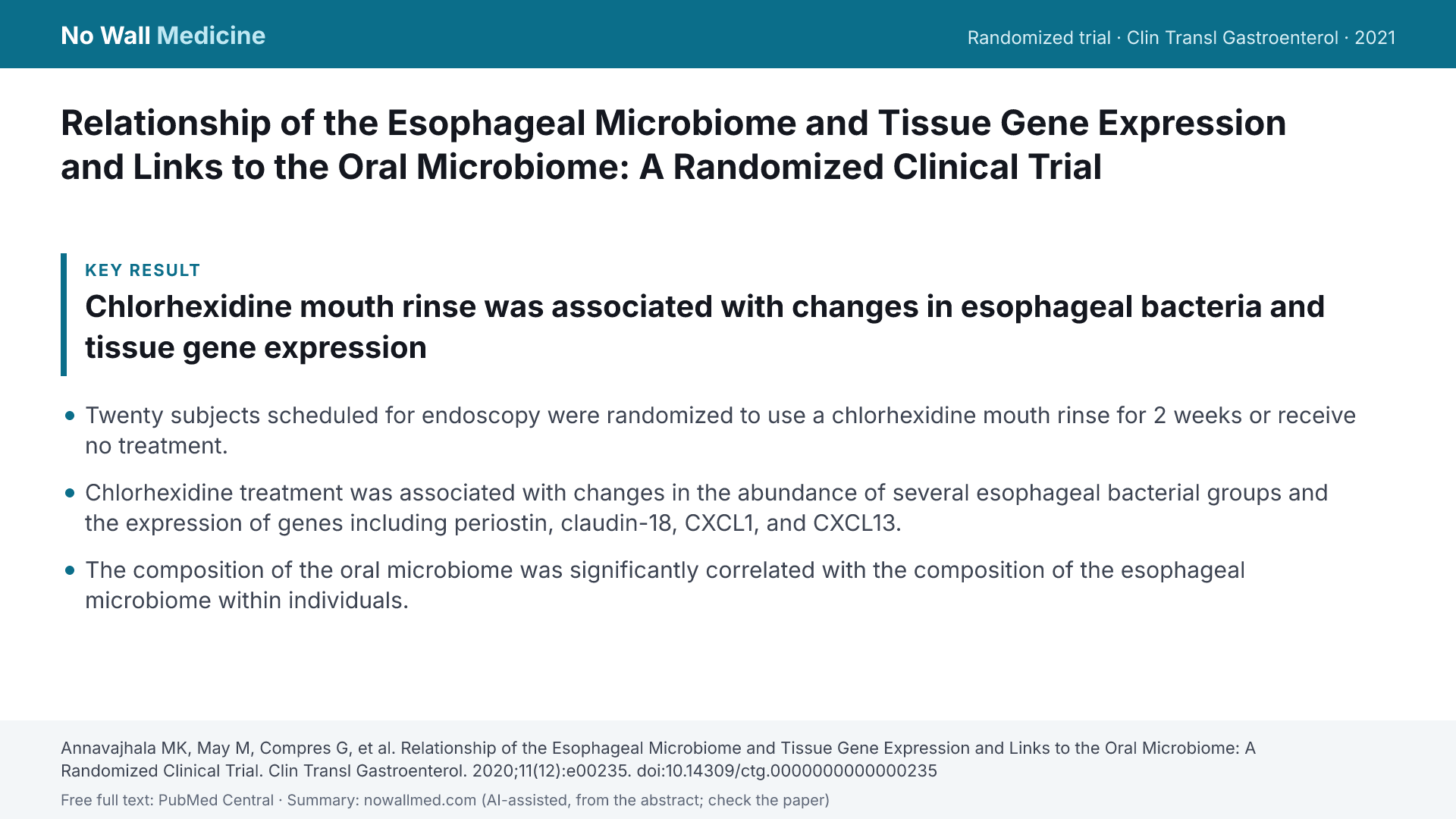
Key result: Chlorhexidine mouth rinse was associated with changes in esophageal bacteria and tissue gene expression
Key points
- Twenty subjects scheduled for endoscopy were randomized to use a chlorhexidine mouth rinse for 2 weeks or receive no treatment.
- Chlorhexidine treatment was associated with changes in the abundance of several esophageal bacterial groups and the expression of genes including periostin, claudin-18, CXCL1, and CXCL13.
- The composition of the oral microbiome was significantly correlated with the composition of the esophageal microbiome within individuals.
Discussion prompts
- Would these patients look like yours? Who was left out?
- Is the main outcome one that matters to patients?
- Is the difference large enough to change what you do?
Cite: Annavajhala MK, May M, Compres G, et al. Relationship of the Esophageal Microbiome and Tissue Gene Expression and Links to the Oral Microbiome: A Randomized Clinical Trial. Clin Transl Gastroenterol. 2020;11(12):e00235. doi:10.14309/ctg.0000000000000235
Free full text: PubMed Central · Summary and visual abstract: nowallmed.com/a/relationship-of-the-esophageal-microbiome-and-tissue-gene-expression-8qpytg/ (AI-assisted from the abstract; check the paper before relying on it).