Relative efficacy of exercise prehabilitation interventions and their components: a systematic review and network meta-analysis of randomised controlled trials
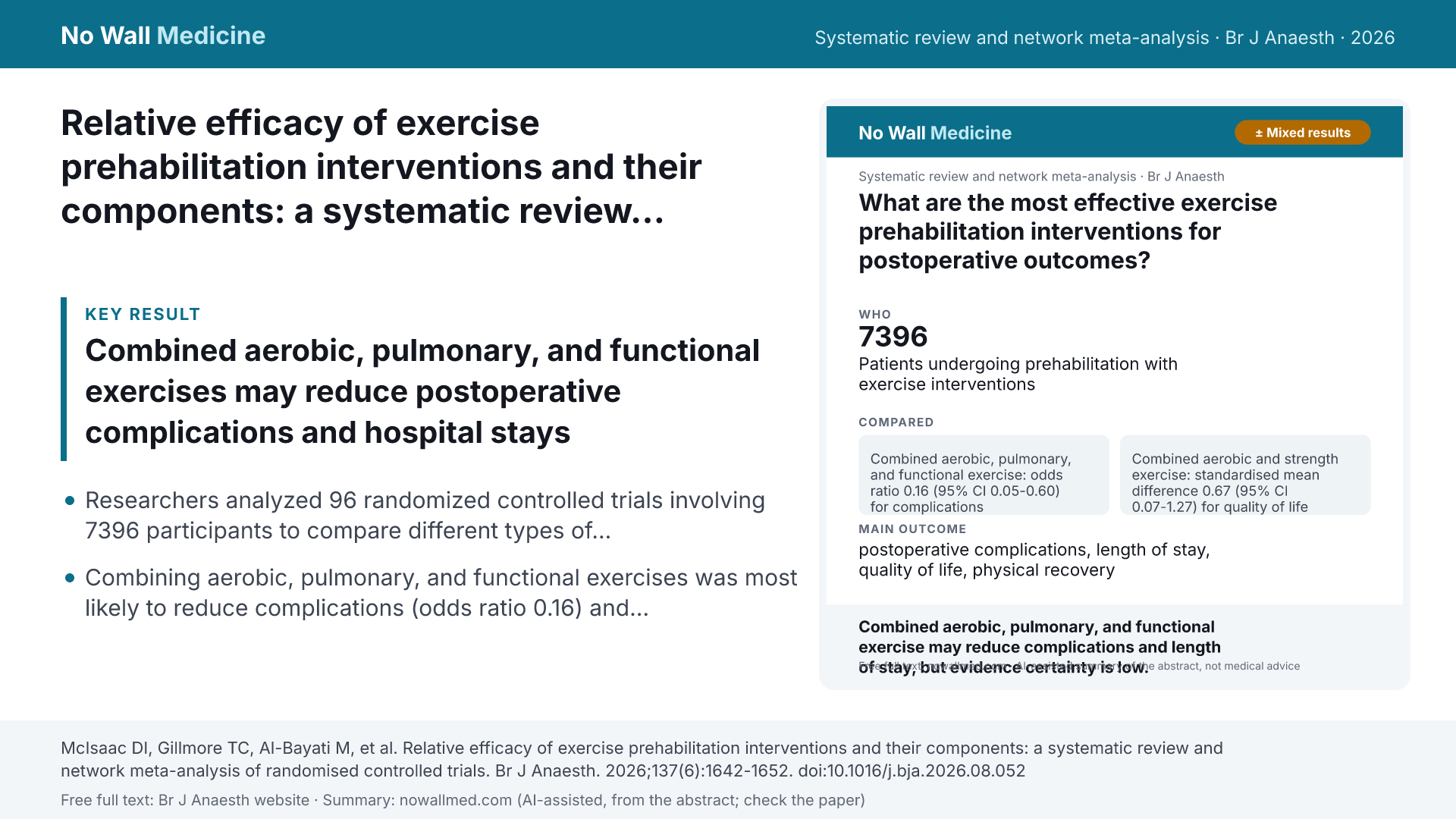
Key result: Combined aerobic, pulmonary, and functional exercises may reduce postoperative complications and hospital stays
Key points
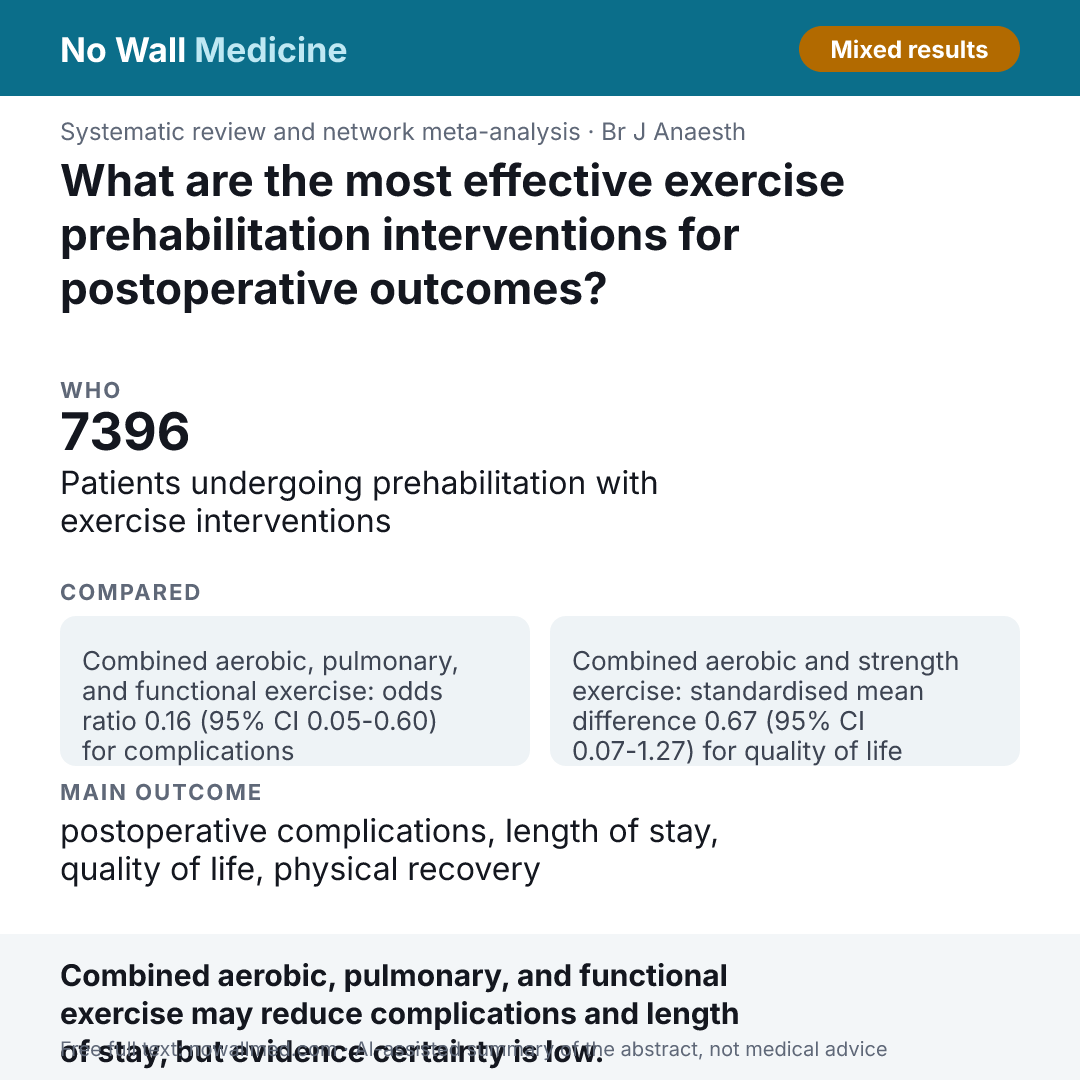
- Researchers analyzed 96 randomized controlled trials involving 7396 participants to compare different types of exercise prehabilitation before surgery.
- Combining aerobic, pulmonary, and functional exercises was most likely to reduce complications (odds ratio 0.16) and hospital length of stay (mean difference -3.4 days).
- Combining aerobic and strength exercises was most likely to improve health-related quality of life, but no exercise interventions significantly improved physical recovery.
Why it matters: The optimal types of exercise interventions to improve outcomes after surgery are currently unknown.
Limitation the authors note: The authors state that the available data are mostly of low certainty and require low-risk-of-bias trials to confirm the findings.
Discussion prompts
- Would these patients look like yours? Who was left out?
- Is the main outcome one that matters to patients?
- Is the difference large enough to change what you do?
Cite: McIsaac DI, Gillmore TC, Al-Bayati M, et al. Relative efficacy of exercise prehabilitation interventions and their components: a systematic review and network meta-analysis of randomised controlled trials. Br J Anaesth. 2026;137(6):1642-1652. doi:10.1016/j.bja.2026.08.052
Free full text: Br J Anaesth website · Summary and visual abstract: nowallmed.com/a/relative-efficacy-of-exercise-prehabilitation-interventions-and-their-1r03uen/ (AI-assisted from the abstract; check the paper before relying on it).