Remote ischemic conditioning was associated with fewer adverse events in stroke patients with heart attacks
Remote ischemic conditioning reduces adverse events in patients with acute ischemic stroke complicating acute myocardial infarction: a randomized controlled trial
Double-blind, randomized, controlled trialBenefit found
Does remote ischemic conditioning reduce adverse events in acute ischemic stroke complicating acute myocardial infarction?
Who
77
Patients with acute ischemic stroke complicating acute myocardial infarction
Compared
11Remote ischemic conditioning (29.7%)
21Sham (52.5%)
Main outcome
Major adverse cardiac and cerebrovascular events within 3 months
Result: hazard ratio 0.396 (95% confidence interval 0.187-0.838)
Bottom line: Remote ischemic conditioning decreased major adverse cardiac and cerebrovascular events and improved functional outcomes in these patients.
Crit Care · 2024-01-02Download image
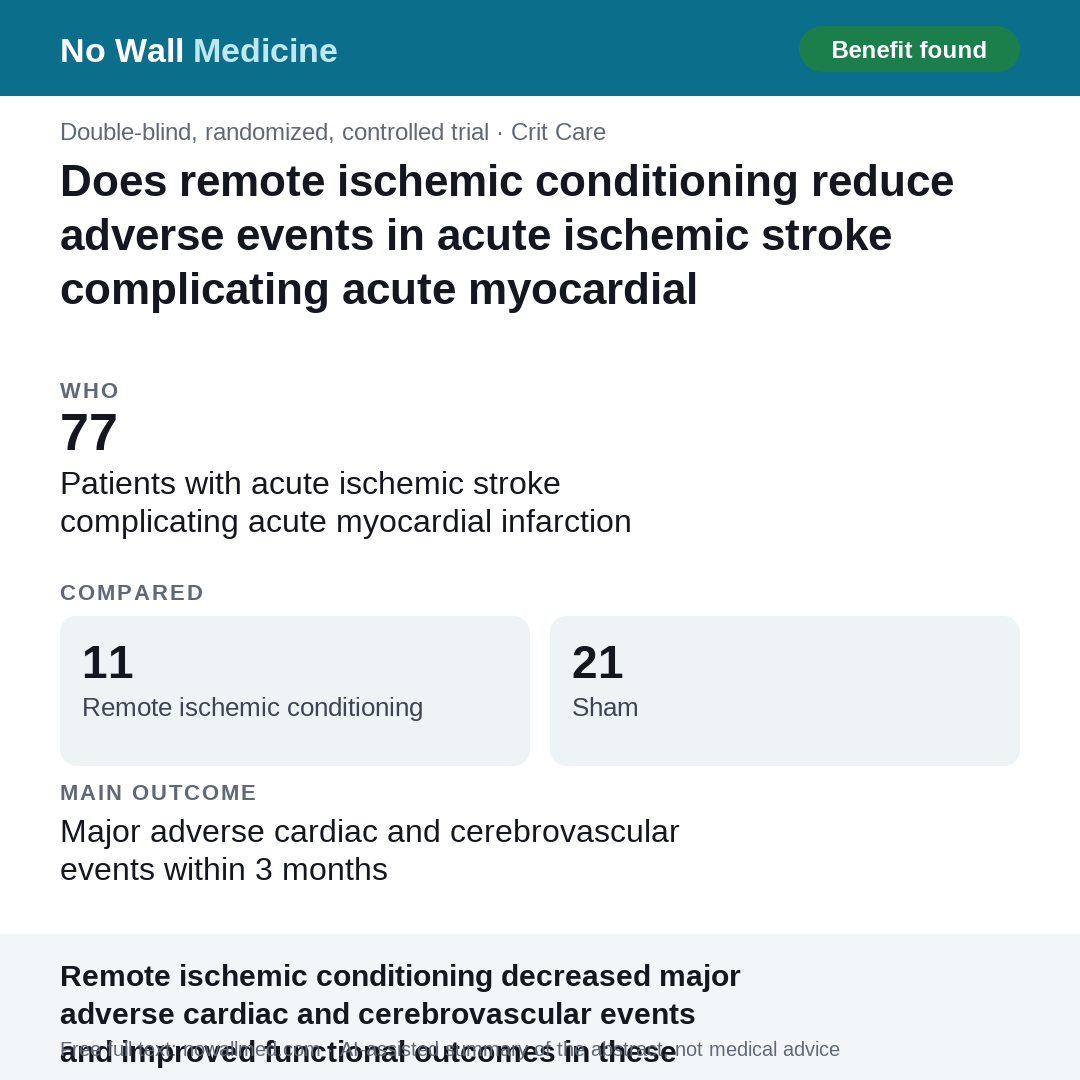
Clinical question: Does remote ischemic conditioning reduce adverse events in acute ischemic stroke complicating acute myocardial infarction?
Why it matters: It was unknown if remote ischemic conditioning, which involves brief cycles of blood flow restriction to a limb, provides clinical benefits for patients experiencing both a stroke and a heart attack.
Key points
- Eighty patients with acute ischemic stroke and acute myocardial infarction were randomized to receive either remote ischemic conditioning or a sham procedure twice daily for 2 weeks.
- At 3 months, 29.7% of the remote ischemic conditioning group experienced major adverse cardiac and cerebrovascular events compared to 52.5% in the sham group.
- The remote ischemic conditioning group had a 16.2% death rate at 3 months, while the sham group had a 37.5% death rate.
Headline and key points written with AI from the paper’s abstract, with every number checked against it. Read the paper before relying on them.
Was this summary helpful?
Subject terms
Cite this article
Li S, Xing X, Wang L, Xu J, Ren C, Li Y. Remote ischemic conditioning reduces adverse events in patients with acute ischemic stroke complicating acute myocardial infarction: a randomized controlled trial. Crit Care. 2024. doi:10.1186/s13054-023-04786-y
Spotted a mistake? Suggest a correction
Top studies every Monday
The week’s key trials and guidelines in your specialties, plus any topics you follow. By email, free.
Get the weekly digest