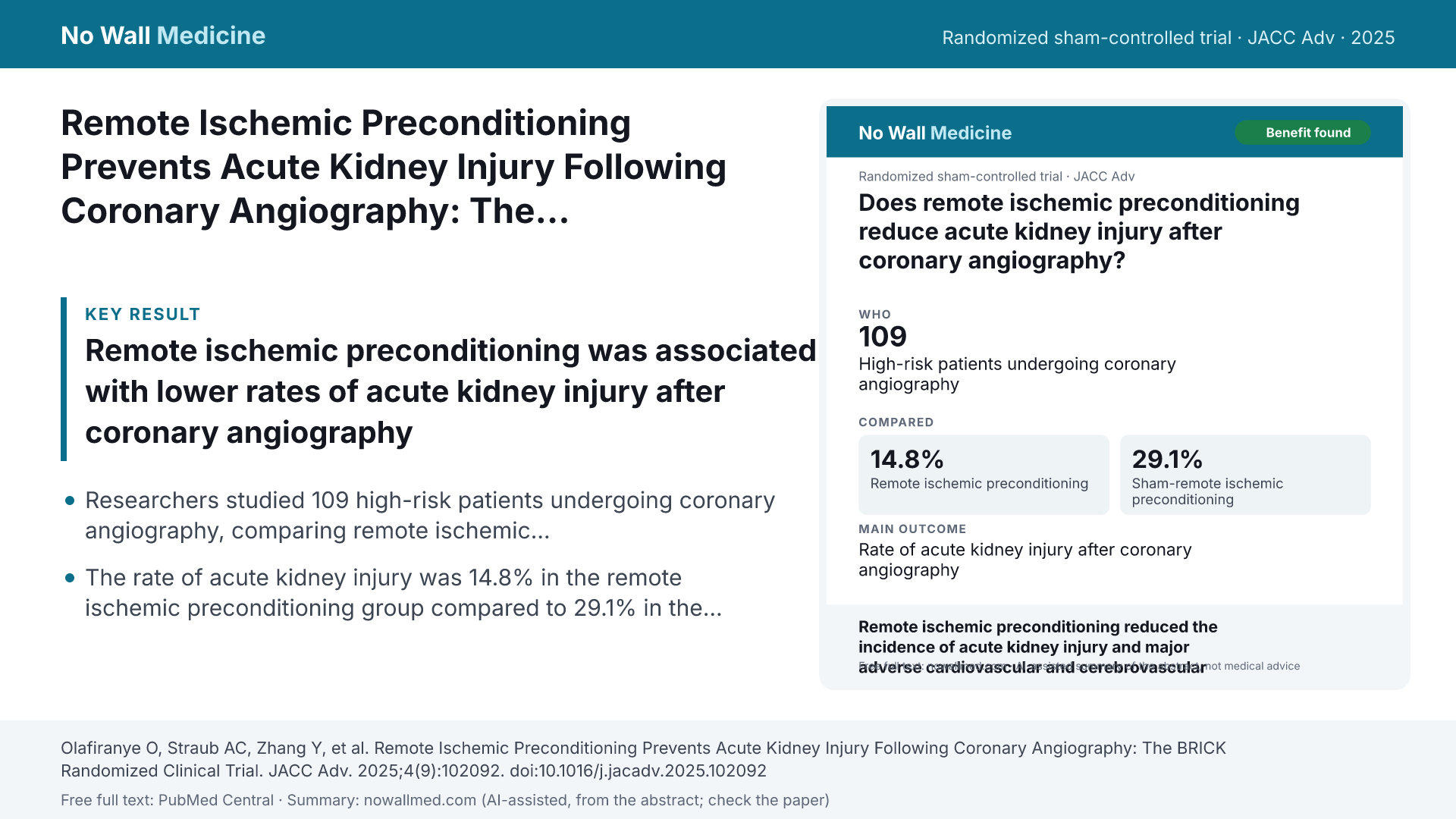
Remote ischemic preconditioning was associated with lower rates of acute kidney injury after coronary angiography
Remote Ischemic Preconditioning Prevents Acute Kidney Injury Following Coronary Angiography: The BRICK Randomized Clinical Trial
Randomized sham-controlled trialBenefit found
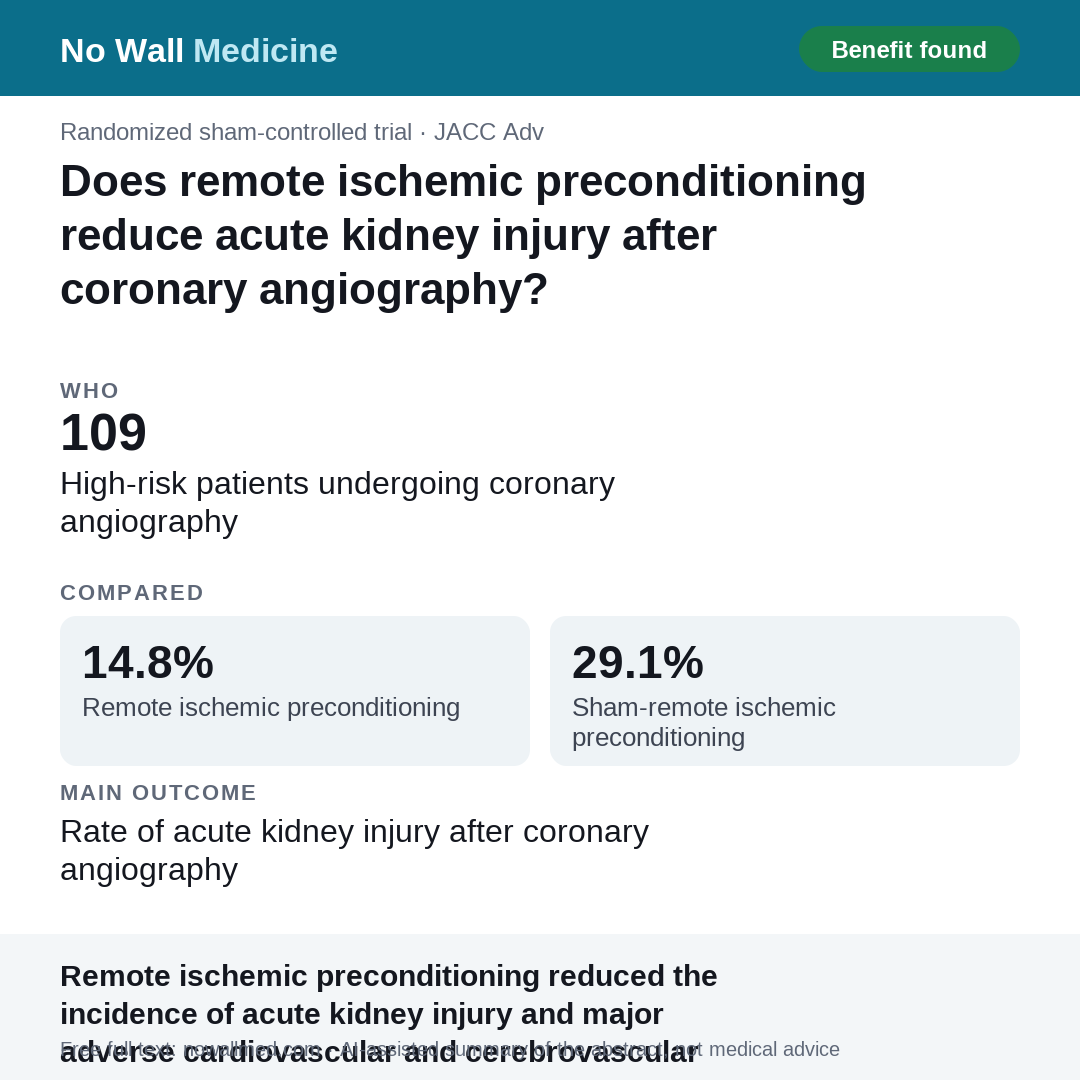
Does remote ischemic preconditioning reduce acute kidney injury after coronary angiography?
Who
109
High-risk patients undergoing coronary angiography
Compared
14.8%Remote ischemic preconditioning
29.1%Sham-remote ischemic preconditioning
Main outcome
Rate of acute kidney injury after coronary angiography
Result: odds ratio 0.43 (95% CI 0.17 to 0.94)
Bottom line: Remote ischemic preconditioning reduced the incidence of acute kidney injury and major adverse cardiovascular and cerebrovascular events.
JACC Adv · 2025-08-23Download image
Clinical question: Does remote ischemic preconditioning reduce acute kidney injury after coronary angiography?
Why it matters: There is currently no well-defined prophylactic therapy to prevent acute kidney injury in patients undergoing invasive coronary angiography.
In absolute numbers
Remote ischemic preconditioning: 14.8% · Sham-remote ischemic preconditioning: 29.1% → a difference of 14.3 percentage points, so about 7 people would need the treatment for 1 more to benefit (number needed to treat) over the trial’s follow-up.
Worked out by us from the two group results above, not reported by the authors. Check the paper for the exact outcome and timing.
Key points
- Researchers studied 109 high-risk patients undergoing coronary angiography, comparing remote ischemic preconditioning—briefly restricting blood flow to a limb—against a sham procedure.
- The rate of acute kidney injury was 14.8% in the remote ischemic preconditioning group compared to 29.1% in the sham group.
- At 6-month follow-up, remote ischemic preconditioning was associated with a lower rate of major adverse cardiovascular and cerebrovascular events at 16.7% versus 36.4%.
Headline and key points written with AI from the paper’s abstract, with every number checked against it. Read the paper before relying on them.
Was this summary helpful?
Cite this article
Olafiranye O, Straub AC, Zhang Y, Chaudhary R, Miller MP, Trivedi K. Remote Ischemic Preconditioning Prevents Acute Kidney Injury Following Coronary Angiography: The BRICK Randomized Clinical Trial. JACC Adv. 2025. doi:10.1016/j.jacadv.2025.102092
Spotted a mistake? Suggest a correction