Renal function status was linked to how intensive glucose control affects cognitive decline in diabetes
Renal function as an effect modifier of intensive glucose control in delaying cognitive function decline among individuals with type 2 diabetes: A revisit to the ACCORD MIND trial
Post-hoc analysis of a randomized trialMixed results
Does renal function modify the effect of intensive glucose control on cognitive decline?
Who
2977
People with type 2 diabetes
Compared
Intensive glucose control
Standard glucose control
Main outcome
Cognitive function changes from baseline to 40th month follow-up
Bottom line: Intensive glucose control benefits those with preserved renal function but may accelerate cognitive decline in those with impaired renal function.
Diabetes Obes Metab · 2024-07-04Download image
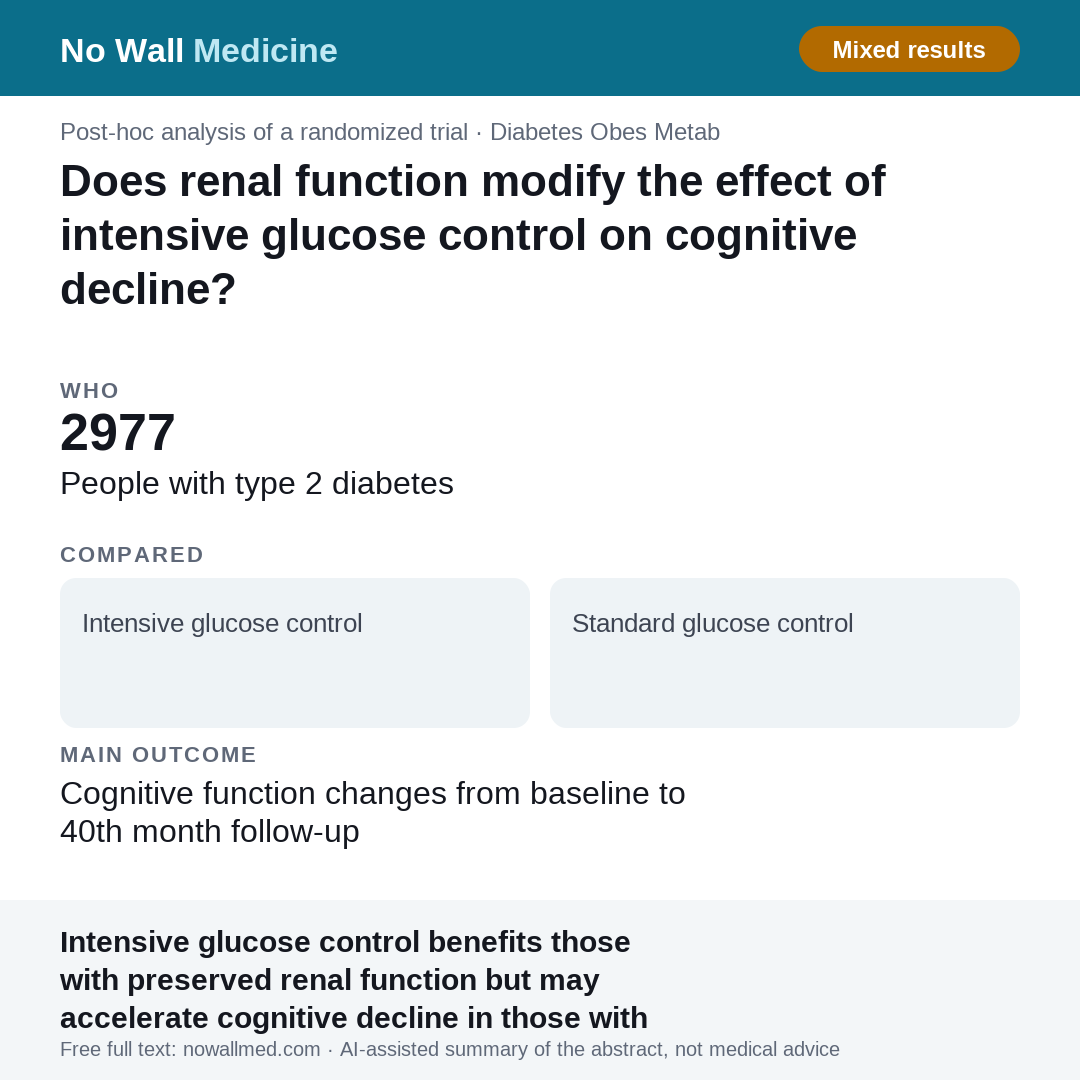
Clinical question: Does renal function modify the effect of intensive glucose control on cognitive decline?
Why it matters: It was unknown how specific patient characteristics, such as kidney function, influence whether intensive glucose control delays cognitive function decline in people with type 2 diabetes.
Key points
- Researchers analyzed 2977 participants from the ACCORD MIND trial to compare intensive glucose control with standard control on cognitive function changes over 40 months.
- Participants with urinary albumin levels <0.4 mg/dl had slower cognitive decline with intensive glucose control (Cohen's d: 0.25).
- Those with an estimated glomerular filtration rate <60 ml/min/1.73 m2 exhibited faster cognitive decline when undergoing intensive glucose control (Cohen's d: -0.30).
Headline and key points written with AI from the paper’s abstract, with every number checked against it. Read the paper before relying on them.
Was this summary helpful?
Subject terms
Cite this article
Li P, Kianmehr H, Guan D, Kulshreshtha A, Narayan KMV, Ali MK. Renal function as an effect modifier of intensive glucose control in delaying cognitive function decline among individuals with type 2 diabetes: A revisit to the ACCORD MIND trial. Diabetes Obes Metab. 2024. doi:10.1111/dom.15744
Spotted a mistake? Suggest a correction
Top studies every Monday
The week’s key trials and guidelines in your specialties, plus any topics you follow. By email, free.
Get the weekly digest