Combined magnetic stimulation showed better upper limb function scores than sham stimulation in stroke patients
Repetitive peripheral magnetic stimulation combined with transcranial magnetic stimulation in rehabilitation of upper extremity hemiparesis following stroke: a pilot study
Pilot studyBenefit found
Does combined peripheral and transcranial magnetic stimulation improve upper extremity function in subacute stroke?
Who
45
Subacute stroke patients
Compared
Central-associated peripheral stimulation
Central-stimulation-only
Control
Main outcome
Fugl-Meyer Assessment Upper Extremity score
Bottom line: Real-stimulus groups showed better upper extremity outcomes than the control group in subacute stroke patients.
J Rehabil Med · 2024-02-01Download image
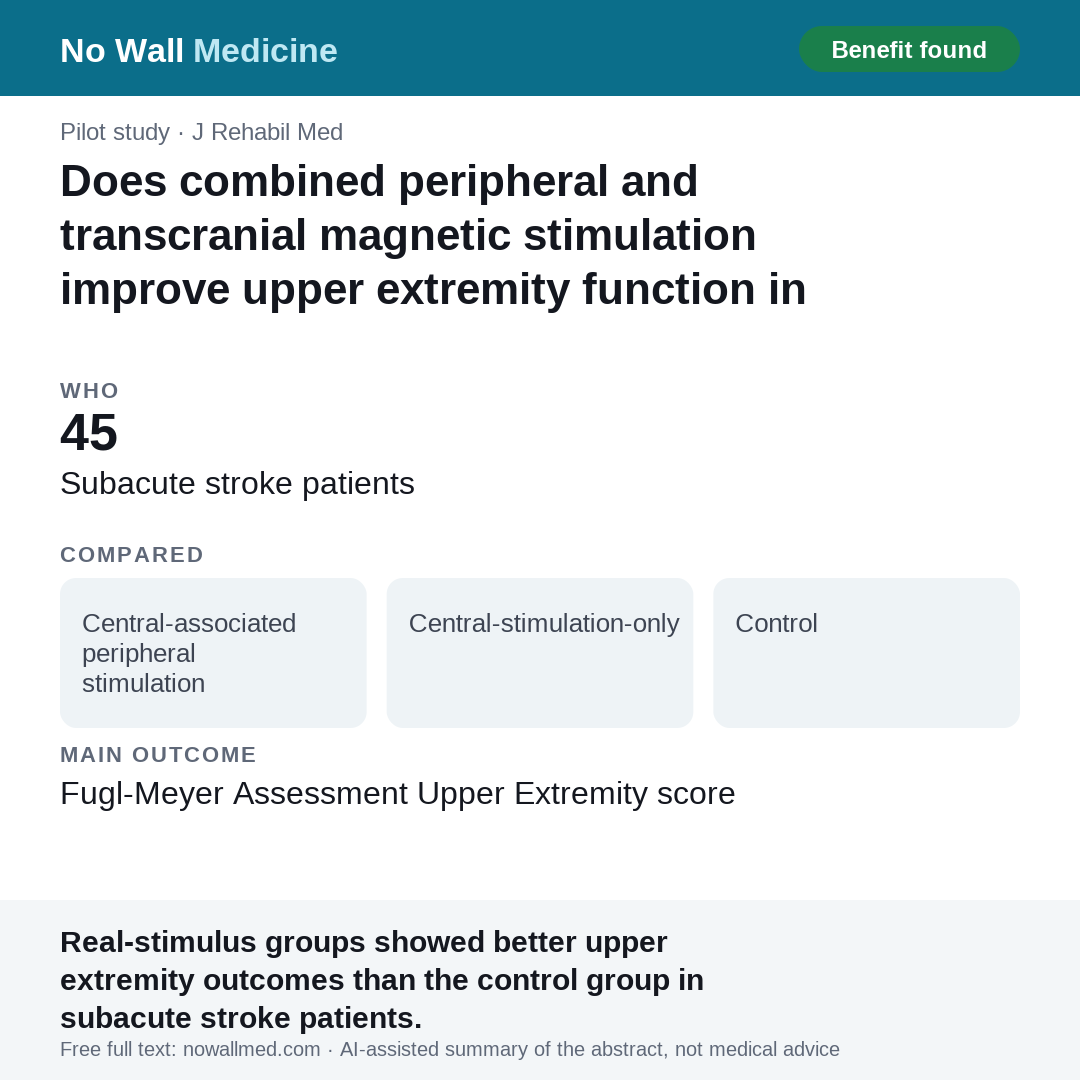
Clinical question: Does combined peripheral and transcranial magnetic stimulation improve upper extremity function in subacute stroke?
Why it matters: It is unknown if combining peripheral magnetic stimulation with brain stimulation improves upper limb function more effectively than brain stimulation alone in subacute stroke patients.
Key points
- Researchers studied 45 subacute stroke patients randomized into a combined stimulation group, a brain-only stimulation group, or a sham stimulation control group.
- The combined stimulation group and the brain-only stimulation group showed significant improvements in Fugl-Meyer Assessment Upper Extremity scores compared to the control group.
- No substantial positive correlation was found between changes in upper limb function scores and short-interval intracortical inhibition, a measure of brain activity.
Headline and key points written with AI from the paper’s abstract, with every number checked against it. Read the paper before relying on them.
Was this summary helpful?
Subject terms
Cite this article
Liang S, Wang W, Yu F, Pan L, Xu D, Hu R. Repetitive peripheral magnetic stimulation combined with transcranial magnetic stimulation in rehabilitation of upper extremity hemiparesis following stroke: a pilot study. J Rehabil Med. 2024. doi:10.2340/jrm.v56.19449
Spotted a mistake? Suggest a correction
Top studies every Monday
The week’s key trials and guidelines in your specialties, plus any topics you follow. By email, free.
Get the weekly digest