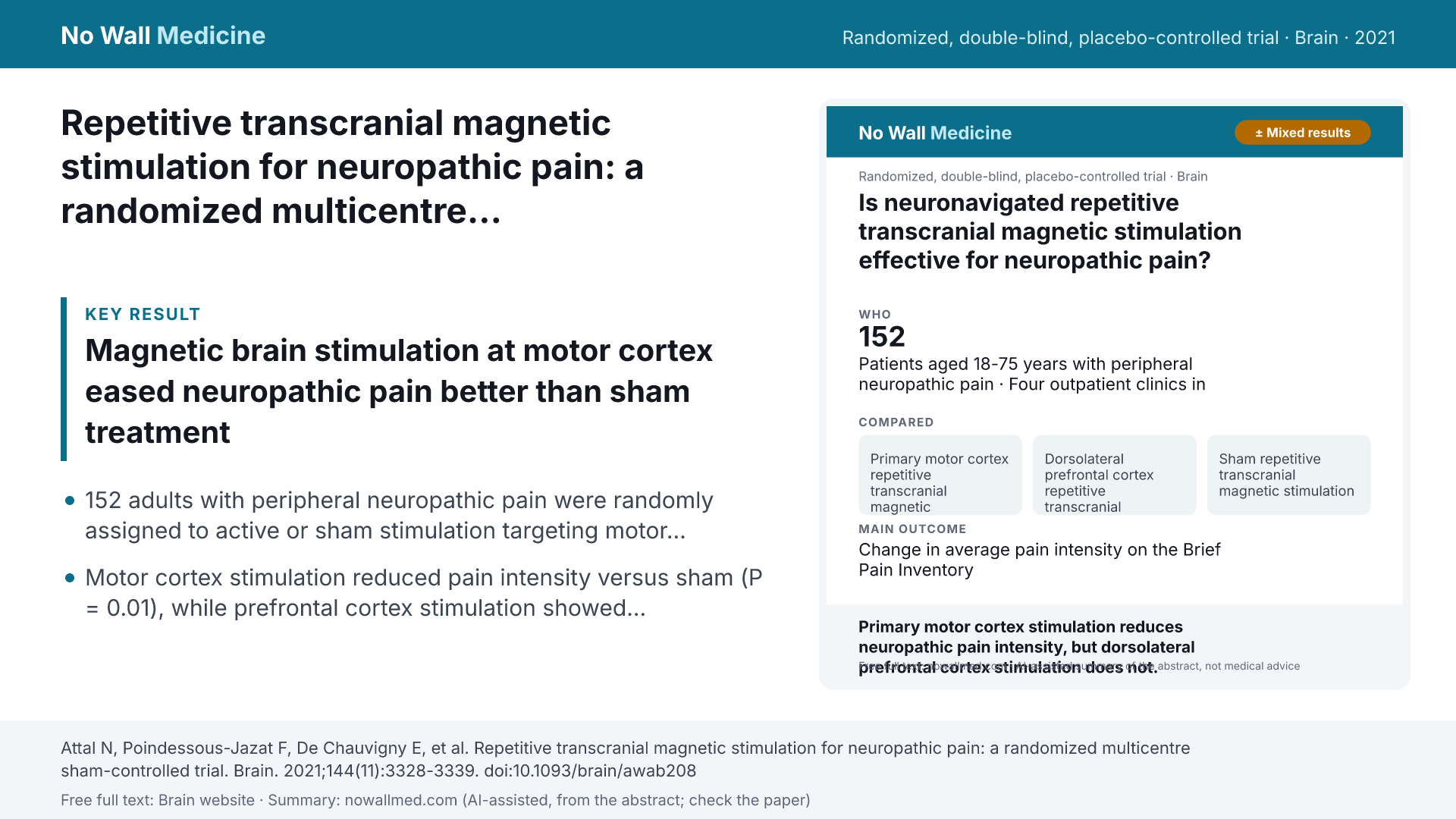
Repetitive transcranial magnetic stimulation for neuropathic pain: a randomized multicentre sham-controlled trial
Key result: Magnetic brain stimulation at motor cortex eased neuropathic pain better than sham treatment
Key points
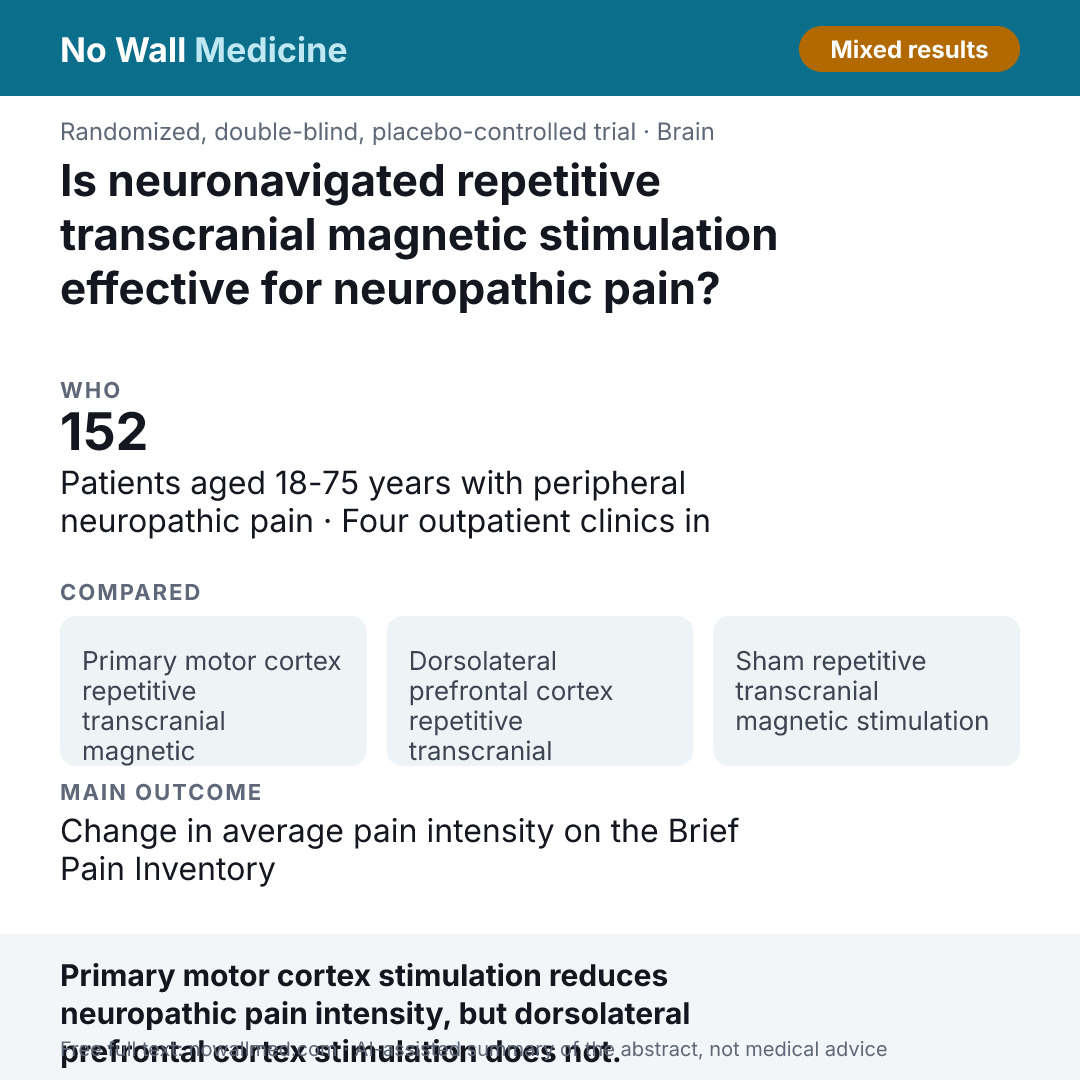
- 152 adults with peripheral neuropathic pain were randomly assigned to active or sham stimulation targeting motor or prefrontal cortex over 25 weeks.
- Motor cortex stimulation reduced pain intensity versus sham (P = 0.01), while prefrontal cortex stimulation showed no significant difference from sham (P = 0.9).
- Headache was the most common side effect, occurring in 34.7% of motor cortex patients and 27.1% of sham patients, with no significant difference between groups.
Why it matters: Previous evidence for repetitive transcranial magnetic stimulation in neuropathic pain was of low quality, leaving its efficacy unclear.
Limitation the authors note: The study was conducted at four outpatient clinics in France, which may limit generalizability to other populations.
Discussion prompts
- Would these patients look like yours? Who was left out?
- Is the main outcome one that matters to patients?
- Is the difference large enough to change what you do?
Cite: Attal N, Poindessous-Jazat F, De Chauvigny E, et al. Repetitive transcranial magnetic stimulation for neuropathic pain: a randomized multicentre sham-controlled trial. Brain. 2021;144(11):3328-3339. doi:10.1093/brain/awab208
Free full text: Brain website · Summary and visual abstract: nowallmed.com/a/repetitive-transcranial-magnetic-stimulation-for-neuropathic-pain-a-vm1has/ (AI-assisted from the abstract; check the paper before relying on it).