Navigated magnetic brain stimulation improved PTSD symptom relief when added to intensive residential therapy
Residential Therapy With Navigated Transcranial Magnetic Stimulation for Combat-Related PTSD: A Randomized Clinical Trial
Randomized clinical trialBenefit found
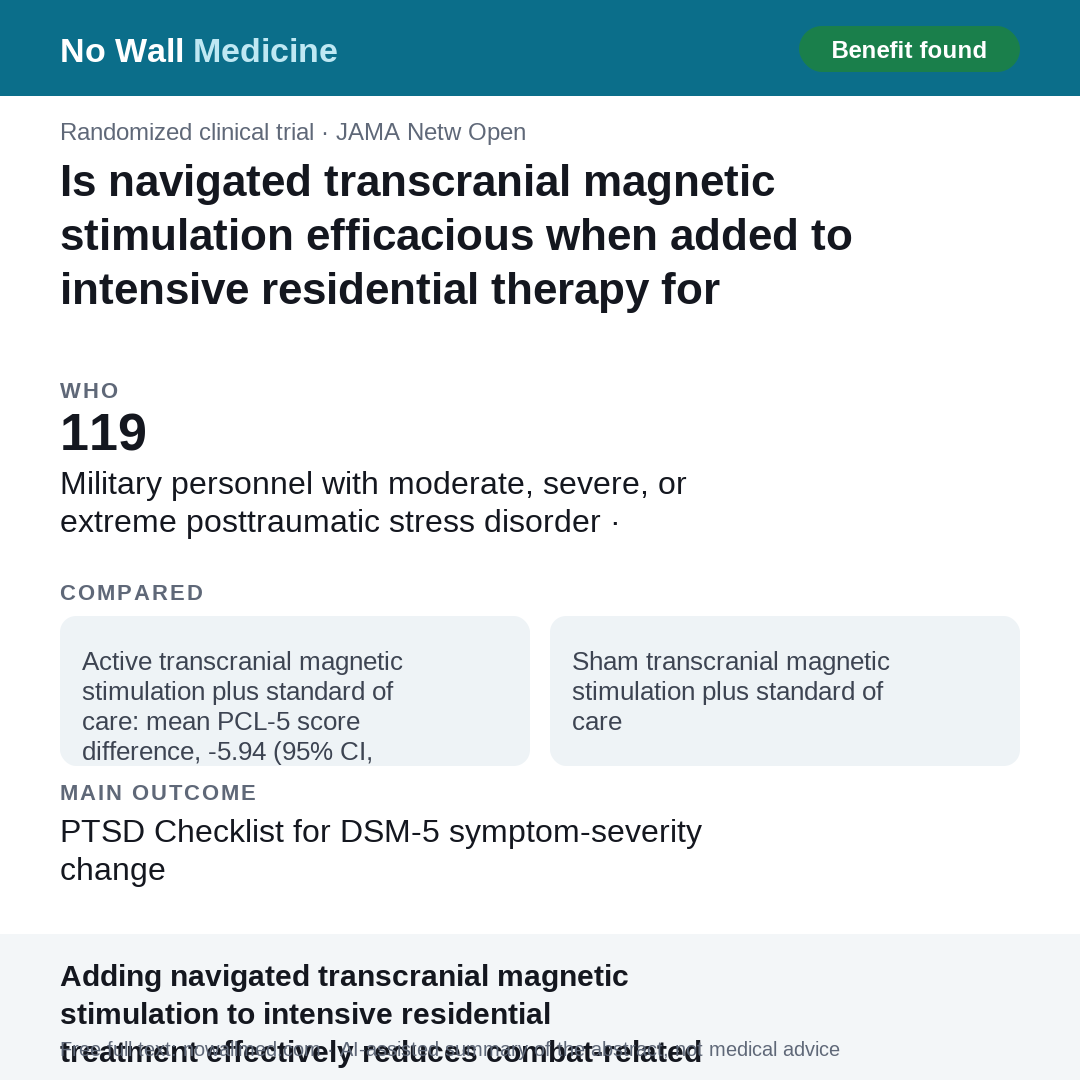
Is navigated transcranial magnetic stimulation efficacious when added to intensive residential therapy for combat-related PTSD?
Who
119
Military personnel with moderate, severe, or extreme posttraumatic stress disorder · Residential facility specializing in military mental health
Compared
Active transcranial magnetic stimulation plus standard of care: mean PCL-5 score difference, -5.94 (95% CI, -11.77 to -0.10)
Sham transcranial magnetic stimulation plus standard of care
Main outcome
PTSD Checklist for DSM-5 symptom-severity change
Result: mean PCL-5 score difference, -5.94 (95% CI, -11.77 to -0.10)
Bottom line: Adding navigated transcranial magnetic stimulation to intensive residential treatment effectively reduces combat-related posttraumatic stress disorder symptoms.
JAMA Netw Open · 2026-04-01Download image
Clinical question: Is navigated transcranial magnetic stimulation efficacious when added to intensive residential therapy for combat-related PTSD?
Why it matters: Improved treatments are needed for combat-related posttraumatic stress disorder.
Key points
- The study randomized 119 military personnel and veterans with moderate to extreme posttraumatic stress disorder to receive either intensive residential therapy plus active magnetic brain stimulation or sham stimulation.
- At the end of treatment, active magnetic brain stimulation showed superior symptom relief on the PTSD Checklist for DSM-5 with a mean score difference of -5.94.
- During follow-up, the active magnetic brain stimulation group showed more durable symptom relief on the PTSD Checklist for DSM-5 and the Patient Health Questionnaire-9 depression module.
Headline and key points written with AI from the paper’s abstract, with every number checked against it. Read the paper before relying on them.
Topics
Spotted a mistake? Suggest a correction