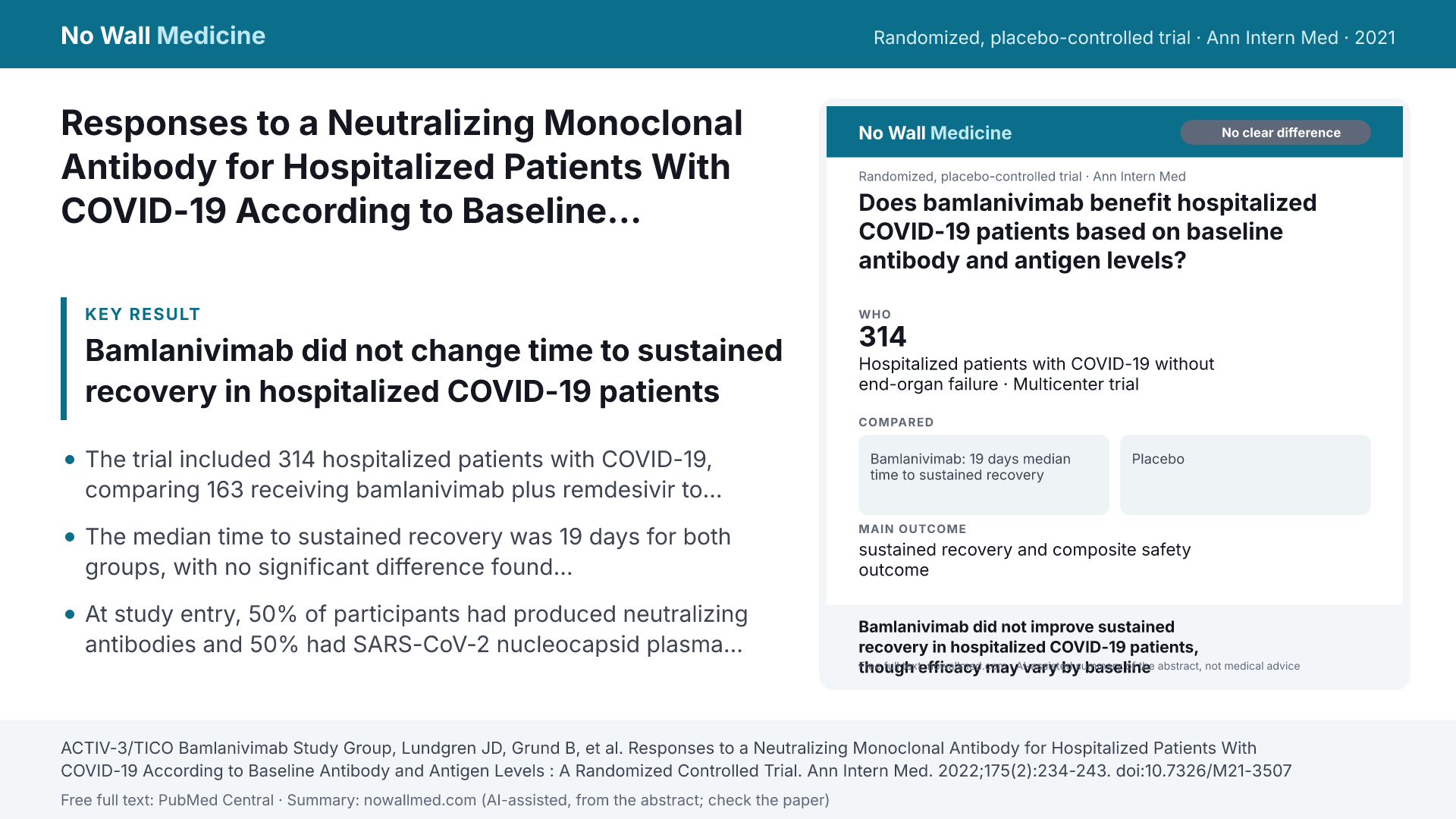
Bamlanivimab did not change time to sustained recovery in hospitalized COVID-19 patients
Responses to a Neutralizing Monoclonal Antibody for Hospitalized Patients With COVID-19 According to Baseline Antibody and Antigen Levels : A Randomized Controlled Trial
Randomized, placebo-controlled trialNo clear difference
Does bamlanivimab benefit hospitalized COVID-19 patients based on baseline antibody and antigen levels?
Who
314
Hospitalized patients with COVID-19 without end-organ failure · Multicenter trial
Compared
Bamlanivimab: 19 days median time to sustained recovery
Placebo
Main outcome
sustained recovery and composite safety outcome
Result: subhazard ratio 0.99 (95% CI 0.79 to 1.22)
Bottom line: Bamlanivimab did not improve sustained recovery in hospitalized COVID-19 patients, though efficacy may vary by baseline antibody levels.
Limitation: Trial prematurely stopped for futility, small sample size, and multiple subgroups analyzed.
Funded by: U.S. government Operation Warp Speed and NIAID
Ann Intern Med · 2021-12-21Download image
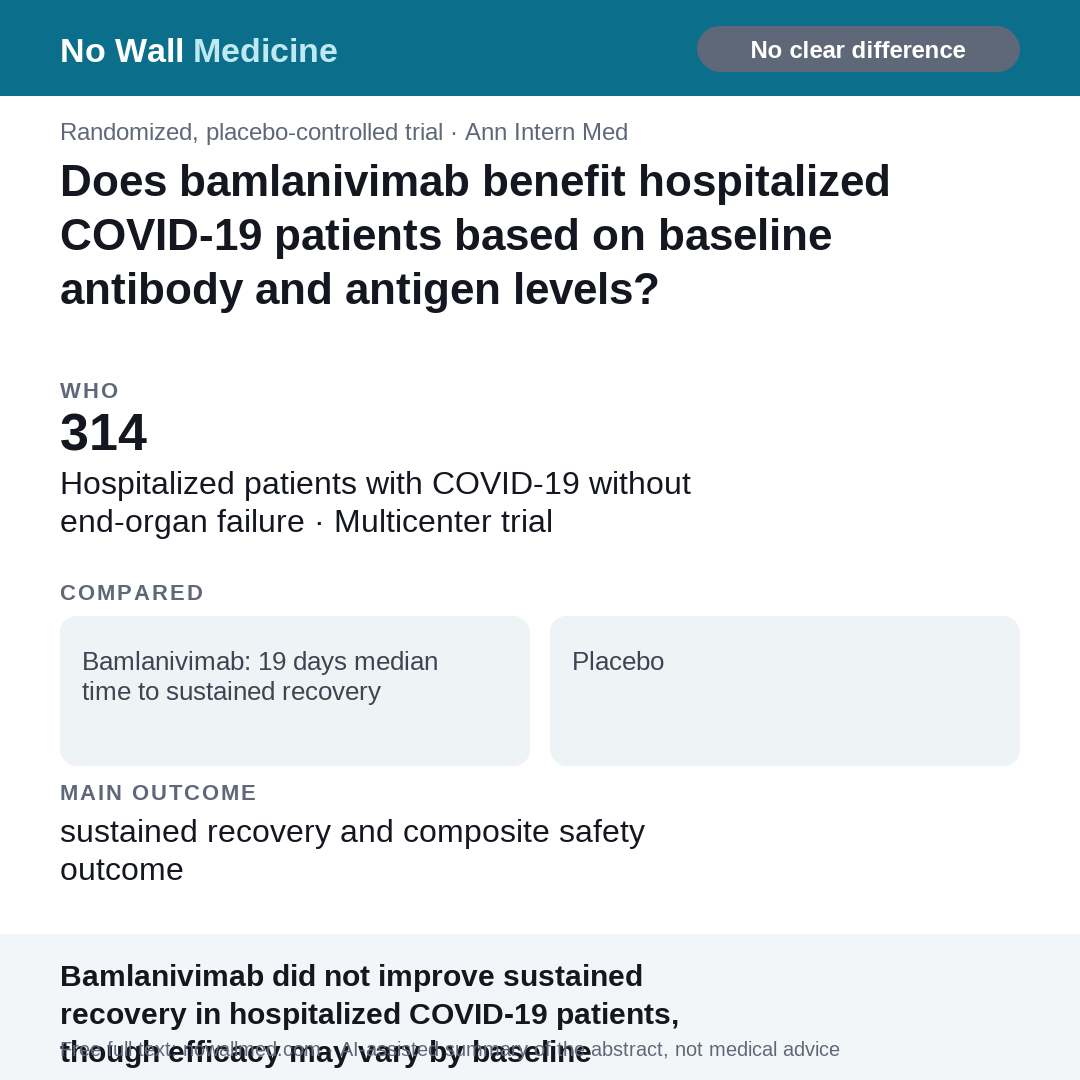
Clinical question: Does bamlanivimab benefit hospitalized COVID-19 patients based on baseline antibody and antigen levels?
Why it matters: It was unknown if the benefit of bamlanivimab depends on a patient's existing neutralizing antibody levels or viral loads at the start of treatment.
Key points
- The trial included 314 hospitalized patients with COVID-19, comparing 163 receiving bamlanivimab plus remdesivir to 151 receiving a placebo.
- The median time to sustained recovery was 19 days for both groups, with no significant difference found between bamlanivimab and placebo (sHR, 0.99 [95% CI, 0.79 to 1.22]).
- At study entry, 50% of participants had produced neutralizing antibodies and 50% had SARS-CoV-2 nucleocapsid plasma antigen levels of at least 1000 ng/L.
Limitation the authors note: The study was a subgroup analysis of a trial that was stopped early due to futility, had a small sample size, and included multiple subgroups.
Headline and key points written with AI from the paper’s abstract, with every number checked against it. Read the paper before relying on them.
Was this summary helpful?
Subject terms
Cite this article
ACTIV-3/TICO Bamlanivimab Study Group, Lundgren JD, Grund B, et al. Responses to a Neutralizing Monoclonal Antibody for Hospitalized Patients With COVID-19 According to Baseline Antibody and Antigen Levels : A Randomized Controlled Trial. Ann Intern Med. 2021. doi:10.7326/M21-3507
Spotted a mistake? Suggest a correction