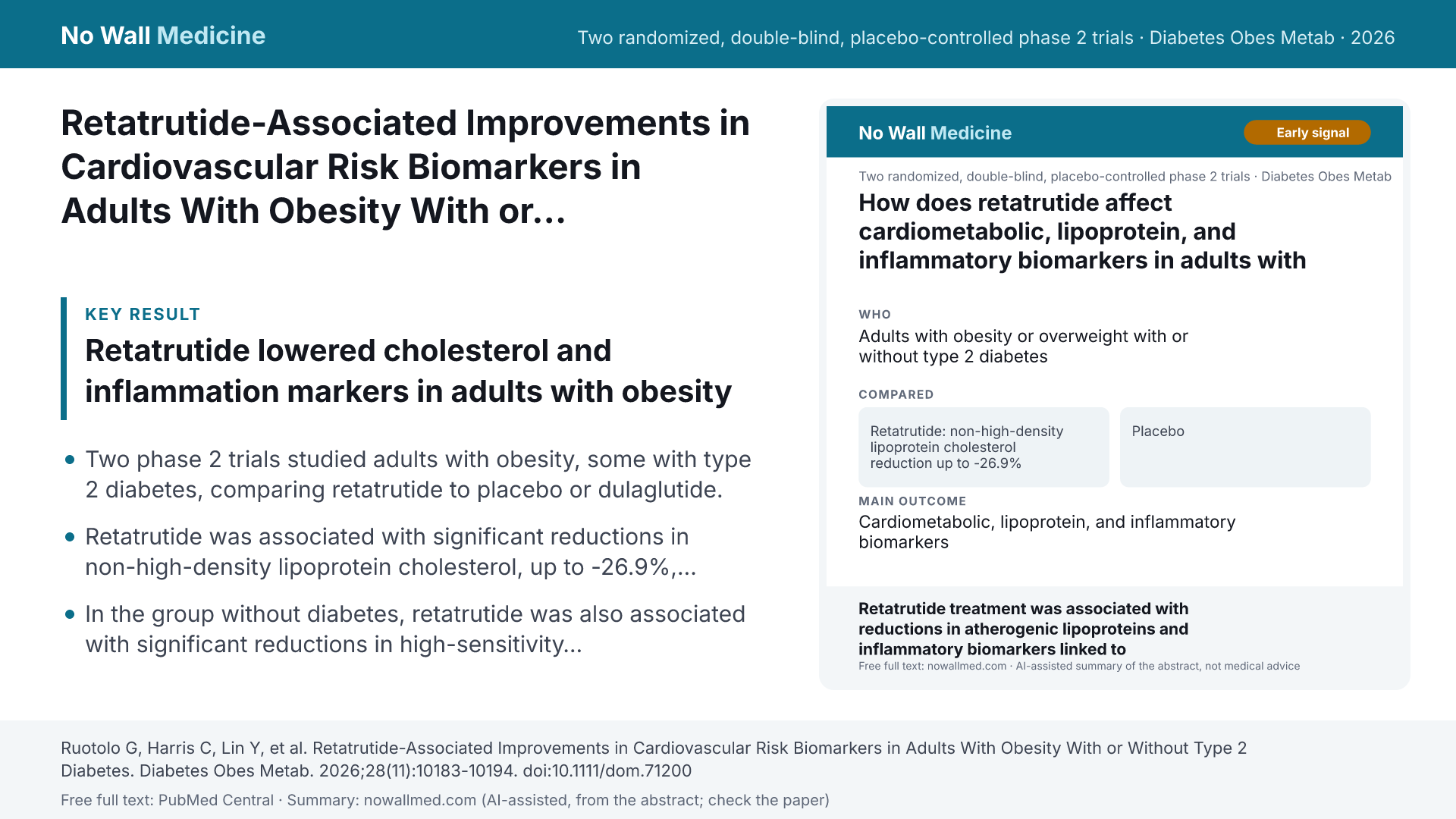
Retatrutide lowered cholesterol and inflammation markers in adults with obesity
Retatrutide-Associated Improvements in Cardiovascular Risk Biomarkers in Adults With Obesity With or Without Type 2 Diabetes
Two randomized, double-blind, placebo-controlled phase 2 trialsEarly signal
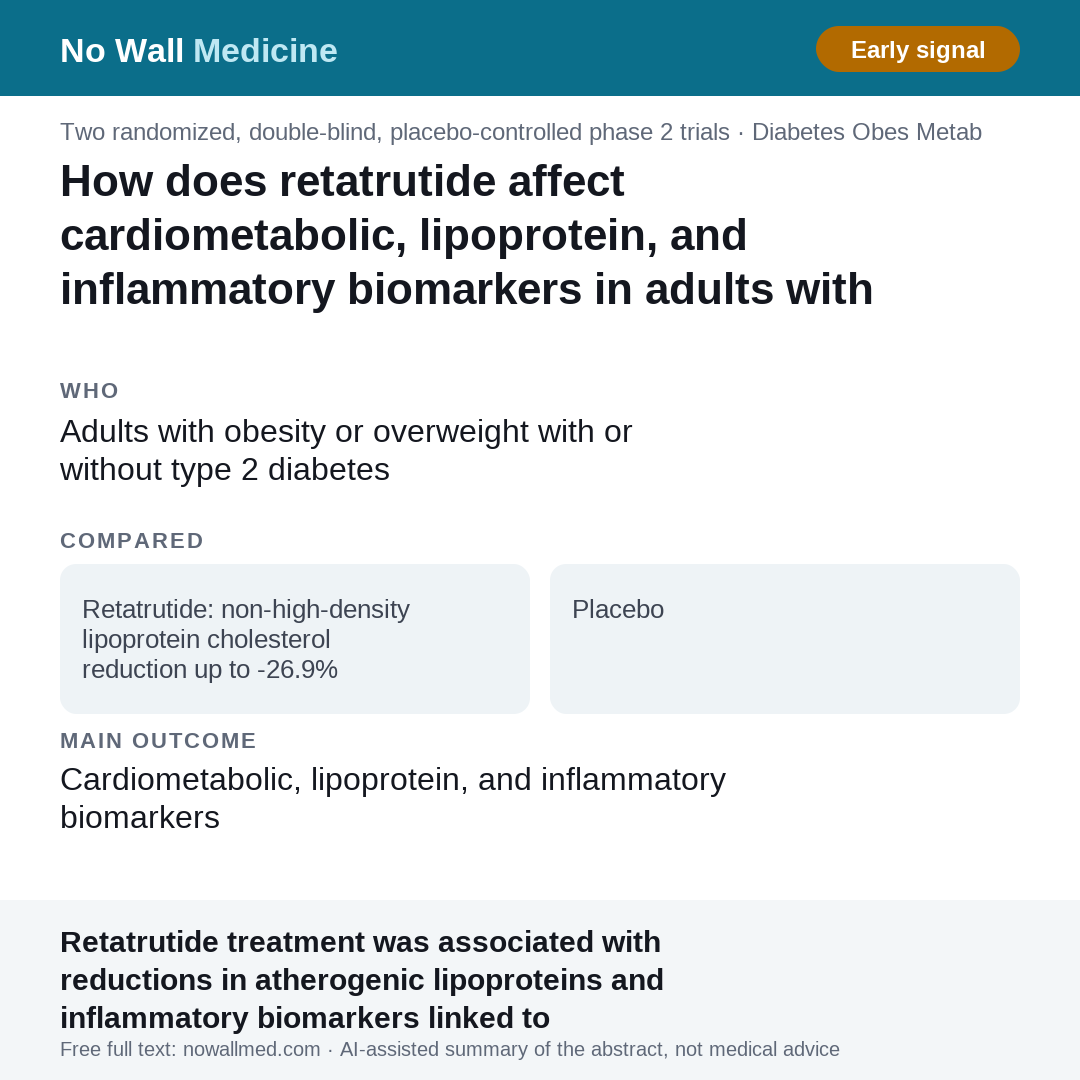
How does retatrutide affect cardiometabolic, lipoprotein, and inflammatory biomarkers in adults with obesity?
Who
Adults with obesity or overweight with or without type 2 diabetes
Compared
Retatrutide: non-high-density lipoprotein cholesterol reduction up to -26.9%
Placebo
Main outcome
Cardiometabolic, lipoprotein, and inflammatory biomarkers
Bottom line: Retatrutide treatment was associated with reductions in atherogenic lipoproteins and inflammatory biomarkers linked to cardiovascular disease risk.
Diabetes Obes Metab · 2026-08-17Download image
Clinical question: How does retatrutide affect cardiometabolic, lipoprotein, and inflammatory biomarkers in adults with obesity?
Why it matters: The effects of retatrutide on specific cardiometabolic risk, lipoprotein, and inflammatory biomarkers were not previously characterized in detail.
Key points
- Two phase 2 trials studied adults with obesity, some with type 2 diabetes, comparing retatrutide to placebo or dulaglutide.
- Retatrutide was associated with significant reductions in non-high-density lipoprotein cholesterol, up to -26.9%, and apolipoprotein B, up to -24.2%.
- In the group without diabetes, retatrutide was also associated with significant reductions in high-sensitivity C-reactive protein and interleukin-6.
Limitation the authors note: The analysis was post hoc and focused on biomarkers rather than direct cardiovascular outcomes.
Headline and key points written with AI from the paper’s abstract, with every number checked against it. Read the paper before relying on them.
Was this summary helpful?
Subject terms
Cite this article
Ruotolo G, Harris C, Lin Y, et al. Retatrutide-Associated Improvements in Cardiovascular Risk Biomarkers in Adults With Obesity With or Without Type 2 Diabetes. Diabetes Obes Metab. 2026. doi:10.1111/dom.71200
Spotted a mistake? Suggest a correction