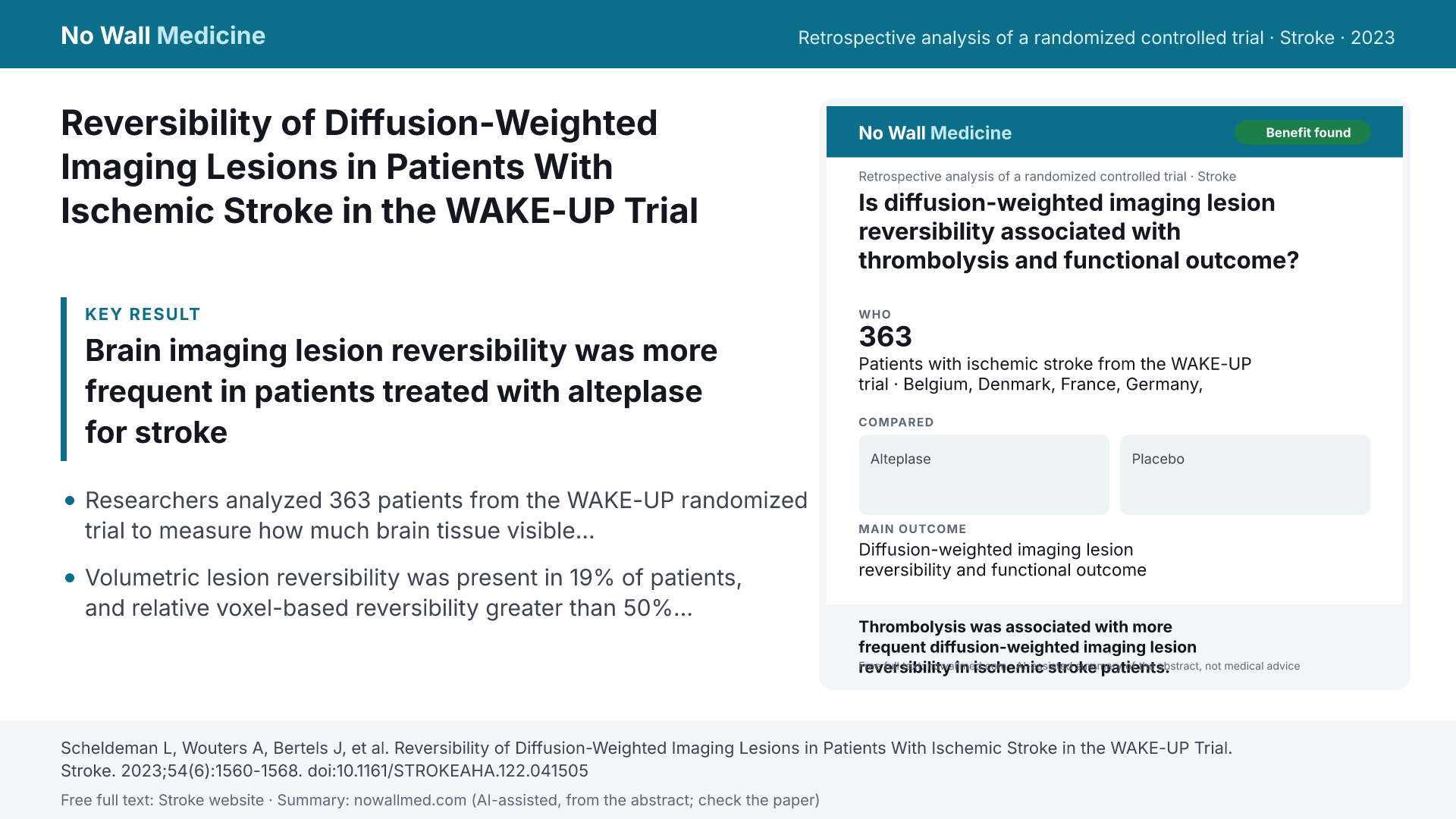
Brain imaging lesion reversibility was more frequent in patients treated with alteplase for stroke
Reversibility of Diffusion-Weighted Imaging Lesions in Patients With Ischemic Stroke in the WAKE-UP Trial
Retrospective analysis of a randomized controlled trialBenefit found
Is diffusion-weighted imaging lesion reversibility associated with thrombolysis and functional outcome?
Who
363
Patients with ischemic stroke from the WAKE-UP trial · Belgium, Denmark, France, Germany, Spain and United Kingdom
Compared
Alteplase
Placebo
Main outcome
Diffusion-weighted imaging lesion reversibility and functional outcome
Result: OR, 1.86 [95% CI, 1.09-3.17] for volumetric reversibility
Bottom line: Thrombolysis was associated with more frequent diffusion-weighted imaging lesion reversibility in ischemic stroke patients.
Stroke · 2023-05-09Download image
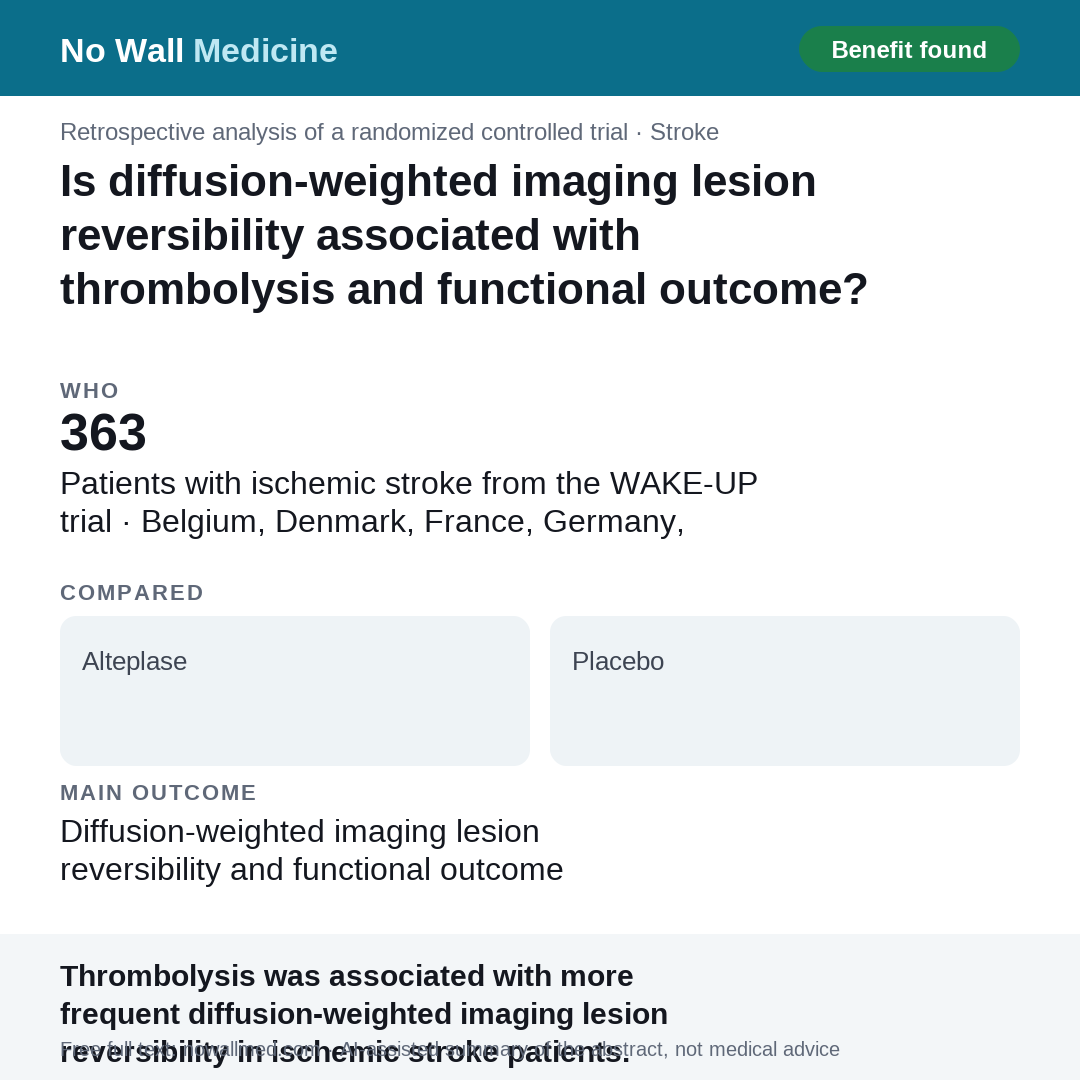
Clinical question: Is diffusion-weighted imaging lesion reversibility associated with thrombolysis and functional outcome?
Why it matters: It was unknown if the lesions seen on magnetic resonance imaging represent permanently injured tissue or if they can reverse after treatment.
Key points
- Researchers analyzed 363 patients from the WAKE-UP randomized trial to measure how much brain tissue visible on diffusion-weighted imaging (a type of MRI) changed after 24 hours.
- Volumetric lesion reversibility was present in 19% of patients, and relative voxel-based reversibility greater than 50% was more frequent in patients treated with alteplase compared to placebo.
- Relative voxel-based lesion reversibility greater than 50% was associated with an excellent functional outcome, defined as a modified Rankin Scale score of 0-1.
Headline and key points written with AI from the paper’s abstract, with every number checked against it. Read the paper before relying on them.
Was this summary helpful?
Subject terms
Cite this article
Scheldeman L, Wouters A, Bertels J, et al. Reversibility of Diffusion-Weighted Imaging Lesions in Patients With Ischemic Stroke in the WAKE-UP Trial. Stroke. 2023. doi:10.1161/STROKEAHA.122.041505
Spotted a mistake? Suggest a correction