Specific genetic mutations in bacteria are linked to resistance against ampicillin and cefotaxime
Revisiting mutational resistance to ampicillin and cefotaxime in Haemophilus influenzae
Systematic meta-analysisKey finding
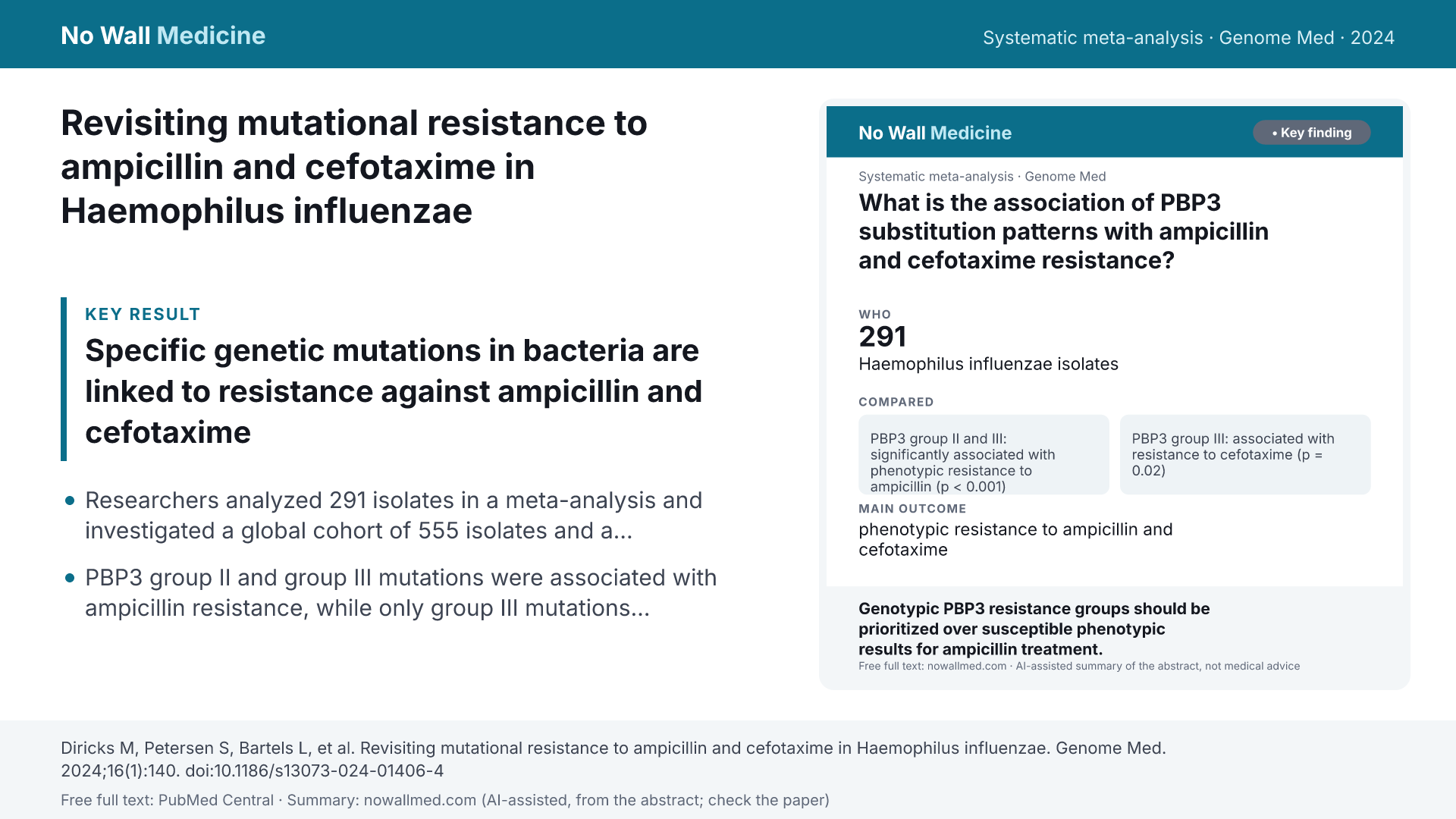
What is the association of PBP3 substitution patterns with ampicillin and cefotaxime resistance?
Who
291
Haemophilus influenzae isolates
Compared
PBP3 group II and III: significantly associated with phenotypic resistance to ampicillin (p < 0.001)
PBP3 group III: associated with resistance to cefotaxime (p = 0.02)
Main outcome
phenotypic resistance to ampicillin and cefotaxime
Bottom line: Genotypic PBP3 resistance groups should be prioritized over susceptible phenotypic results for ampicillin treatment.
Limitation: Implications on treatment outcome and bacterial fitness need to be determined.
Genome Med · 2024-12-04 · Save PNG

Clinical question: What is the association of PBP3 substitution patterns with ampicillin and cefotaxime resistance?
Why it matters: The relationship between genetic resistance markers and actual drug resistance in Haemophilus influenzae is unclear, making it difficult to manage infections.
Key points
- Researchers analyzed 291 isolates in a meta-analysis and investigated a global cohort of 555 isolates and a clinical cohort of 298 isolates.
- PBP3 group II and group III mutations were associated with ampicillin resistance, while only group III mutations were associated with cefotaxime resistance.
- Group II mutations had low specificities of < 16% for ruling in ampicillin resistance because many were classified as susceptible by standard tests.
Headline and key points written with AI from the paper’s abstract, with every number checked against it. Read the paper before relying on them.
Was this summary helpful?
Subject terms
Headline, design, result, key points, caveat and citation as plain text.
Cite this article
Diricks M, Petersen S, Bartels L, et al. Revisiting mutational resistance to ampicillin and cefotaxime in Haemophilus influenzae. Genome Med. 2024;16(1):140. doi:10.1186/s13073-024-01406-4
Spotted a mistake? Suggest a correction