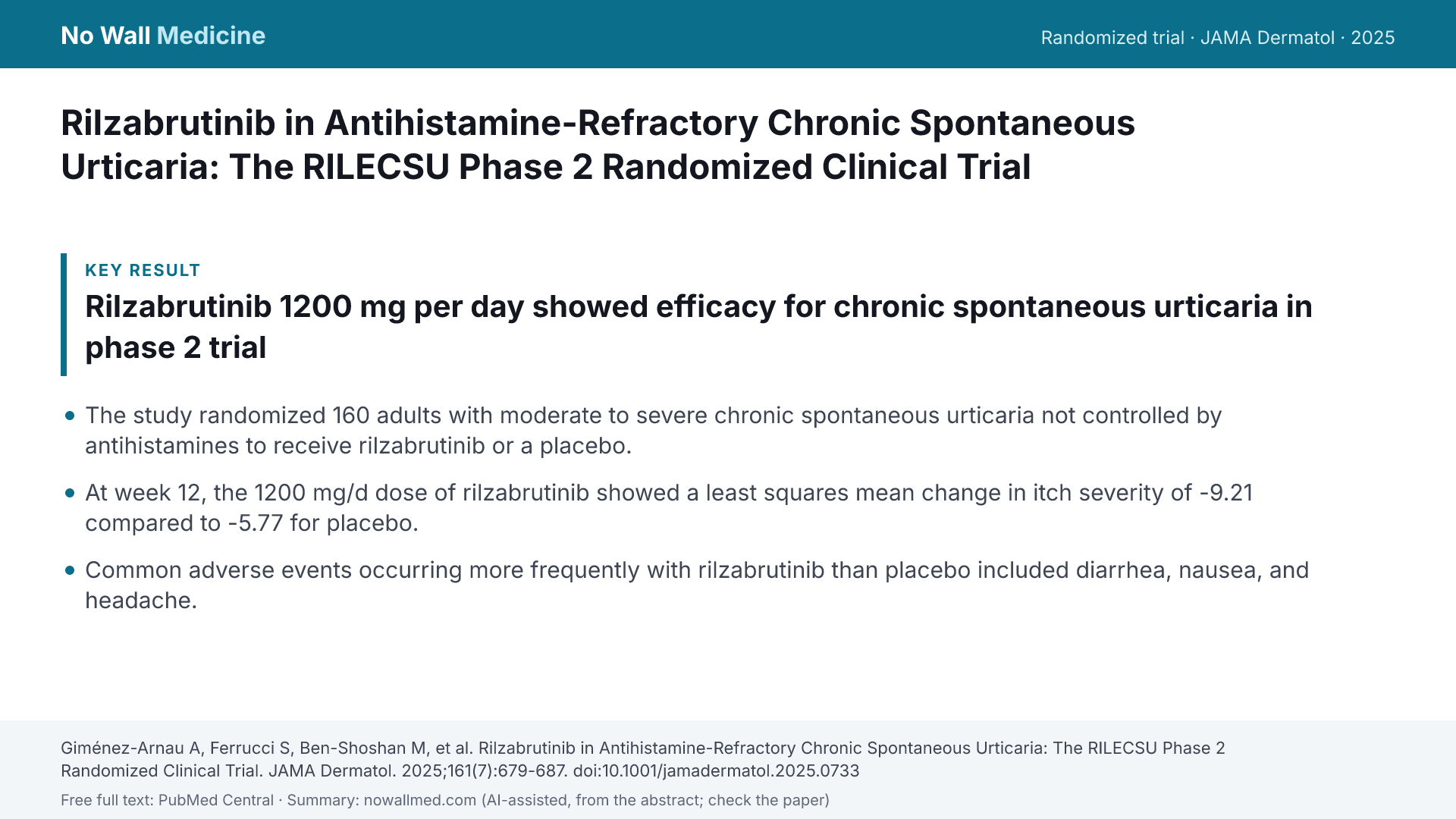
Rilzabrutinib in Antihistamine-Refractory Chronic Spontaneous Urticaria: The RILECSU Phase 2 Randomized Clinical Trial
Key result: Rilzabrutinib 1200 mg per day showed efficacy for chronic spontaneous urticaria in phase 2 trial
Key points
- The study randomized 160 adults with moderate to severe chronic spontaneous urticaria not controlled by antihistamines to receive rilzabrutinib or a placebo.
- At week 12, the 1200 mg/d dose of rilzabrutinib showed a least squares mean change in itch severity of -9.21 compared to -5.77 for placebo.
- Common adverse events occurring more frequently with rilzabrutinib than placebo included diarrhea, nausea, and headache.
Why it matters: Patients with moderate to severe chronic spontaneous urticaria often do not achieve adequate control using standard H1-antihistamine treatments.
Discussion prompts
- Would these patients look like yours? Who was left out?
- Is the main outcome one that matters to patients?
- Is the difference large enough to change what you do?
Cite: Giménez-Arnau A, Ferrucci S, Ben-Shoshan M, et al. Rilzabrutinib in Antihistamine-Refractory Chronic Spontaneous Urticaria: The RILECSU Phase 2 Randomized Clinical Trial. JAMA Dermatol. 2025;161(7):679-687. doi:10.1001/jamadermatol.2025.0733
Free full text: PubMed Central · Summary and visual abstract: nowallmed.com/a/rilzabrutinib-in-antihistamine-refractory-chronic-spontaneous-1tpuv5s/ (AI-assisted from the abstract; check the paper before relying on it).