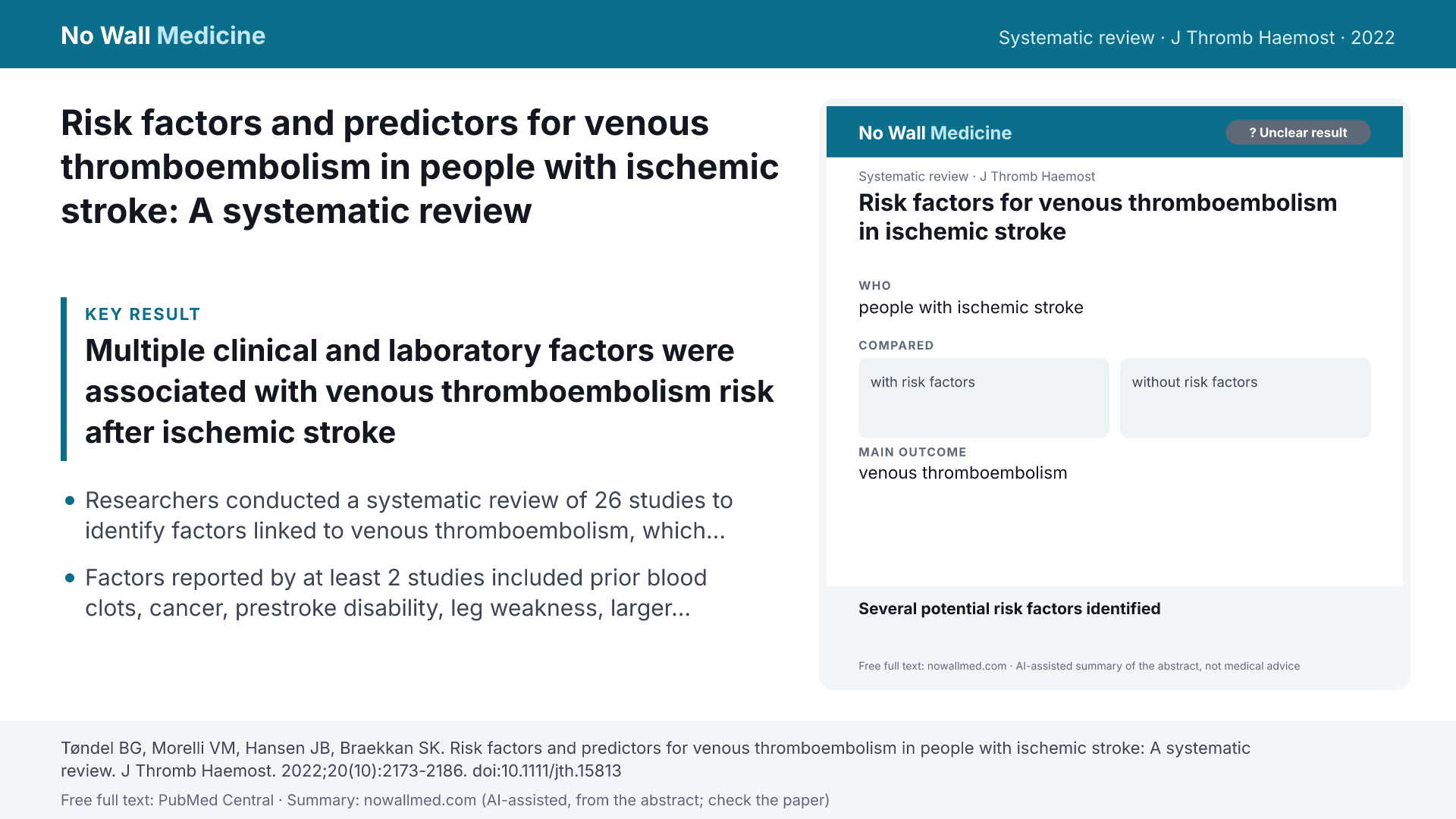
Multiple clinical and laboratory factors were associated with venous thromboembolism risk after ischemic stroke
Risk factors and predictors for venous thromboembolism in people with ischemic stroke: A systematic review
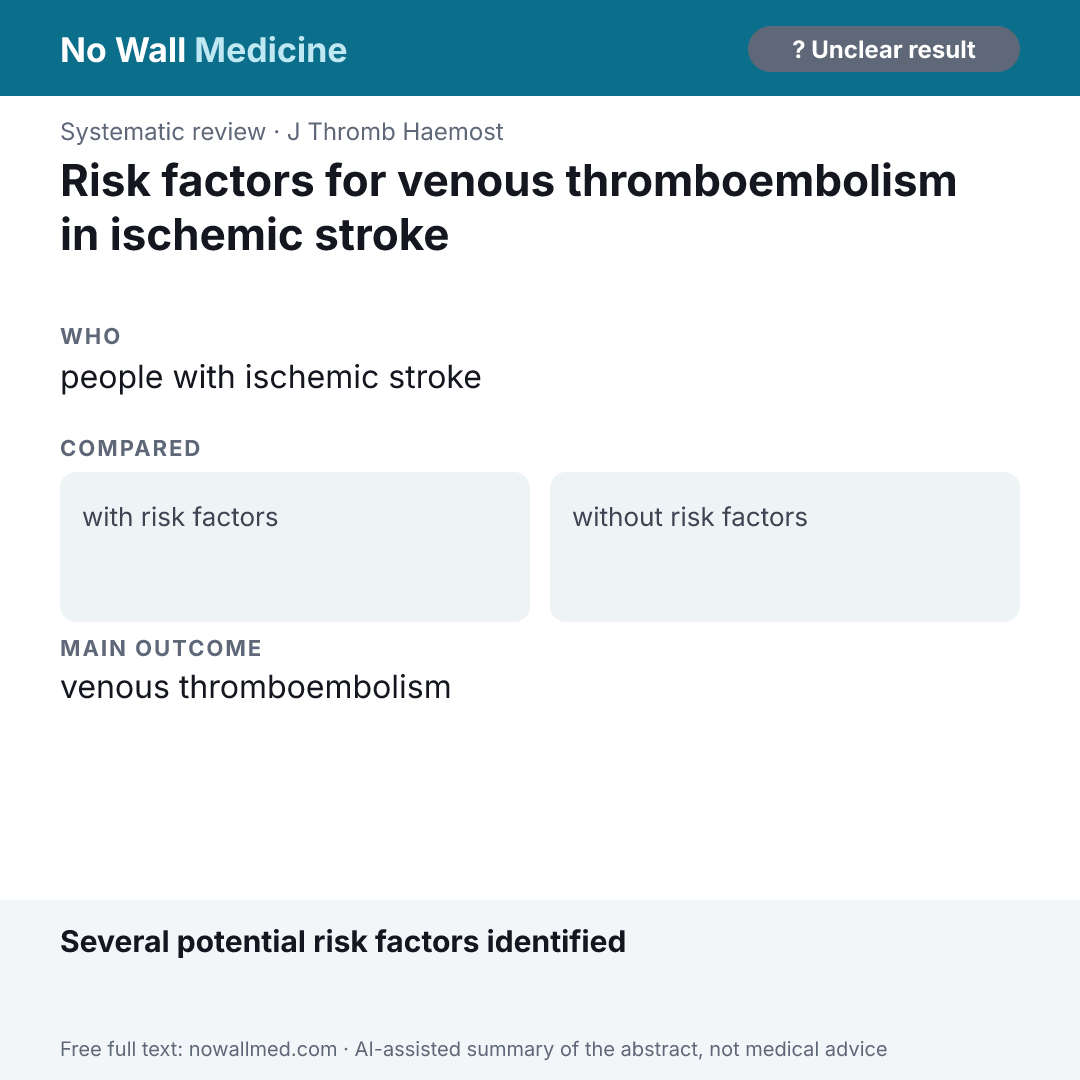
Systematic reviewUnclear result
Risk factors for venous thromboembolism in ischemic stroke
Who
people with ischemic stroke
Compared
with risk factors
without risk factors
Main outcome
venous thromboembolism
Bottom line: Several potential risk factors identified
Limitation: poor quality studies with bias
J Thromb Haemost · 2022-07-28 · Save PNG
Key points
- Researchers conducted a systematic review of 26 studies to identify factors linked to venous thromboembolism, which is blood clotting in veins, after an ischemic stroke.
- Factors reported by at least 2 studies included prior blood clots, cancer, prestroke disability, leg weakness, larger brain infarct volume, infection, low Barthel Index, and longer hospital stays.
- Elevated levels of D-dimer, C-reactive protein, and homocysteine, along with biochemical indices of dehydration, were also associated with increased risk.
Limitation the authors note: The majority of the included studies were of poor quality with moderate or high risk of bias.
Headline and key points written with AI from the paper’s abstract, with every number checked against it. Read the paper before relying on them.
Was this summary helpful?
Subject terms
Headline, design, result, key points, caveat and citation as plain text.
Cite this article
Tøndel BG, Morelli VM, Hansen JB, Braekkan SK. Risk factors and predictors for venous thromboembolism in people with ischemic stroke: A systematic review. J Thromb Haemost. 2022;20(10):2173-2186. doi:10.1111/jth.15813
Spotted a mistake? Suggest a correction