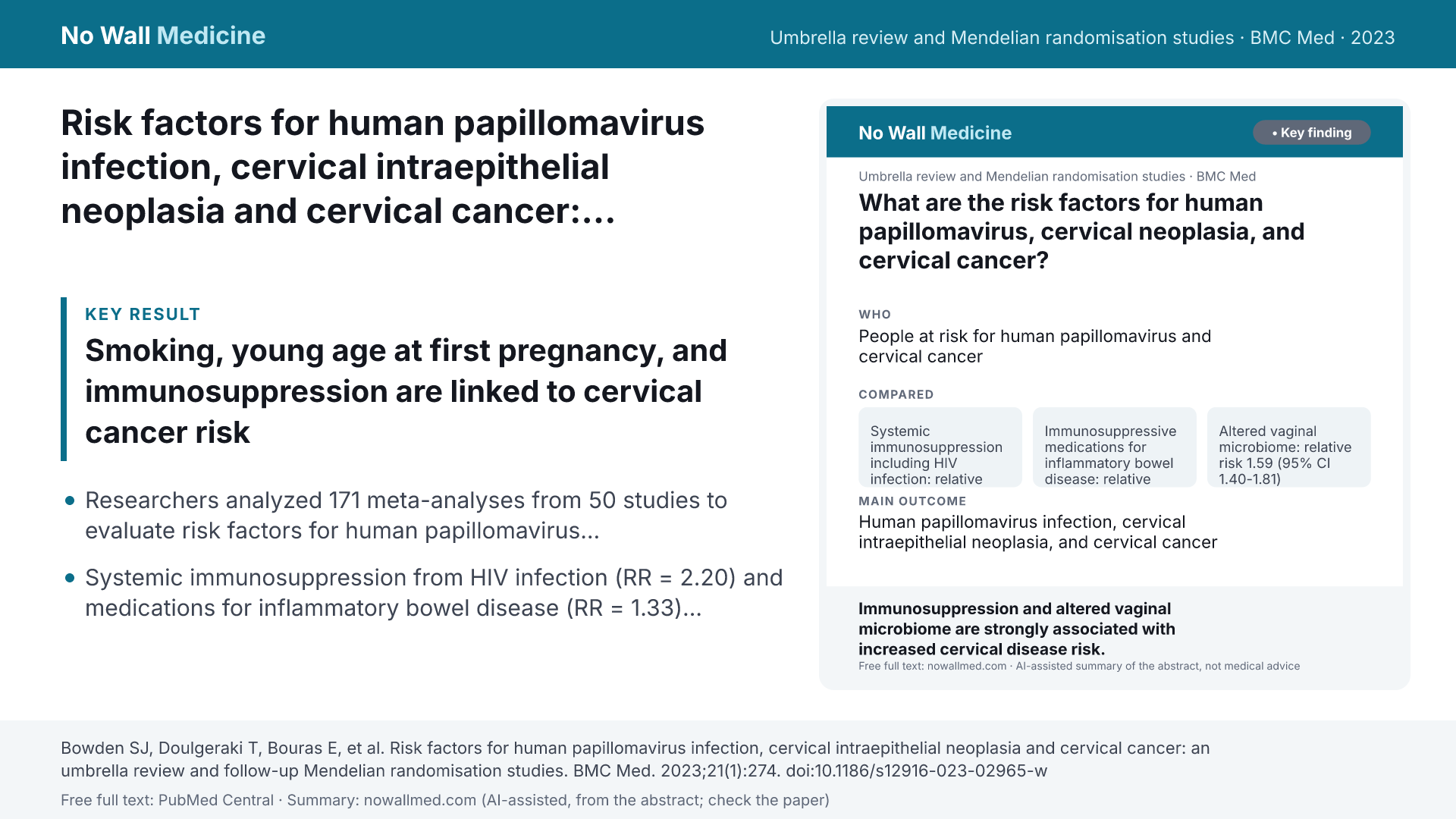
Smoking, young age at first pregnancy, and immunosuppression are linked to cervical cancer risk
Risk factors for human papillomavirus infection, cervical intraepithelial neoplasia and cervical cancer: an umbrella review and follow-up Mendelian randomisation studies
Umbrella review and Mendelian randomisation studiesBenefit found
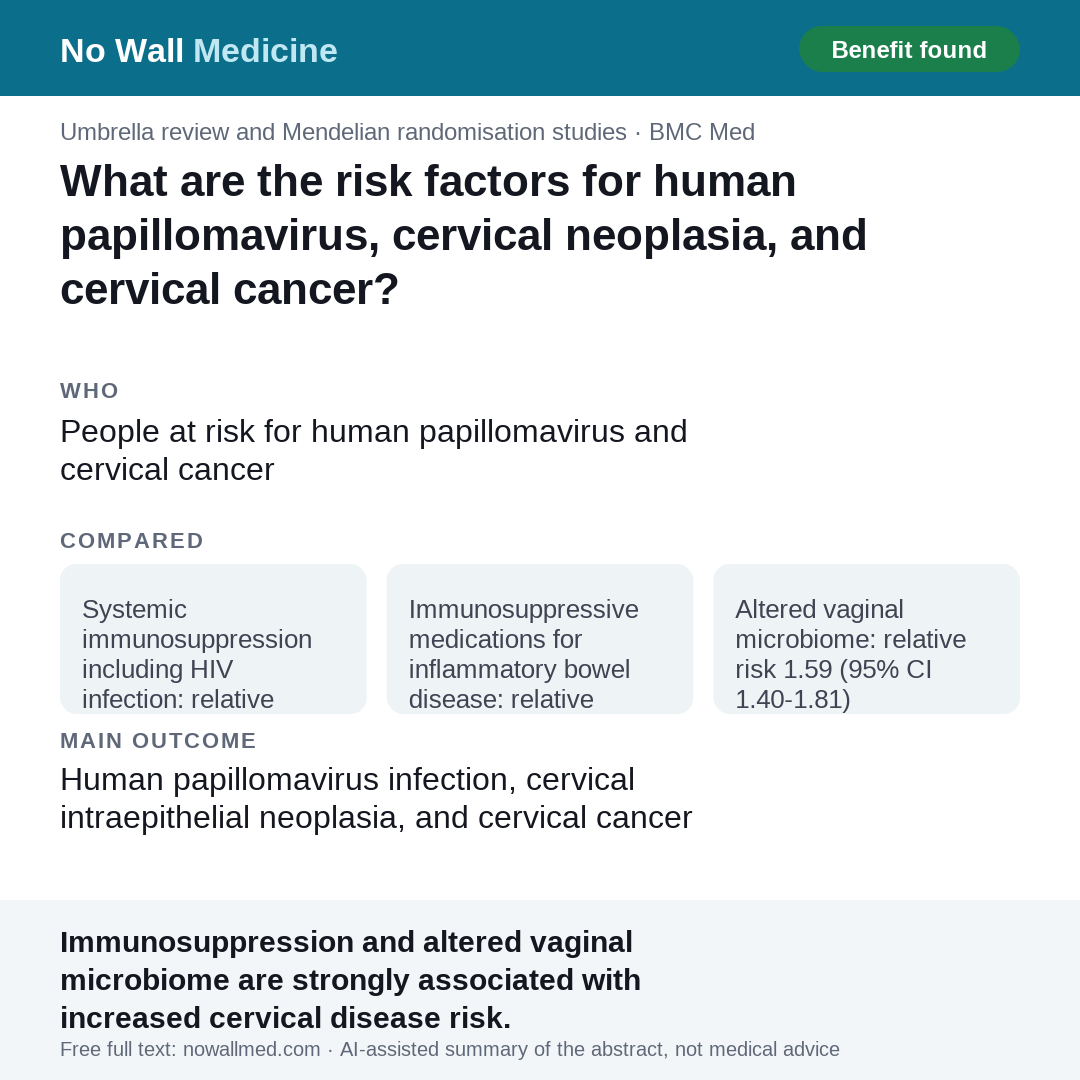
What are the risk factors for human papillomavirus, cervical neoplasia, and cervical cancer?
Who
People at risk for human papillomavirus and cervical cancer
Compared
Systemic immunosuppression including HIV infection: relative risk 2.20 (95% CI 1.89-2.54)
Immunosuppressive medications for inflammatory bowel disease: relative risk 1.33 (95% CI 1.27-1.39)
Altered vaginal microbiome: relative risk 1.59 (95% CI 1.40-1.81)
Main outcome
Human papillomavirus infection, cervical intraepithelial neoplasia, and cervical cancer
Bottom line: Immunosuppression and altered vaginal microbiome are strongly associated with increased cervical disease risk.
Limitation: Observational evidence can hide different inherent biases.
BMC Med · 2023-07-27Download image
Clinical question: What are the risk factors for human papillomavirus, cervical neoplasia, and cervical cancer?
Why it matters: The validity of observational studies regarding behavioral, environmental, or comorbid exposures that may promote or protect against cervical cancer development remains unclear.
Key points
- Researchers analyzed 171 meta-analyses from 50 studies to evaluate risk factors for human papillomavirus infection, cervical intraepithelial neoplasia, and cervical cancer.
- Systemic immunosuppression from HIV infection (RR = 2.20) and medications for inflammatory bowel disease (RR = 1.33) were associated with increased risk.
- An altered vaginal microbiome (RR = 1.59), smoking, number of sexual partners, and young age at first pregnancy were also linked to disease outcomes.
Headline and key points written with AI from the paper’s abstract, with every number checked against it. Read the paper before relying on them.
Was this summary helpful?
Subject terms
Cite this article
Bowden SJ, Doulgeraki T, Bouras E, et al. Risk factors for human papillomavirus infection, cervical intraepithelial neoplasia and cervical cancer: an umbrella review and follow-up Mendelian randomisation studies. BMC Med. 2023. doi:10.1186/s12916-023-02965-w
Spotted a mistake? Suggest a correction